Notice: تابع WP_Block_Type_Registry::register به طورنادرست فراخوانی شد. نامهای نوع بلوک نباید حروف بزرگ داشته باشند. لطفاً برای اطلاعات بیشتر، اشکال زدایی در وردپرس را مشاهده کنید. (این پیام در نگارش 5.0.0 افزوده شده است.) in /home/ethicsho/public_html/wp-includes/functions.php on line 5313
Warning: Use of undefined constant TDC_PATH_LEGACY - assumed 'TDC_PATH_LEGACY' (this will throw an Error in a future version of PHP) in /home/ethicsho/public_html/wp-content/plugins/td-composer/td-composer.php on line 109
Warning: Use of undefined constant TDSP_THEME_PATH - assumed 'TDSP_THEME_PATH' (this will throw an Error in a future version of PHP) in /home/ethicsho/public_html/wp-content/plugins/td-composer/td-composer.php on line 113 بایگانیهای 3160 - خانه اخلاق پژوهان جوان Notice: Trying to access array offset on value of type bool in /home/ethicsho/public_html/wp-content/plugins/wp-ulike/inc/general-functions.php on line 807
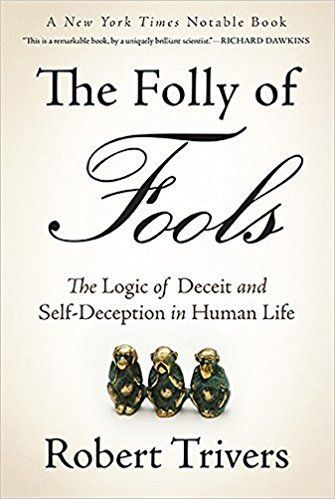
Whether it’s in a cockpit at takeoff or the planning of an offensive war, a romantic relationship or a dispute at the office, there are many opportunities to lie and self-deceive?but deceit and self-deception carry the costs of being alienated from reality and can lead to disaster. So why does deception play such a prominent role in our everyday lives? In short, why do we deceive? In his bold new work, prominent biological theorist Robert Trivers unflinchingly argues that self-deception evolved in the service of deceit?the better to fool others. We do it for biological reasons?in order to help us survive and procreate. From viruses mimicking host behavior to humans misremembering (sometimes intentionally) the details of a quarrel, science has proven that the deceptive one can always outwit the masses. But we undertake this deception at our own peril. Trivers has written an ambitious investigation into the evolutionary logic of lying and the costs of leaving it unchecked.
Setting the Moral Compass brings together the (largely unpublished) work of nineteen women moral philosophers whose powerful and innovative work has contributed to the “re-setting of the compass” of moral philosophy over the past two decades. The contributors, who include many of the top names in this field, tackle several wide-ranging projects: they develop an ethics for ordinary life and vulnerable persons; they examine the question of what we ought to do for each other; they highlight the moral significance of inhabiting a shared social world; they reveal the complexities of moral negotiations; and finally they show us the place of emotion in moral life.
Ethics is taught in various ways; in this book exercises and discussion are provided for each of the following areas: – Ethical Practices in Health Care – Law and Ethics – Rights of Patients and Responsibilities of Health-Care Providers – The Rights of Health-Care Professionals – The Duty of Care – Confidentiality – Consent to Treatment – Life and Death – Research Ethics – Ethics in Public Health Practice – Ethical Practice in Everyday Health Care is useful, practical and student friendly. The exercises and discussions will stimulate thought about ethical conduct and help students to develop and translate ethical principles into their daily practice as health-care workers. Dr Walrond offers a ready and concise source of information for medical students on ethical issues. The text is simple, comprehensive and factual, addressing issues encountered in everyday medical practices. Case studies provide practical illustrations of complex ethical issues.
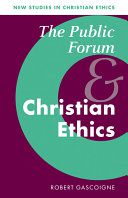
This book addresses the question of the communication of Christian ethics in the public forum of liberal, pluralist societies. Drawing on debates in philosophy, theology and sociological theory, it relates the problem of communication to fundamental questions about the nature of liberal societies and the identity of Christian faith and the Christian community. With particular emphasis on Kantian and neo-Kantian ethics, it explores the link between autonomy and community in liberal societies. The theology of communio, expressed in revealed Christian traditions, can reconcile autonomy and community. Any Christian attempt to communicate this vision must also reflect on Christianity’s own identity, especially the ways in which its own self-consciousness grows in critical interaction with secularity. In this light, Christian ethical communication is both a witness to a distinctive identity, founded in the revelation of the triune God, and a vision of universal human solidarity which can reconcile autonomy and community.
ما از اخلاق چه انتظاری داریم؟ این سوال شاید تاحدودی برای عموم مردم و یا متخصصان این رشته قابل پاسخ باشد؛ اینکه خوب بودن را به ما بیاموزد و در تنظیم روابط فردی م...

جشن کتاب تهران به ایستگاه سی و یکم رسیده است. حال و احوال نشر کتاب خوب نیست و باید فرهنگدوستان را به خرید و هدیه دادن کتاب ترغیب نمود. خانه اخلاقپژوهان جوان ب...

بنیاد کتابهای اخلاق اسلامی عمدتا پالایش جان از آلودگیها و آراستن آن به زیباییها است. اندیشه محوری این قبیل کتابها آن است که انسان فعلی آنی نیست که باید باشد...

-
0 Comments