Notice: تابع WP_Block_Type_Registry::register به طورنادرست فراخوانی شد. نامهای نوع بلوک نباید حروف بزرگ داشته باشند. لطفاً برای اطلاعات بیشتر، اشکال زدایی در وردپرس را مشاهده کنید. (این پیام در نگارش 5.0.0 افزوده شده است.) in /home/ethicsho/public_html/wp-includes/functions.php on line 5313
Warning: Use of undefined constant TDC_PATH_LEGACY - assumed 'TDC_PATH_LEGACY' (this will throw an Error in a future version of PHP) in /home/ethicsho/public_html/wp-content/plugins/td-composer/td-composer.php on line 109
Warning: Use of undefined constant TDSP_THEME_PATH - assumed 'TDSP_THEME_PATH' (this will throw an Error in a future version of PHP) in /home/ethicsho/public_html/wp-content/plugins/td-composer/td-composer.php on line 113 بایگانیهای 3030 - خانه اخلاق پژوهان جوان Notice: Trying to access array offset on value of type bool in /home/ethicsho/public_html/wp-content/plugins/wp-ulike/inc/general-functions.php on line 807
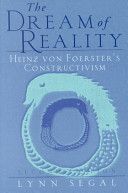
What if there were no objective facts, no objective truth, no objectivity at all, only our belief in them? What if our consciousness itself is an unconscious invention, constructed out of logic and language? In this thought-provoking volume, Lynn Segal describes how the ideas of Heinz von Foerster compel us to explore the question, “Do we discover the world or do we invent it?” and suggests that we must first know how we think before we can claim knowledge of the world. The resulting philosophy, Constructivism, examines the limits of what we can know and argues that understanding these limits can lead us to be more responsible for our personal and collective behavior. After tracing the historical transition from religious belief to a belief in science, Segal examines objectivity from semantic, philosophical, and neurological perspectives. Segal shows that we can never achieve objectivity and that the scientific method ensures only a consensus among observers. Next, he details how language and logic unwittingly predetermine the very conclusions we derive when we try to know the world. Finally, he describes a computational model of cognition that does not depend on first positing the world to account for cognition and consciousness. While Constructivism may seem relevant only to those in the cognitive sciences, it is, in fact, highly relevant to everyone. Paradoxically, grasping the limits of our own under-standing can free us to live more creative and meaningful personal and professional lives.
“This book explores the Buddhist view of death and its implications for contemporary bioethics. Writing primarily from within the Tibetan tradition, author Karma Lekshe Tsomo discusses Buddhist notions of human consciousness and personal identity and how these figure in the Buddhist view of death. Beliefs about death and enlightenment and states between life and death are also discussed. Tsomo goes on to examine such hot-button topics as cloning, abortion, assisted suicide, euthanasia, organ donation, genetic engineering, and stem-cell research within a Buddhist context, introducing new ways of thinking about these highly controversial issues.”–BOOK JACKET.
The modern era has witnessed enormous changes in our understanding of sexuality and marriage. In this biblically grounded study, Stanley Grenz synthesizes theology, ethics, and current medical research to offer an evangelical perspective on the profound role that sexuality does, and should, play in our lives today.Discussing such issues as marriage in a Christian perspective, sexuality within and outside of marriage, divorce, birth control, homosexuality, and singleness, Grenz takes a holistic view of sexuality as a gift woven into all aspects of our being — an approach often absent when evangelicals speak publicly on sexuality. He calls for Christians to live a biblical sexual ethic in the contemporary world, at the same time calling on the church to recognize that its mandate includes being a reconciling community, one that proclaims God’s grace to all.
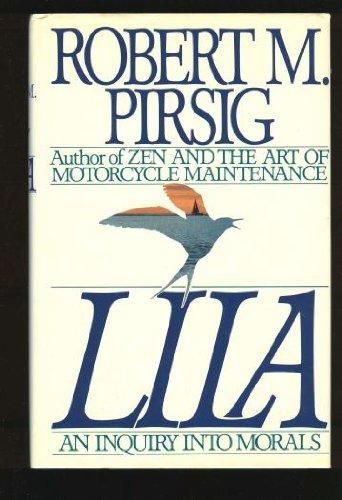
A major publishing event–the bestselling author of Zen and the Art of Motorcycle Maintenance continues the journey in a passionate philosophical exploration of what we live for. A sailboat cruising the Hudson sets the scene for a new voyage as mysterious and compelling as the journey of his first classic. (Philosophy)
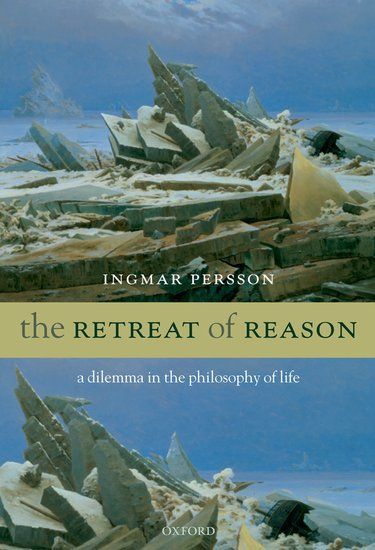
One of the main original aims of philosophy was to give us guidance about how to live our lives. The ancient Greeks typically assumed that a life led in accordance with reason, a rational life, would also be the happiest or most fulfilling. Ingmar Persson’s book resumes this project, which has been largely neglected in contemporary philosophy. But his conclusions are very different; by exploring the irrationality of our attitudes to time, our identity, and our responsibility,Persson shows that the aim of living rationally conflicts not only with the aim of leading the most fulfilling life, but also with the moral aim of promoting the maximization and just distribution of fulfilment for all. Persson also argues that neither the aim of living rationally nor any of the fulfilmentaims can be rejected as less rational than any other. We thus face a dilemma of either having to enter a retreat of reason, insulated from everyday attitudes, or making reason retreat from its aspiration to be the sole controller of our attitudes.The Retreat of Reason explores three areas in which there is a conflict between the rational life and a life dedicated to maximization of fulfilment. Persson contends that living rationally requires us to give up, first, our temporal biases; secondly, our bias towards ourselves; and, thirdly, our responsibility to the extent that it involves the notion of desert and desert-entailing notions. But giving up these attitudes is so overwhelmingly hard that the effort to do so not only makesour own lives less fulfilling, but also obstructs our efficient pursuit of the moral aim of promoting a maximum of justly distributed fulfilment.Ingmar Persson brings back to philosophy the ambition of offering a broad vision of the human condition. The Retreat of Reason challenges and disturbs some of our most fundamental ideas about ourselves.
ما از اخلاق چه انتظاری داریم؟ این سوال شاید تاحدودی برای عموم مردم و یا متخصصان این رشته قابل پاسخ باشد؛ اینکه خوب بودن را به ما بیاموزد و در تنظیم روابط فردی م...

جشن کتاب تهران به ایستگاه سی و یکم رسیده است. حال و احوال نشر کتاب خوب نیست و باید فرهنگدوستان را به خرید و هدیه دادن کتاب ترغیب نمود. خانه اخلاقپژوهان جوان ب...

بنیاد کتابهای اخلاق اسلامی عمدتا پالایش جان از آلودگیها و آراستن آن به زیباییها است. اندیشه محوری این قبیل کتابها آن است که انسان فعلی آنی نیست که باید باشد...

-
0 Comments