Notice: تابع WP_Block_Type_Registry::register به طورنادرست فراخوانی شد. نامهای نوع بلوک نباید حروف بزرگ داشته باشند. لطفاً برای اطلاعات بیشتر، اشکال زدایی در وردپرس را مشاهده کنید. (این پیام در نگارش 5.0.0 افزوده شده است.) in /home/ethicsho/public_html/wp-includes/functions.php on line 5313
Warning: Use of undefined constant TDC_PATH_LEGACY - assumed 'TDC_PATH_LEGACY' (this will throw an Error in a future version of PHP) in /home/ethicsho/public_html/wp-content/plugins/td-composer/td-composer.php on line 109
Warning: Use of undefined constant TDSP_THEME_PATH - assumed 'TDSP_THEME_PATH' (this will throw an Error in a future version of PHP) in /home/ethicsho/public_html/wp-content/plugins/td-composer/td-composer.php on line 113 بایگانیهای 2987 - خانه اخلاق پژوهان جوان Notice: Trying to access array offset on value of type bool in /home/ethicsho/public_html/wp-content/plugins/wp-ulike/inc/general-functions.php on line 807
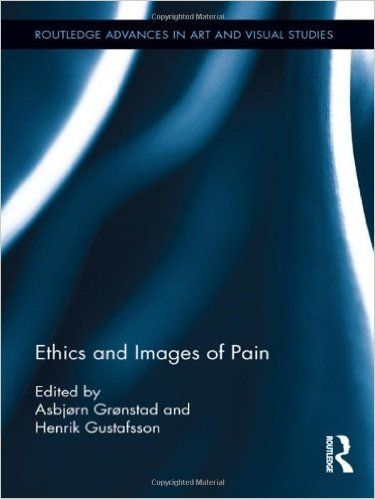
Few phenomena are as formative of our experience of the visual world as displays of suffering. But what does it mean to have an ethical experience of disturbing or traumatizing images? What kind of ethical proposition does an image of pain mobilize? How may the spectator learn from and make use of the painful image as a source of ethical reflection? Engaging with a wide range of visual media–from painting, theatre, and sculpture, to photography, film, and video–this interdisciplinary collection of essays by leading and emerging scholars of visual culture offers a reappraisal of the increasingly complex relationship between images of pain and the ethics of viewing. Ethics and Images of Pain reconsiders the persistent and ever pertinent nexus of aesthetics and ethics, the role of painful images as generators of unpredictable forms of affect, the moral transformation of spectatorship, the ambivalence of the witness and the representation of afflication as a fundamental form of our shared scopic experience. The instructive and illuminating essays in the collection introduce a phenomenological context in which to make sense of our current ecology of excruciating images, one that accentuates notions of responsibility, empathy, and imagination. Contributors trace the images of pain across a miscellany of case studies, and amongst the topics addressed are: the work of artists as disparate as Doris Salcedo, Anselm Kiefer and Bendik Riis; photographs from Abu Ghraib and Rwanda; Hollywood war films and animated documentaries; performances of self-immolations and incidents of police brutality captured on mobile phones.
This lecture is MacIntyre’s most explicit defense of his approach to Thomistic metaphysics. This lecture follows MacIntyre’s argument in After Virtue that modern philosophy has very literally lost its way, and the problems it faces are insoluble. The difficulties are twofold, and stem from the Cartesian turn to the self in the XVith century. Modern philosophy cannot reestablish contact with the outside world when our starting point is self-knowledge, and modern philosophy also cannot accept that any principle could be ‘first’ in any absolute sense of the word, because final causality has been rejected. MacIntyre claims that Thomism does not suffer these defects, but he cautions against a premature victory, because Thomism has been decisively rejected by modern philosophy and modern science, so that there is no chance of effective dialogue between Thomism and other traditions. The very vocabulary of Thomism is a stumbling block. However, modern philosophy has not been able to completely eliminate the Aristotelian roots of all philosophy and science, and so keeps returning to themes that it cannot adequately address. Thus MacIntyre proposes to use the tools of modern philosophies, such as the genealogical narrative, to help reconnect modern philosophy and Thomism. A historical approach might make the rejection, and the reasons for it, evident, and allow fruitful dialogue by allowing for the fruits of modern philosophy to be discussed in a context that will allow them to finally flourish. Essentially, the goal is to enable contemporary philosophy to become more itself by freeing it from the tension created by the premises that cast doubt upon the philosophical enterprise.
“The first of its kind, this cutting edge work of philosophical ethics makes a powerful case for the centrality of moral paradox. Presenting ten diverse and original moral paradoxes, the book challenges some of our deepest moral views. This innovative volume also asks whether the existence of moral paradox is damaging or beneficial, and explores more generally what paradoxicality can teach us about morality and life.”–BOOK JACKET.
In this important book, Dr. Laura Schlessinger shows men and women that they can have a Good Life no matter how Bad their Childhood. For each of us, there is a connection between our early family dynamics and experiences and our current attitudes and decisions. Many of the people Dr. Laura has helped did not realize how their histories impacted their adult lives, or how their choices in people, repetitive situations, and decisions — even their emotional reactions — were connected to those early negative experiences, playing a major role in their current unhappiness. For these people and millions like them, too much time is dedicated to repeating the ugly dynamics of childhood in a vain attempt to repair or cope with deep hurt and longings. Too often they use their emotional pain to control others or excuse their own inappropriate and destructive behaviors. Some turn to therapy, only to find themselves trapped in their self-pitying victim mode, robbed of optimism, confidence, and growth. Dr. Laura will help you realize that no matter what circumstances you came from or currently live in, you are ultimately responsible for how you react to them. The acceptance of this basic truth is the source of your power to secure the Good Life you long for. In her signature straightforward style, with real-life examples, Dr. Laura shows you what you will gain by not being satisfied with an identity as a victim, or even as a survivor — but striving to be a victor! In Bad Childhood — Good Life, Dr. Laura will guide you to accept the truth of the assaults on your psyche and soul, understand your unique coping style and how it impacts your daily thoughts and actions, and help you embrace a life of more peace and happiness. Bad Childhood — Good Life comes from a compassionate and personal place. Dr. Laura also reveals some of her own experiences with a difficult childhood and what efforts it took to attain a Good Life. She writes, “My resilience has paid off, and I’m doing the best I can with what I’ve got.” Now you can, too.
R.M. Hare is one of the foremost moral philosophers of this century and this volume contains 13 essays by well-known philosophers which discuss Hare’s thinking. The essays cover a wide range of issues including universalizability, moral psychology, and the role of common-sense moral principles. A special feature of the book is Professor Hare’s responses to his critics with both an essay and detailed, point-by-point criticism. In 1981, Oxford University Press published Hare’s “Moral thinking”, which built on his earlier metaethical work to develop a utilitarian normative position which differed from other formulations of utilitarianism .
ما از اخلاق چه انتظاری داریم؟ این سوال شاید تاحدودی برای عموم مردم و یا متخصصان این رشته قابل پاسخ باشد؛ اینکه خوب بودن را به ما بیاموزد و در تنظیم روابط فردی م...

جشن کتاب تهران به ایستگاه سی و یکم رسیده است. حال و احوال نشر کتاب خوب نیست و باید فرهنگدوستان را به خرید و هدیه دادن کتاب ترغیب نمود. خانه اخلاقپژوهان جوان ب...

بنیاد کتابهای اخلاق اسلامی عمدتا پالایش جان از آلودگیها و آراستن آن به زیباییها است. اندیشه محوری این قبیل کتابها آن است که انسان فعلی آنی نیست که باید باشد...

-
0 Comments