Notice: تابع WP_Block_Type_Registry::register به طورنادرست فراخوانی شد. نامهای نوع بلوک نباید حروف بزرگ داشته باشند. لطفاً برای اطلاعات بیشتر، اشکال زدایی در وردپرس را مشاهده کنید. (این پیام در نگارش 5.0.0 افزوده شده است.) in /home/ethicsho/public_html/wp-includes/functions.php on line 5313
Warning: Use of undefined constant TDC_PATH_LEGACY - assumed 'TDC_PATH_LEGACY' (this will throw an Error in a future version of PHP) in /home/ethicsho/public_html/wp-content/plugins/td-composer/td-composer.php on line 109
Warning: Use of undefined constant TDSP_THEME_PATH - assumed 'TDSP_THEME_PATH' (this will throw an Error in a future version of PHP) in /home/ethicsho/public_html/wp-content/plugins/td-composer/td-composer.php on line 113 بایگانیهای 2914 - خانه اخلاق پژوهان جوان Notice: Trying to access array offset on value of type bool in /home/ethicsho/public_html/wp-content/plugins/wp-ulike/inc/general-functions.php on line 807
Over the past decade, researchers from different academic disciplines have paid increasing attention to the productivity of online environments. The ethical underpinnings of research in such settings, however, remain contested and often controversial. As traditional debates have been reignited by the need to respond to the particular characteristics of technologically-mediated environments, researchers have entered anew key debates regarding the moral, legal and regulative aspects of research ethics. A growing trend in this work has been towards the promotion of localized and contextualized research ethics – the suggestion that the decisions we make should be informed by the nature of the environments we study and the habits/expectations of participants within them. Despite such moves, the relationship between the empirical, theoretical and methodological aspects of Internet research ethics remains underexplored. Drawing from ongoing sociological research into the practices of media cultures online, this book provides a timely and distinctive response to this need.This book explores the relationship between the production of ethical stances in two different contexts: the ethical manoeuvring of participants within online media-fan communities and the ethical decision-making of the author as Internet researcher, manoeuvring, as it were, in the academic community. In doing so, the book outlines a reflexive framework for exploring research ethics at different levels of analysis; the empirical settings of research; the theoretical perspectives which inform the researcher’s objectification of the research settings; and the methodological issues and practical decisions that constitute the activity as research. The analysis of these different levels develops a way of thinking about ethical practice in terms of stabilizing and destabilizing moves within and between research and researched communities. The analysis emphasizes the continuities and discontinuities between both research practice and online media-fan activity, and social activity in on and offline environments.
How should we decide which inequalities between people are justified, and which are unjustified? One answer is that such inequalities are only justified where there is a corresponding variation in responsible action or choice on the part of the persons concerned. This view, which has become known as ‘luck egalitarianism’, has come to occupy a central place in recent debates about distributive justice. This book is the first full length treatment of this significant development in contemporary political philosophy. Each of its three parts addresses a key question concerning the theory. Which version of luck egalitarian comes closest to realizing luck egalitarian objectives? Does luck egalitarianism succeed as a view of egalitarian justice? And is it sound as an account of distributive justice in general? The book provides a distinctive answer to each of these questions, along the way engaging with the leading theorists identified in the literature as luck egalitarians, such as Richard Arneson, G. A. Cohen, and Ronald Dworkin, as well as the most influential critics, including Elizabeth Anderson, Marc Fleurbaey, Susan Hurley, Samuel Scheffler, and Jonathan Wolff. Key Features *Presents a critical survey of already classic debates about responsibility, equality and justice *Provides a sustained engagement with luck egalitarianism’s critics *Stakes a distinctive position on the key questions regarding luck egalitarianism
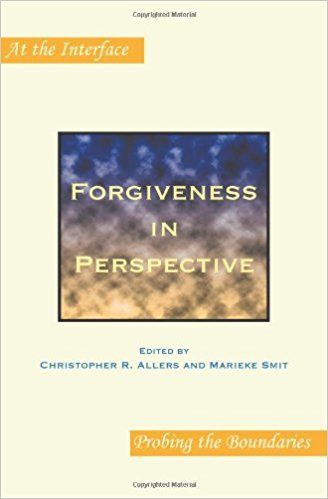
Amidst the cacophony of claims made about forgiveness, this book serves to aid in an effort to put żforgiveness in perspective.ż Marieke Smit and Christopher R. Allers have collected here ten essays written by twelve authors from around the world and across the disciplinary spectrum including philosophers, practitioners, psychologists, literary theorists, and prison chaplains. All the essays offer a perspective on forgiveness and put forgiveness in perspective whether by tracing what forgiveness żis,ż how this religious inheritance is worked out in our secularizing societies, how forgiveness works in our quotidian experience, or a particular manifestation in a particular context such as marriage, prison, or after an abortion, to name a few. The multi-disciplinary character of this book provides a multi-disciplinary appeal as well as a resource to enlarge oneżs own perspective on this perplexing, enigmatic, and wonderfully complex concept of forgiveness.Marieke Smit is a researcher at the Centre for Prison Pastoral Care at the University of Tilburg, The Netherlands. Her research concerns the role of forgiveness in detention. She is also working as a prison chaplain in Dutch prisons.Christopher R. Allers (M.A., Institute for Christian Studies, Toronto) is Adjunct Professor of Philosophy at Cornerstone University (Grand Rapids, MI) and Sessional Instructor in Philosophy at the Institute for Christian Studies, Toronto (ICS) where he is also a doctoral student in the conjoint degree program between ICS and the Vrije Universiteit, Amsterdam. He is currently working on a dissertation on forgiveness which is tentatively titled The Miracle of Forgiveness.
ما از اخلاق چه انتظاری داریم؟ این سوال شاید تاحدودی برای عموم مردم و یا متخصصان این رشته قابل پاسخ باشد؛ اینکه خوب بودن را به ما بیاموزد و در تنظیم روابط فردی م...

جشن کتاب تهران به ایستگاه سی و یکم رسیده است. حال و احوال نشر کتاب خوب نیست و باید فرهنگدوستان را به خرید و هدیه دادن کتاب ترغیب نمود. خانه اخلاقپژوهان جوان ب...

بنیاد کتابهای اخلاق اسلامی عمدتا پالایش جان از آلودگیها و آراستن آن به زیباییها است. اندیشه محوری این قبیل کتابها آن است که انسان فعلی آنی نیست که باید باشد...

-
0 Comments