Notice: تابع WP_Block_Type_Registry::register به طورنادرست فراخوانی شد. نامهای نوع بلوک نباید حروف بزرگ داشته باشند. لطفاً برای اطلاعات بیشتر، اشکال زدایی در وردپرس را مشاهده کنید. (این پیام در نگارش 5.0.0 افزوده شده است.) in /home/ethicsho/public_html/wp-includes/functions.php on line 5313
Warning: Use of undefined constant TDC_PATH_LEGACY - assumed 'TDC_PATH_LEGACY' (this will throw an Error in a future version of PHP) in /home/ethicsho/public_html/wp-content/plugins/td-composer/td-composer.php on line 109
Warning: Use of undefined constant TDSP_THEME_PATH - assumed 'TDSP_THEME_PATH' (this will throw an Error in a future version of PHP) in /home/ethicsho/public_html/wp-content/plugins/td-composer/td-composer.php on line 113 بایگانیهای 2912 - خانه اخلاق پژوهان جوان Notice: Trying to access array offset on value of type bool in /home/ethicsho/public_html/wp-content/plugins/wp-ulike/inc/general-functions.php on line 807
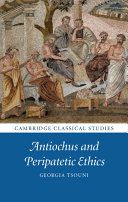
This book offers a fresh analysis of the account of Peripatetic ethics in Cicero’s On Ends 5, which goes back to the first-century BCE philosopher Antiochus of Ascalon. Georgia Tsouni challenges previous characterisations of Antiochus’ philosophical project as ‘eclectic’ and shows how his reconstruction of the ethics of the ‘Old Academy’ demonstrates a careful attempt to update the ancient heritage, and predominantly the views of Aristotle and the Peripatos, in the light of contemporary Stoic-led debates. This results in both a hermeneutically complex and a philosophically exciting reading of the old tradition. A case in point is the way Antiochus grounds the ‘Old Academic’ conception of the happy life in natural appropriation (oikeiosis), thus offering a naturalistic version of Aristotelian ethics.
Kevin Hill presents a highly original study of Nietzsche’s thought, the first book to examine in detail his debt to the work of Kant. Hill argues that Nietzsche is a systematic philosopher who knew Kant far better than is commonly thought, and that he can only be properly understood in relation to him. Nietzsche’s Critiques will be of great value to scholars and students with interests in either of these philosophical giants, or in the history of ideas generally.
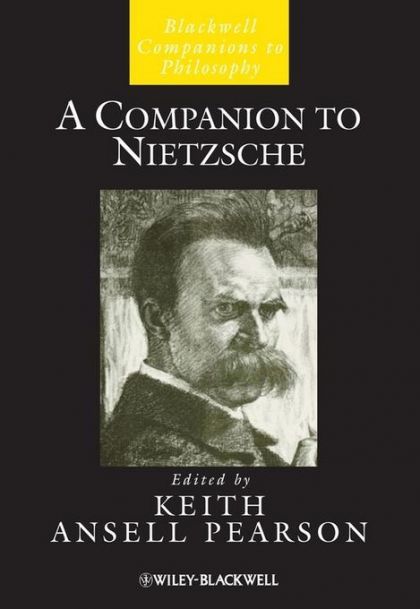
A Companion to Nietzsche provides a comprehensive guide to all the main aspects of Nietzsche’s philosophy, profiling the most recent research and trends in scholarship. Brings together an international roster of both rising stars and established scholars, including many of the leading commentators and interpreters of Nietzsche. Showcases the latest trends in Nietzsche scholarship, such as the renewed focus on Nietzsche’s philosophy of time, of nature, and of life. Includes clearly organized sections on Art, Nature, and Individuation; Nietzsche’s New Philosophy of the Future; Eternal Recurrence, the Overhuman, and Nihilism; Philosophy of Mind; Philosophy and Genealogy; Ethics; Politics; Aesthetics; Evolution and Life. Features fresh treatments of Nietzsche’s core and enigmatic doctrines.
Why is ethics part of philosophy? Stephen Darwall’s Philosophical Ethicsintroduces students to ethics from a distinctively philosophical perspective, one that weaves together central ethical questions such as “What has value?” and “What are our moral obligations?” with fundamental philosophical issues such as “What is value?” and “What can a moral obligation consist in?”With one eye on contemporary discussions and another on classical texts, Philosophical Ethicsshows how Hobbes, Mill, Kant, Aristotle, and Nietzsche all did ethical philosophy–how, for example, they sought to gain insight into what has value through understanding what value itself is. After an introductory section, and one on main approaches to metaethics, chapters discuss “modern” philosophical moralists–Hobbes, Mill, and Kant–and pre- and postmodern philosophical approaches to ethics in Aristotle, Nietzsche, and the ethics of care.Throughout, the reader is invited to do–rather than just read about–philosophical ethics and, in doing so, to think through questions that face all thoughtful human beings. Themes include the nature of value and moral obligation, freedom and choice, human flourishing, excellence and merit, radical critiques of morality, and the importance of relationships for human life.
Immanuel Kant (1724-1804) is arguably the most influential of the Enlightenment Philosophers. In this outstanding introduction, Paul Guyer introduces and assesses all the major aspects of Kant’s thought. Beginning with a helpful overview of Kant’s life and times, Guyer introduces the “Copernican revolution” Kant brought about in metaphysics and epistemology, carefully introducing his arguments about the nature of experience, space and time in his most influential but difficult work,The Critique of Pure Reason.He gives a much-needed explanation of Kant’s famous theory of transcendental idealism, a cornerstone of his philosophy as a whole. He then examines Kant’s moral philosophy, clearly explaining Kant’s celebrated “categorical imperative” and his theories of duty, freedom of the will, and rights. Finally, he covers Kant’s aesthetics, in particular his arguments about the nature of beauty and the sublime and their relation to human freedom and happiness. A concluding chapterconsiders Kant’s legacy and his influence on the shape of contemporary philosophy. Kant is an ideal starting point for anyone coming to the philosopher for the first time, as well as those studying Kant in related disciplines.
ما از اخلاق چه انتظاری داریم؟ این سوال شاید تاحدودی برای عموم مردم و یا متخصصان این رشته قابل پاسخ باشد؛ اینکه خوب بودن را به ما بیاموزد و در تنظیم روابط فردی م...

جشن کتاب تهران به ایستگاه سی و یکم رسیده است. حال و احوال نشر کتاب خوب نیست و باید فرهنگدوستان را به خرید و هدیه دادن کتاب ترغیب نمود. خانه اخلاقپژوهان جوان ب...

بنیاد کتابهای اخلاق اسلامی عمدتا پالایش جان از آلودگیها و آراستن آن به زیباییها است. اندیشه محوری این قبیل کتابها آن است که انسان فعلی آنی نیست که باید باشد...

-
0 Comments