Notice: تابع WP_Block_Type_Registry::register به طورنادرست فراخوانی شد. نامهای نوع بلوک نباید حروف بزرگ داشته باشند. لطفاً برای اطلاعات بیشتر، اشکال زدایی در وردپرس را مشاهده کنید. (این پیام در نگارش 5.0.0 افزوده شده است.) in /home/ethicsho/public_html/wp-includes/functions.php on line 5313
Warning: Use of undefined constant TDC_PATH_LEGACY - assumed 'TDC_PATH_LEGACY' (this will throw an Error in a future version of PHP) in /home/ethicsho/public_html/wp-content/plugins/td-composer/td-composer.php on line 109
Warning: Use of undefined constant TDSP_THEME_PATH - assumed 'TDSP_THEME_PATH' (this will throw an Error in a future version of PHP) in /home/ethicsho/public_html/wp-content/plugins/td-composer/td-composer.php on line 113 بایگانیهای 2822 - خانه اخلاق پژوهان جوان Notice: Trying to access array offset on value of type bool in /home/ethicsho/public_html/wp-content/plugins/wp-ulike/inc/general-functions.php on line 807
We have been taught that all humans share intrinsic qualities that lend them a common dignity. Philosophers conceive of a certain level of cognitive capacity as the very mark of humanity, and extend the mantle of equal moral fellowship to these “persons.” But what of individuals with diminished cognitive abilities? Cognitive disability poses significant challenges to these fundamental philosophical concepts, prompting a variety of difficult questions. Should those with cognitive disabilities be excluded from the protections and responsibilities we routinely assign to “persons”? Are we forced to reconsider the very concept of “personhood”? How should the interests of people with cognitive disabilities and their caregivers be represented politically? Who is responsible for guaranteeing their care? And to what extent ought they to be granted autonomy?Cognitive Disability and Its Challenge to Moral Philosophy addresses these concerns in a series of thought-provoking Chapters contributed by some of the most prominent moral philosophers of our time, as well as clinicians and medical historians. Collectively, the Chapters represent an important milestone in contemporary thinking about ethical considerations relating to people with cognitive disabilities.Eva Feder Kittay is Distinguished Professor of Philosophy, Women’s Studies Affiliate, and Senior Fellow of the Center for Medical Humanities, Bioethics and Compassionate Care at Stony Brook University, New York. Her published works include Love’s Labor: Essays on Women, Equality, and Dependency (1998); The Blackwell Guide to Feminist Philosophy (co-edited with Linda Martin Alcoff, Wiley-Blackwell, 2006); The Subject of Care: Feminist Perspectives on Dependency (with Ellen K. Feder, 2003); and Metaphor: Its Cognitive Force and Linguistic Structure (1990). She is also the mother of a cognitively disabled woman.Licia Carlson is an assistant professor of philosophy at Providence College. Her research interests include twentieth-century French philosophy, ethics, feminist theory, philosophy and disability, and the philosophy of music. She has published articles on bioethics, feminist theory, disability, and the works of Michel Foucault, and is the author of The Faces of Intellectual Disability: Philosophical Reflections (2010).
Sullivan and Kymlicka seek to provide an alternative to post-9/11 pessimism about the ability of serious ethical dialogue to resolve disagreements and conflict across national, religious, and cultural differences. It begins by acknowledging the gravity of the problem: on our tightly interconnected planet, entire populations look for moral guidance to a variety of religious and cultural traditions, and these often stiffen, rather than soften, opposing moral perceptions. How, then, to set minimal standards for the treatment of persons while developing moral bases for coexistence and cooperation across different ethical traditions? The Globalization of Ethics argues for a tempered optimism in approaching these questions. Its distinguished contributors report on some of the most globally influential traditions of ethical thought in order to identify the resources within each tradition for working toward consensus and accommodation among the ethical traditions that shape the contemporary world.
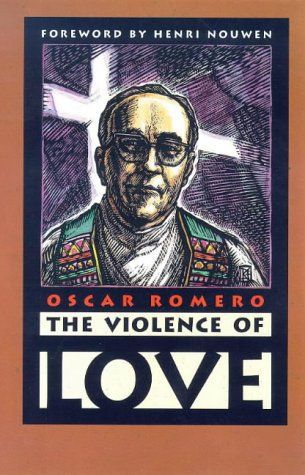
The Violence of Love is a powerful collection of extracts from Romero’s homilies, letters, and articles. Each of these passages gives insight into the mind and heart of the man behind them, more insight, perhaps, than any biographic account of his life. They show a man not afraid to expose his weakness, a man whose tremendous faith and hope call us to repentance and renewal.Originally addressed to the people of El Salvador, Romero’s words speak to all people, passionately decrying injustice and violence, exhorting to peace and forgiveness, and inviting all to help build a new, just society. Chronologically arranged, the selections reflect Romero’s own spiritual transformation and call us to experience a similar revolution of the heart.Romero was martyred for his insistence that following Christ cannot be relegated to the spiritual realm. He did not die in vain; the people of Central America say his spirit lives on in them. As their struggle for justice and dignity intensifies, his words take on a renewed urgency.Short, poetic passages make this collection excellent reading for daily reflection and renewal.
This is a revised edition of Walker’s well-known book in feminist ethics first published in 1997. Walker’s book proposes a view of morality and an approach to ethical theory which uses the critical insights of feminism and race theory to rethink the epistemological and moral position of the ethical theorist, and how moral theory is inescapably shaped by culture and history. The main gist of her book is that morality is embodied in “practices of responsibility” that express our identities, values, and connections to others in socially patterned ways. Thus ethical theory needs to be empirically informed and politically critical to avoid reiterating forms of socially entrenched bias. Responsible ethical theory should reveal and question the moral significance of social differences. The book engages with, and challenges, the work of contemporary analytic philosophers in ethics.
Nearly everyone has wronged another. Who among us has not longed to be forgiven? Nearly everyone has suffered the bitter injustice of wrongdoing. Who has not struggled to forgive? Charles Griswold has written the first comprehensive philosophical book on forgiveness in both its interpersonal and political contexts, as well as its relation to reconciliation. Having examined the place of forgiveness in ancient philosophy and in modern thought, he discusses what forgiveness is, what conditions the parties to it must meet, its relation to revenge and hatred, when it is permissible and whether it is obligatory, and why it is a virtue.
ما از اخلاق چه انتظاری داریم؟ این سوال شاید تاحدودی برای عموم مردم و یا متخصصان این رشته قابل پاسخ باشد؛ اینکه خوب بودن را به ما بیاموزد و در تنظیم روابط فردی م...

جشن کتاب تهران به ایستگاه سی و یکم رسیده است. حال و احوال نشر کتاب خوب نیست و باید فرهنگدوستان را به خرید و هدیه دادن کتاب ترغیب نمود. خانه اخلاقپژوهان جوان ب...

بنیاد کتابهای اخلاق اسلامی عمدتا پالایش جان از آلودگیها و آراستن آن به زیباییها است. اندیشه محوری این قبیل کتابها آن است که انسان فعلی آنی نیست که باید باشد...

-
0 Comments