Notice: تابع WP_Block_Type_Registry::register به طورنادرست فراخوانی شد. نامهای نوع بلوک نباید حروف بزرگ داشته باشند. لطفاً برای اطلاعات بیشتر، اشکال زدایی در وردپرس را مشاهده کنید. (این پیام در نگارش 5.0.0 افزوده شده است.) in /home/ethicsho/public_html/wp-includes/functions.php on line 5313
Warning: Use of undefined constant TDC_PATH_LEGACY - assumed 'TDC_PATH_LEGACY' (this will throw an Error in a future version of PHP) in /home/ethicsho/public_html/wp-content/plugins/td-composer/td-composer.php on line 109
Warning: Use of undefined constant TDSP_THEME_PATH - assumed 'TDSP_THEME_PATH' (this will throw an Error in a future version of PHP) in /home/ethicsho/public_html/wp-content/plugins/td-composer/td-composer.php on line 113 بایگانیهای 2635 - خانه اخلاق پژوهان جوان Notice: Trying to access array offset on value of type bool in /home/ethicsho/public_html/wp-content/plugins/wp-ulike/inc/general-functions.php on line 807
Information technology is an integral part of the practices and institutions of post-industrial society. It is also a source of hard moral questions and thus is both a probing and relevant area for moral theory. In this volume, an international team of philosophers sheds light on many of the ethical issues arising from information technology, including informational privacy, digital divide and equal access, e-trust and tele-democracy. Collectively, these essays demonstrate how accounts of equality and justice, property and privacy benefit from taking into account how information technology has shaped our social and epistemic practices and our moral experiences. Information technology changes the way that we look at the world and deal with one another. It calls, therefore, for a re-examination of notions such as friendship, care, commitment and trust.
Two essays on utilitarianism, written from opposite points of view, by J. J. C. Smart and Bernard Williams. In the first part of the book Professor Smart advocates a modern and sophisticated version of classical utilitarianism; he tries to formulate a consistent and persuasive elaboration of the doctrine that the rightness and wrongness of actions is determined solely by their consequences, and in particular their consequences for the sum total of human happiness. This is a revised version of Professor Smart’s famous essay ‘an outline of a system of utilitarian ethics’, first published in 1961 but long unobtainable. In Part II Bernard Williams offers a sustained and vigorous critique of utilitarian assumptions, arguments and ideals. He finds inadequate the theory of action implied by utilitarianism, and he argues that utilitarianism fails to engage at a serious level with the real problems of moral and political philosophy, and fails to make sense of notions such as integrity, or even human happiness itself. Both authors are agreed on utilitarianism’s importance: it cuts across a number of different philosophical disputes and combines a systematic account of mata-ethical problems with a distinctive and substantive moral stand. It thus is, or involves, philosophy in both the traditional and the narrower, professional sense of the word, and is a key topic (often the first topic) in introductory philosophy courses. This book should also be of interest to welfare economists, political scientists and decision-theorists.
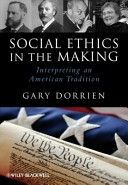
A CHOICE Outstanding Academic Title for 2009In the early 1880s, proponents of what came to be called “the social gospel” founded what is now known as social ethics. This ambitious and magisterial book describes the tradition of social ethics: one that began with the distinctly modern idea that Christianity has a social-ethical mission to transform the structures of society in the direction of social justice. Charts the story of social ethics – the idea that Christianity has a social-ethical mission to transform society – from its roots in the nineteenth century through to the present day Discusses and analyzes how different traditions of social ethics evolved in the realms of the academy, church, and general public Looks at the wide variety of individuals who have been prominent exponents of social ethics from academics and self-styled “public intellectuals” through to pastors and activists Set to become the definitive reference guide to the history and development of social ethics
“This book provides answers to both normative and metaethical questions in a way that shows the interconnection of both types of questions, and also shows how a complete theory of reasons can be developed by moving back and forth between the two types of questions. It offers an account of the nature of intimate relationships and of the nature of the reasons that intimacy provides, and then uses that account to defend a traditional intuitionist metaethics. The book thus combines attention to the details of the lived moral life – the context in which many of our most pressing moral questions arise, how we deliberate and make moral decisions, the complexities that plague our attempts to know what we ought to do – with theoretical rigor in offering an account of the nature of reasons, how we come to have moral knowledge, and how we can adjudicate between competing positions.”–BOOK JACKET.
Pharmaceutical Ethics is an important text, which aims to provide the ethical guidelines much needed by the pharmaceutical industry. By focusing on many of the central issues such as the ethical aspects of clinical trials, informed consent, physician or patient choice and pharmaceutical advertising, this text will provide very good coverage of an area which perhaps still lacks coherent instruction. * Covers ethical issues involved in the testing and use of pharmaceuticals on human beings * Investigates issues such as whether choice of drug should lie with the physician or the patient * Looks at a wide variety of subjects connected with pharmaceutical ethics. * Focuses specifically on the issues surrounding the pharmaceutical industry, not medicine in general. * Fulfils an important need in the Pharmaceutical Industry.
ما از اخلاق چه انتظاری داریم؟ این سوال شاید تاحدودی برای عموم مردم و یا متخصصان این رشته قابل پاسخ باشد؛ اینکه خوب بودن را به ما بیاموزد و در تنظیم روابط فردی م...

جشن کتاب تهران به ایستگاه سی و یکم رسیده است. حال و احوال نشر کتاب خوب نیست و باید فرهنگدوستان را به خرید و هدیه دادن کتاب ترغیب نمود. خانه اخلاقپژوهان جوان ب...

بنیاد کتابهای اخلاق اسلامی عمدتا پالایش جان از آلودگیها و آراستن آن به زیباییها است. اندیشه محوری این قبیل کتابها آن است که انسان فعلی آنی نیست که باید باشد...

-
0 Comments