Notice: تابع WP_Block_Type_Registry::register به طورنادرست فراخوانی شد. نامهای نوع بلوک نباید حروف بزرگ داشته باشند. لطفاً برای اطلاعات بیشتر، اشکال زدایی در وردپرس را مشاهده کنید. (این پیام در نگارش 5.0.0 افزوده شده است.) in /home/ethicsho/public_html/wp-includes/functions.php on line 5313
Warning: Use of undefined constant TDC_PATH_LEGACY - assumed 'TDC_PATH_LEGACY' (this will throw an Error in a future version of PHP) in /home/ethicsho/public_html/wp-content/plugins/td-composer/td-composer.php on line 109
Warning: Use of undefined constant TDSP_THEME_PATH - assumed 'TDSP_THEME_PATH' (this will throw an Error in a future version of PHP) in /home/ethicsho/public_html/wp-content/plugins/td-composer/td-composer.php on line 113 بایگانیهای 2536 - خانه اخلاق پژوهان جوان Notice: Trying to access array offset on value of type bool in /home/ethicsho/public_html/wp-content/plugins/wp-ulike/inc/general-functions.php on line 807
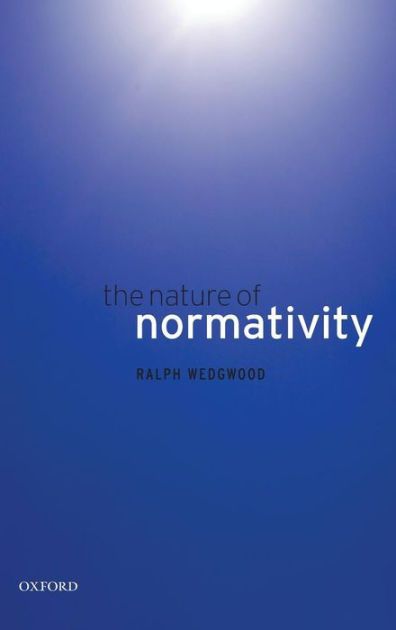
The Nature of Normativity presents a complete theory about the nature of normative thought –that is, the sort of thought that is concerned with what ought to be the case, or what we ought to do or think. Ralph Wedgwood defends a kind of realism about the normative, according to which normative truths or facts are genuinely part of reality. Anti-realists often complain that realism gives rise to demands for explanation that it cannot adequately meet. What is the nature of these normative facts? How could we ever know them or even refer to them in language or thought? Wedgwood accepts that any adequate version of realism must answer these explanatory demands. However, he seeks to show that these demands can be met — in large part by relying on a version of the idea, which has been much discussed in recent work in the philosophy of mind, that the intentional is normative — that is, that there is no way of explaining the nature of the various sorts of mental states that have intentional or representational content (such as beliefs, judgments, desires, decisions, and so on), without stating normative facts. On the basis of this idea, Wedgwood provides a detailed systematic theory that deals with the following three areas: the meaning of statements about what ought to be; the nature of the facts stated by these statements; and what justifies us in holding beliefs about what ought to be.
Using a linguistic point of view, The Language of Confession, Interrogation, and Deception is a practical explanation of how confessions work, written by the “father of forensic linguistics”, Roger W. Shuy. Using his 1993 benchmark work, Language Crimes as his model, Shuy examines criminal confessions, the interrogations that elicit them, and the deceptive language that plays a role in the confession event. He presents transcripts from numerous interrogations and analyzes how language is used, how constitutional rights are not protected, consistency and truthfulness, suggestibility, written confessions, as well as unvalidated confessions. He concludes the volume with explicit advice on how to conduct interrogations that will yield credible evidence. A landmark volume with cross-disciplinary applications, The Language of Confession, Interrogation, and Deception is useful for professionals and academics in linguistics, forensic linguistics, criminal justice, communication, and interpersonal violence.
A companion volume to Free Will: A Philosophical Study, this new anthology collects influential essays on free will, including both well-known contemporary classics and exciting recent work. Agency and Responsibility: Essays on the Metaphysics of Freedom is divided into three parts. The essays in the first section address metaphysical issues concerning free will and causal determinism. The second section groups papers presenting a positive account of the nature of free action, including competing compatibilist and incompatibilist analyses. The third section concerns free will and moral responsibility, including theories of moral responsibility and the challenge to an alternative possibilities condition posed by Frankurt-type scenarios. Distinguished by its balance and consistently high quality, the volume presents papers selected for their significance, innovation, and clarity of expression. Contributors include Harry Frankfurt, Peter van Inwagen, David Lewis, Elizabeth Anscombe, John Martin Fischer, Michael Bratman, Roderick Chisholm, Robert Kane, Peter Strawson, and Susan Wolf. The anthology serves as an up-to-date resource for scholars as well as a useful text for courses in ethics, philosophy of religion, or metaphysics. In addition, paired with Free Will: A Philosophical Study, it would form an excellent upper-level undergraduate or graduate-level course in free will, responsibility, motivation, or action theory.
ما از اخلاق چه انتظاری داریم؟ این سوال شاید تاحدودی برای عموم مردم و یا متخصصان این رشته قابل پاسخ باشد؛ اینکه خوب بودن را به ما بیاموزد و در تنظیم روابط فردی م...

جشن کتاب تهران به ایستگاه سی و یکم رسیده است. حال و احوال نشر کتاب خوب نیست و باید فرهنگدوستان را به خرید و هدیه دادن کتاب ترغیب نمود. خانه اخلاقپژوهان جوان ب...

بنیاد کتابهای اخلاق اسلامی عمدتا پالایش جان از آلودگیها و آراستن آن به زیباییها است. اندیشه محوری این قبیل کتابها آن است که انسان فعلی آنی نیست که باید باشد...

-
0 Comments