Notice: تابع WP_Block_Type_Registry::register به طورنادرست فراخوانی شد. نامهای نوع بلوک نباید حروف بزرگ داشته باشند. لطفاً برای اطلاعات بیشتر، اشکال زدایی در وردپرس را مشاهده کنید. (این پیام در نگارش 5.0.0 افزوده شده است.) in /home/ethicsho/public_html/wp-includes/functions.php on line 5313
Warning: Use of undefined constant TDC_PATH_LEGACY - assumed 'TDC_PATH_LEGACY' (this will throw an Error in a future version of PHP) in /home/ethicsho/public_html/wp-content/plugins/td-composer/td-composer.php on line 109
Warning: Use of undefined constant TDSP_THEME_PATH - assumed 'TDSP_THEME_PATH' (this will throw an Error in a future version of PHP) in /home/ethicsho/public_html/wp-content/plugins/td-composer/td-composer.php on line 113 بایگانیهای 2496 - خانه اخلاق پژوهان جوان Notice: Trying to access array offset on value of type bool in /home/ethicsho/public_html/wp-content/plugins/wp-ulike/inc/general-functions.php on line 807
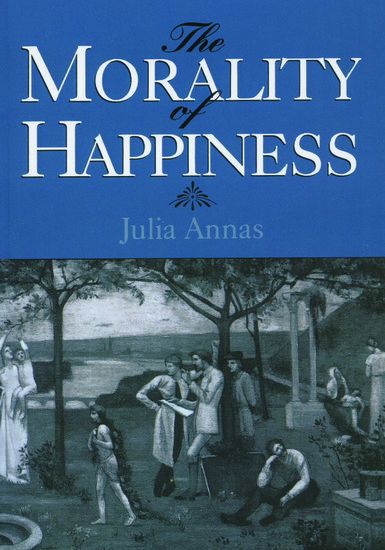
Ancient ethical theories, based on the notions of virtue and happiness, have struck many as an attractive alternative to modern theories. But we cannot find out whether this is true until we understand ancient ethics–and to do this we need to examine the basic structure of ancient ethical theory, not just the details of one or two theories. In this book, Annas brings together the results of a wide-ranging study of ancient ethical philosophy and presents it in a way that is easily accessible to anyone with an interest in ancient or modern ethics. She examines the fundamental notions of happiness and virtue, the role of nature in ethical justification and the relation between concern for self and concern for others. Her careful examination of the ancient debates and arguments shows that many widespread assumptions about ancient ethics are quite mistaken. Ancient ethical theories are not egoistic, and do not depend for their acceptance on metaphysical theories of a teleological kind. Most centrally, they are recognizably theories of morality, and the ancient disputes about the place of virtue in happiness can be seen as akin to modern disputes about the demands of morality.
Section I examines historical philosophical understandings of expertise in order to situate the current institution of bioethics. Section II focuses on philosophical analyses of the concept of expertise, asking, among other things, how it should be understood, how it can be acquired, and what such expertise warrants. Finally, section III addresses topics in bioethics and how ethics expertise should or should not be brought to bear in these areas, including expertise in the court room, in the hospital room, in the media, and in making policy. 2. A GUIDED HISTORICAL TOUR As Scott LaBarge points out, Plato’s dialogues can be viewed as an extended treatment of the concept of moral expertise, so it is fitting to begin the volume with an examination of “Socrates and Moral Expertise”. Given Socrates’ protestations (the Oracle at Delphi notwithstanding) that he knows nothing, LaBarge observes that it would be interesting to determine both what a Socratic theory of moral expertise might be and whether Socrates qualified as such an expert. Plato’s model of moral expertise is what LaBarge calls “demonstrable expertise”, which is concerned mainly with the ability to attain a goal and to explain how one did it. The problem with this account is that when one tries to solve the various problems in the model – for example, allowing that moral expertise is not an all-or-nothing skill – then one is immediately faced with the “credentials problem”. As LaBarge puts it, “. . .
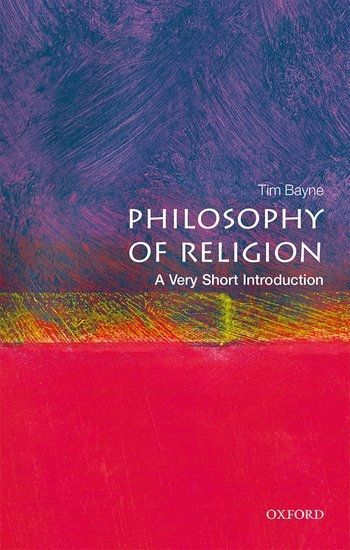
What is the philosophy of religion? How can we distinguish it from theology on the one hand and the psychology/sociology of religious belief on the other? What does it mean to describe God as ‘eternal’? And should religious people want there to be good arguments for the existence of God, or is religious belief only authentic in the absence of these good arguments?00In this ‘Very Short Introduction’ Tim Bayne introduces the field of philosophy of religion, and engages with some of the most burning questions that philosophers discuss. Considering how ‘religion’ should be defined, and whether we even need to be able to define it in order to engage in the philosophy of religion, he goes on to discuss whether the existence of God matters. Exploring the problem of evil, Bayne also debates the connection between faith and reason, and the related question of what role reason should play in religious contexts. Shedding light on the relationship between science and religion, Bayne finishes by considering the topics of reincarnation and the afterlife.
Can – and should – a work of art have a moral value? Must a work of art be morally admirable in order to be aesthetically satisfying? Aesthetics and Morality is a stimulating, lucid and insightful inquiry into exactly these questions. Philosopher Elisabeth Schellekens explains and explores the major ideas and debates in aesthetics and moral philosophy, inviting readers to reflect on their own thinking about art and morality, and provides the philosophical knowledge and understanding to disentangle such thinking. This original, inspiring and entertaining book sheds valuable new light on our understanding of aesthetic and moral value, and the relationship between the two.
ما از اخلاق چه انتظاری داریم؟ این سوال شاید تاحدودی برای عموم مردم و یا متخصصان این رشته قابل پاسخ باشد؛ اینکه خوب بودن را به ما بیاموزد و در تنظیم روابط فردی م...

جشن کتاب تهران به ایستگاه سی و یکم رسیده است. حال و احوال نشر کتاب خوب نیست و باید فرهنگدوستان را به خرید و هدیه دادن کتاب ترغیب نمود. خانه اخلاقپژوهان جوان ب...

بنیاد کتابهای اخلاق اسلامی عمدتا پالایش جان از آلودگیها و آراستن آن به زیباییها است. اندیشه محوری این قبیل کتابها آن است که انسان فعلی آنی نیست که باید باشد...

-
0 Comments