Notice: تابع WP_Block_Type_Registry::register به طورنادرست فراخوانی شد. نامهای نوع بلوک نباید حروف بزرگ داشته باشند. لطفاً برای اطلاعات بیشتر، اشکال زدایی در وردپرس را مشاهده کنید. (این پیام در نگارش 5.0.0 افزوده شده است.) in /home/ethicsho/public_html/wp-includes/functions.php on line 5313
Warning: Use of undefined constant TDC_PATH_LEGACY - assumed 'TDC_PATH_LEGACY' (this will throw an Error in a future version of PHP) in /home/ethicsho/public_html/wp-content/plugins/td-composer/td-composer.php on line 109
Warning: Use of undefined constant TDSP_THEME_PATH - assumed 'TDSP_THEME_PATH' (this will throw an Error in a future version of PHP) in /home/ethicsho/public_html/wp-content/plugins/td-composer/td-composer.php on line 113 بایگانیهای 2485 - خانه اخلاق پژوهان جوان Notice: Trying to access array offset on value of type bool in /home/ethicsho/public_html/wp-content/plugins/wp-ulike/inc/general-functions.php on line 807
The debate between impartialists and their critics has dominated both moral and political philosophy for over a decade. Characteristically, impartialists argue that any sensible form of impartialism can accommodate the partial concerns we have for others. By contrast, partialists deny that this is so. They see the division as one which runs exceedingly deep and argue that, at the limit, impartialist thinking requires that we marginalise those concerns and commitments that make our lives meaningful. This book attempts to show both that the dispute between impartialists and their critics runs very deep, and that it can nonetheless be resolved. The resolution begins by asking how impartialist political philosophy can defend the priority of justice when it conflicts with people’s commitments to their conceptions of the good. It is argued that priority can only defended if political impartialism has a moral foundation, and that moral foundation must not be a foundation in the ideal of equality (as is often thought), but a foundation in the partial concerns we have for others. In short, impartialist moral philosophy must take our partial concerns as central if it is to gain allegiance. However, if it does take our partial concerns as central, then it can generate a defence of political impartialism which shows why justice must take priority, but which also acknowledges that pluralism about the good is permanent.
Gives students philosophical tools to think clearly about divisive moral issues faced today. Early chapters introduce moral theory, ethical relativism and objectivism, and classical ethical theories to provide a framework for understanding moral issues. Later chapters explore specific moral issues, such as cloning, suicide, abortion, the death penalty, and animal rights. This second edition contains four new chapters. Can be used as a stand-alone text, or with an anthology by the author. The author teaches philosophy at the US Military Academy in West Point, NY.
“We all live our daily lives surrounded by the products of technology that make what we do simpler, faster, and more efficient. These are benefits we often just take for granted. But at the same time, as these products disburden us of unwanted tasks that consumed much time and effort in earlier eras, many of them also leave us more disengaged from our natural and even human surroundings. It is the task of what Gene Moriarty calls focal engineering to create products that will achieve a balance between disburdenment and engagement.” “One of Moriarty’s examples of a focally engineered structure is the Golden Gate Bridge, which “draws people to it, enlivens and elevates the human spirit, and resonates with the world of its congenial setting. Humans, bridge, and world are in tune.” These values of engagement, enlivenment, and resonance are key to the normative approach Moriarty brings to the profession of engineering, which traditionally has focused mainly on technical measures of evaluation such as efficiency, productivity, objectivity, and precision.”–BOOK JACKET.
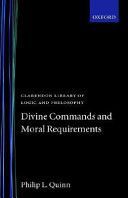
In this wide-ranging study, Quinn argues that human moral autonomy is compatible with unqualified obedience to divine commands. He formulates several versions of the crucial assumptions of divine command ethics, defending them against a battery of objections often expressed in the philosophical literature.
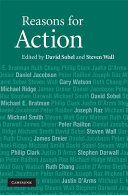
What are our reasons for acting? Morality purports to give us these reasons, and so do norms of prudence and the laws of society. The theory of practical reason assesses the authority of these potentially competing claims, and for this reason philosophers with a wide range of interests have converged on the topic of reasons for action. This volume contains eleven new essays on practical reason by leading and emerging philosophers. Topics include the differences between practical and theoretical rationality, practical conditionals and the wide-scope ought, the explanation of action, the sources of reasons, and the relationship between morality and reasons for action. The volume will be essential reading for all philosophers interested in ethics and practical reason.
ما از اخلاق چه انتظاری داریم؟ این سوال شاید تاحدودی برای عموم مردم و یا متخصصان این رشته قابل پاسخ باشد؛ اینکه خوب بودن را به ما بیاموزد و در تنظیم روابط فردی م...

جشن کتاب تهران به ایستگاه سی و یکم رسیده است. حال و احوال نشر کتاب خوب نیست و باید فرهنگدوستان را به خرید و هدیه دادن کتاب ترغیب نمود. خانه اخلاقپژوهان جوان ب...

بنیاد کتابهای اخلاق اسلامی عمدتا پالایش جان از آلودگیها و آراستن آن به زیباییها است. اندیشه محوری این قبیل کتابها آن است که انسان فعلی آنی نیست که باید باشد...

-
0 Comments