Notice: تابع WP_Block_Type_Registry::register به طورنادرست فراخوانی شد. نامهای نوع بلوک نباید حروف بزرگ داشته باشند. لطفاً برای اطلاعات بیشتر، اشکال زدایی در وردپرس را مشاهده کنید. (این پیام در نگارش 5.0.0 افزوده شده است.) in /home/ethicsho/public_html/wp-includes/functions.php on line 5313
Warning: Use of undefined constant TDC_PATH_LEGACY - assumed 'TDC_PATH_LEGACY' (this will throw an Error in a future version of PHP) in /home/ethicsho/public_html/wp-content/plugins/td-composer/td-composer.php on line 109
Warning: Use of undefined constant TDSP_THEME_PATH - assumed 'TDSP_THEME_PATH' (this will throw an Error in a future version of PHP) in /home/ethicsho/public_html/wp-content/plugins/td-composer/td-composer.php on line 113 بایگانیهای 2383 - خانه اخلاق پژوهان جوان Notice: Trying to access array offset on value of type bool in /home/ethicsho/public_html/wp-content/plugins/wp-ulike/inc/general-functions.php on line 807
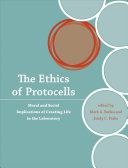
Teams of scientists around the world are racing to create protocells—microscopic, self-organizing entities that spontaneously assemble from simple organic and inorganic materials. The creation of fully autonomous protocells—a technology that can, for all intents and purposes, be considered literally alive—is only a matter of time. This book examines the pressing social and ethical issues raised by the creation of life in the laboratory. Protocells might offer great medical and social benefits and vast new economic opportunities, but they also pose potential risks and threaten cultural and moral norms against tampering with nature and “playing God.” The Ethics of Protocells offers a variety of perspectives on these concerns.After a brief survey of current protocell research (including the much-publicized “top-down” strategy of J. Craig Venter and Hamilton Smith, for which they have received multimillion dollar financing from the U.S. Department of Energy), the chapters treat risk, uncertainty, and precaution; lessons from recent history and related technologies; and ethics in a future society with protocells. The discussions range from new considerations of the precautionary principle and the role of professional ethicists to explorations of what can be learned from society’s experience with other biotechnologies and the open-source software movement.Contributors: Mark A. Bedau, Gaymon Bennett, Giovanni Boniolo, Carl Cranor, Bill Durodie, Mickey Gjerris, Brigitte Hantsche-Tangen, Christine Hauskeller, Andrew Hessel, Brian Johnson, George Khushf, Emily C. Parke, Alain Pottage, Paul Rabinow, Per Sandin, Joachim Schummer, Mark Triant, Laurie ZolothBasic Bioethics series
Conservative columnist David Brooks explores the four commitments that define a life of meaning and purpose: to a spouse and family, to a vocation, to a philosophy or faith, and to a community. Our personal fulfillment depends on how well we choose and execute these commitments. Brooks looks at a range of people who have lived joyous, committed lives, and who have embraced the necessity and beauty of dependence. He gathers their wisdom on how to choose a partner, how to pick a vocation, how to live out a philosophy, and how we can begin to integrate our commitments into one overriding purpose.
For decades, Engelhardt has alluded to the ethics that binds moral friends. While his ‘Foundations of Bioethics’ explored the sparse ethics binding moral strangers, this long-awaited volume addresses the morality at the foundations of Christian bioethics. The volume opens with an analysis of the marginalization of Christian bioethics in the 1970s and the irremedial shortcomings of secular ethics in general. Drawing on the Christianity of the first millennium, Engelhardt provides the ontological and epistemological foundations for a Christian bioethics that can remedy the onesidedness of a secular bioethics and supply the bases for a Christian bioethics. The volume then addresses issues from abortion, third-party-assisted reproduction, and cloning, to withholding and withdrawing treatment, physician-assisted suicide, and euthanasia. Practices such as free and informed consent are relocated within a traditional Christian morality. Attention is also given to the allocation of scarce resources in health care, and to the challenge of maintaining the Christian identity of physicians, nurses, patients, and health care institutions in a culture that is now post-Christian.
ما از اخلاق چه انتظاری داریم؟ این سوال شاید تاحدودی برای عموم مردم و یا متخصصان این رشته قابل پاسخ باشد؛ اینکه خوب بودن را به ما بیاموزد و در تنظیم روابط فردی م...

جشن کتاب تهران به ایستگاه سی و یکم رسیده است. حال و احوال نشر کتاب خوب نیست و باید فرهنگدوستان را به خرید و هدیه دادن کتاب ترغیب نمود. خانه اخلاقپژوهان جوان ب...

بنیاد کتابهای اخلاق اسلامی عمدتا پالایش جان از آلودگیها و آراستن آن به زیباییها است. اندیشه محوری این قبیل کتابها آن است که انسان فعلی آنی نیست که باید باشد...

-
0 Comments