Notice: تابع WP_Block_Type_Registry::register به طورنادرست فراخوانی شد. نامهای نوع بلوک نباید حروف بزرگ داشته باشند. لطفاً برای اطلاعات بیشتر، اشکال زدایی در وردپرس را مشاهده کنید. (این پیام در نگارش 5.0.0 افزوده شده است.) in /home/ethicsho/public_html/wp-includes/functions.php on line 5313
Warning: Use of undefined constant TDC_PATH_LEGACY - assumed 'TDC_PATH_LEGACY' (this will throw an Error in a future version of PHP) in /home/ethicsho/public_html/wp-content/plugins/td-composer/td-composer.php on line 109
Warning: Use of undefined constant TDSP_THEME_PATH - assumed 'TDSP_THEME_PATH' (this will throw an Error in a future version of PHP) in /home/ethicsho/public_html/wp-content/plugins/td-composer/td-composer.php on line 113 بایگانیهای 2243 - خانه اخلاق پژوهان جوان Notice: Trying to access array offset on value of type bool in /home/ethicsho/public_html/wp-content/plugins/wp-ulike/inc/general-functions.php on line 807
Although much human action serves as proof that irrational behavior is remarkably common, certain forms of irrationality–most notably, incontinent action and self-deception–pose such difficult theoretical problems that philosophers have rejected them as logically or psychologically impossible. Here, Mele shows that, and how, incontinent action and self-deception are indeed possible. Drawing upon recent experimental work in the psychology of action and inference, he advances naturalized explanations of akratic action and self-deception while resolving the paradoxes around which the philosophical literature revolves. In addition, he defends an account of self-control, argues that “strict” akratic action is an insurmountable obstacle for traditional belief-desire models of action-explanation, and explains how a considerably modified model accommodates action of this sort.
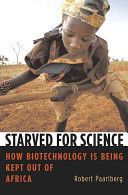
Producer: Heron & CraneHeading upcountry in Africa to visit small farms is absolutely exhilarating given the dramatic beauty of big skies, red soil, and arid vistas, but eventually the two-lane tarmac narrows to rutted dirt, and the journey must continue on foot. The farmers you eventually meet are mostly women, hardworking but visibly poor. They have no improved seeds, no chemical fertilizers, no irrigation, and with their meager crops they earn less than a dollar a day. Many are malnourished. Nearly two-thirds of Africans are employed in agriculture, yet on a per-capita basis they produce roughly 20 percent less than they did in 1970. Although modern agricultural science was the key to reducing rural poverty in Asia, modern farm science—including biotechnology—has recently been kept out of Africa. In Starved for Science Robert Paarlberg explains why poor African farmers are denied access to productive technologies, particularly genetically engineered seeds with improved resistance to insects and drought. He traces this obstacle to the current opposition to farm science in prosperous countries. Having embraced agricultural science to become well-fed themselves, those in wealthy countries are now instructing Africans—on the most dubious grounds—not to do the same. In a book sure to generate intense debate, Paarlberg details how this cultural turn against agricultural science among affluent societies is now being exported, inappropriately, to Africa. Those who are opposed to the use of agricultural technologies are telling African farmers that, in effect, it would be just as well for them to remain poor.
What basis do we have for condemning the Aztec custom of human sacrifice, the Chinese tradition of foot-binding, or the African practice of female genital mutilation? What can we learn from the moral traditions of other cultures? Addressing such questions,MoralMeasuresis a clear, fresh and accessible introduction to ethics which carefully illuminates the difficult issues surrounding cross-cultural ethics and moral thought. By examining Eastern and Western moral traditions, J. E. Tiles explores the basis for determining ethical measures of conduct across different cultures. Drawing on a rich array of ethical thinkers, including Aristotle, Kant and Confucius, Tiles argues that ethical problems are shared by apparently opposed moral traditions and that there is much to be learned by comparing them.
ما از اخلاق چه انتظاری داریم؟ این سوال شاید تاحدودی برای عموم مردم و یا متخصصان این رشته قابل پاسخ باشد؛ اینکه خوب بودن را به ما بیاموزد و در تنظیم روابط فردی م...

جشن کتاب تهران به ایستگاه سی و یکم رسیده است. حال و احوال نشر کتاب خوب نیست و باید فرهنگدوستان را به خرید و هدیه دادن کتاب ترغیب نمود. خانه اخلاقپژوهان جوان ب...

بنیاد کتابهای اخلاق اسلامی عمدتا پالایش جان از آلودگیها و آراستن آن به زیباییها است. اندیشه محوری این قبیل کتابها آن است که انسان فعلی آنی نیست که باید باشد...

-
0 Comments