Notice: تابع WP_Block_Type_Registry::register به طورنادرست فراخوانی شد. نامهای نوع بلوک نباید حروف بزرگ داشته باشند. لطفاً برای اطلاعات بیشتر، اشکال زدایی در وردپرس را مشاهده کنید. (این پیام در نگارش 5.0.0 افزوده شده است.) in /home/ethicsho/public_html/wp-includes/functions.php on line 5313
Warning: Use of undefined constant TDC_PATH_LEGACY - assumed 'TDC_PATH_LEGACY' (this will throw an Error in a future version of PHP) in /home/ethicsho/public_html/wp-content/plugins/td-composer/td-composer.php on line 109
Warning: Use of undefined constant TDSP_THEME_PATH - assumed 'TDSP_THEME_PATH' (this will throw an Error in a future version of PHP) in /home/ethicsho/public_html/wp-content/plugins/td-composer/td-composer.php on line 113 بایگانیهای 2229 - خانه اخلاق پژوهان جوان Notice: Trying to access array offset on value of type bool in /home/ethicsho/public_html/wp-content/plugins/wp-ulike/inc/general-functions.php on line 807
Psychology and ‘Human Nature’ problematizes what psychology usually takes for granted – the meaning of the psyche or ‘human nature’. Peter Ashworth provides a coherent account of many of the major schools of thought in psychology and its related disciplines, including: sociobiology and evolutionary psychology, psychoanalysis, cognitive psychology, radical behaviourism, existentialism, discursive psychology and postmodernism. For each approach he considers the claims or assumptions being made about ‘human nature’, especially regarding issues of consciousness, the self, the body, other people and the physical world.Psychology and ‘Human Nature’ will be essential reading for all students of psychology.Series Details; The Psychology Focus Series provides students with a new focus on key topic areas in psychology.Each short book: * presents clear, in-depth coverage of a discrete area with many applied examples* assumes no prior knowlede of psychology* has been written by an experienced teacher* has chapter summaries, annotated further reading and a glossary of key terms
The provocative contention of the postmodernist and feminist essays in Ethics of the Body is that conventional bioethics is out of touch, despite its growing profile. It is out of touch with an ongoing phenomenological sense of bodies themselves; with the impact of postmodernist theory as it problematizes the certainties of binary thinking; and with a postmodern culture in which bioscientific developments force us to question what is meant by the notion of the human self. The authors demonstrate that the conventional normative framework of bioethics is called into question by issues as wide ranging as genetic manipulation, disability, high-tech prosthetics, and intersexuality. The essays show how both the theory and practice of bioethics can benefit from postmodernism’s characteristic fluidity and multiplicity, as well as from the insights of a reconceived feminist bioethics. They address issues in philosophy, law, bioscientific research, psychiatry, cultural studies, and feminism from a “postconventional” perspective that looks beyond the familiar ideas of the body, proposing not a bioethics about the body but a radical ethics of the body.After exploring notions of difference in both feminist and postmodernist terms, the book considers specific issues—including HIV, addiction, borderline personality disorder, and cancer—that challenge the principles of conventional bioethics. The focus then turns to questions raised by biotechnology: one essay rethinks the traditional feminist ethics of care in the context of new reproductive technology, while others tackle genetic and genomic issues. Finally, the book looks at embodiment and some specifically anomalous forms of being-in-the-body, including a consideration of intersex infants and children that draws on feminist, postructuralist, and queer theory.
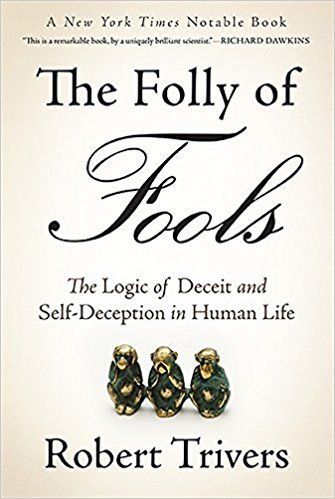
Whether it’s in a cockpit at takeoff or the planning of an offensive war, a romantic relationship or a dispute at the office, there are many opportunities to lie and self-deceive?but deceit and self-deception carry the costs of being alienated from reality and can lead to disaster. So why does deception play such a prominent role in our everyday lives? In short, why do we deceive? In his bold new work, prominent biological theorist Robert Trivers unflinchingly argues that self-deception evolved in the service of deceit?the better to fool others. We do it for biological reasons?in order to help us survive and procreate. From viruses mimicking host behavior to humans misremembering (sometimes intentionally) the details of a quarrel, science has proven that the deceptive one can always outwit the masses. But we undertake this deception at our own peril. Trivers has written an ambitious investigation into the evolutionary logic of lying and the costs of leaving it unchecked.
Why do people behave in moral ways in some circumstances, but not in others? In order to account fully for morality, Dennis Krebs departs from traditional approaches to morality that suggest that children acquire morals through socialization, cultural indoctrination, and moral reasoning. He suggests that such approaches can be subsumed, refined, and revised gainfully within an evolutionary framework.
ما از اخلاق چه انتظاری داریم؟ این سوال شاید تاحدودی برای عموم مردم و یا متخصصان این رشته قابل پاسخ باشد؛ اینکه خوب بودن را به ما بیاموزد و در تنظیم روابط فردی م...

جشن کتاب تهران به ایستگاه سی و یکم رسیده است. حال و احوال نشر کتاب خوب نیست و باید فرهنگدوستان را به خرید و هدیه دادن کتاب ترغیب نمود. خانه اخلاقپژوهان جوان ب...

بنیاد کتابهای اخلاق اسلامی عمدتا پالایش جان از آلودگیها و آراستن آن به زیباییها است. اندیشه محوری این قبیل کتابها آن است که انسان فعلی آنی نیست که باید باشد...

-
0 Comments