Notice: تابع WP_Block_Type_Registry::register به طورنادرست فراخوانی شد. نامهای نوع بلوک نباید حروف بزرگ داشته باشند. لطفاً برای اطلاعات بیشتر، اشکال زدایی در وردپرس را مشاهده کنید. (این پیام در نگارش 5.0.0 افزوده شده است.) in /home/ethicsho/public_html/wp-includes/functions.php on line 5313
Warning: Use of undefined constant TDC_PATH_LEGACY - assumed 'TDC_PATH_LEGACY' (this will throw an Error in a future version of PHP) in /home/ethicsho/public_html/wp-content/plugins/td-composer/td-composer.php on line 109
Warning: Use of undefined constant TDSP_THEME_PATH - assumed 'TDSP_THEME_PATH' (this will throw an Error in a future version of PHP) in /home/ethicsho/public_html/wp-content/plugins/td-composer/td-composer.php on line 113 بایگانیهای 2171 - خانه اخلاق پژوهان جوان Notice: Trying to access array offset on value of type bool in /home/ethicsho/public_html/wp-content/plugins/wp-ulike/inc/general-functions.php on line 807
Paternalistic intervention, especially in the context of modern medicine and health care, is the topical issue of The Limits of Medical Paternalism. Dr Hayry aims to define and morally assess paternalistic interventions through a defined conceptual background. The method employed for this purpose is that of applied philosophical ethics in the analytic tradition. It is argued that there is a marked distinction between strong and weak paternalism. Strong paternalism is defined as the violation of autonomy of a patient ‘in her own best interest’ when the person is capable of autonomous decision-making in matters that concern primarily only herself. Weak paternalism is the violation of autonomy when a person is temporarily incapable of self-determined decision-making; it is therefore sometimes justifiable. The application of these views is that no overall a priori judgement concerning the rights and wrongs of such medical intervention is possible.
Bernard Williams is remembered as one of the most brilliant and original philosophers of the past fifty years. Widely respected as a moral philosopher, Williams began to write about politics in a sustained way in the early 1980s. There followed a stream of articles, lectures, and other major contributions to issues of public concern–all complemented by his many works on ethics, which have important implications for political theory.This new collection of essays, most of them previously unpublished, addresses many of the core subjects of political philosophy: justice, liberty, and equality; the nature and meaning of liberalism; toleration; power and the fear of power; democracy; and the nature of political philosophy itself. A central theme throughout is that political philosophers need to engage more directly with the realities of political life, not simply with the theories of other philosophers. Williams makes this argument in part through a searching examination of where political thinking should originate, to whom it might be addressed, and what it should deliver.Williams had intended to weave these essays into a connected narrative on political philosophy with reflections on his own experience of postwar politics. Sadly he did not live to complete it, but this book brings together many of its components. Geoffrey Hawthorn has arranged the material to resemble as closely as possible Williams’s original design and vision. He has provided both an introduction to Williams’s political philosophy and a bibliography of his formal and informal writings on politics.Those who know the work of Bernard Williams will find here the familiar hallmarks of his writing–originality, clarity, erudition, and wit. Those who are unfamiliar with, or unconvinced by, a philosophical approach to politics, will find this an engaging introduction. Both will encounter a thoroughly original voice in modern political theory and a searching approach to the shape and direction of liberal political thought in the past thirty-five years.
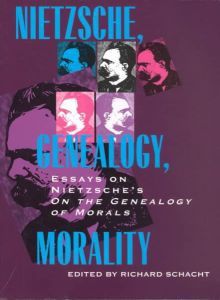
Written at the height of the philosopher’s intellectual powers, Friedrich Nietzsche’s On the Genealogy of Morals has become one of the key texts of recent Western philosophy. Its essayistic style affords a unique opportunity to observe many of Nietzsche’s persisting concerns coming together in an illuminating constellation. A profound influence on psychoanalysis, antihistoricism, and poststructuralism and an abiding challenge to ethical theory, Nietzsche’s book addresses many of the major philosophical problems and possibilities of modernity.In this unique collection focusing on the Genealogy, twenty-five notable philosophers offer diverse discussions of the book’s central themes and concepts. They explore such notions as ressentiment, asceticism, “slave” and “master” moralities, and what Nietzsche calls “genealogy” and its relation to other forms of inquiry in his work. The book presents a cross section of contemporary Nietzsche scholarship and philosophical investigation that is certain to interest philosophers, intellectual and cultural historians, and anyone concerned with one of the master thinkers of the modern age. Written at the height of the philosopher’s intellectual powers, Friedrich Nietzsche’s On the Genealogy of Morals has become one of the key texts of recent Western philosophy. Its essayistic style affords a unique opportunity to observe many of Nietzsche’s persisting concerns coming together in an illuminating constellation. A profound influence on psychoanalysis, antihistoricism, and poststructuralism and an abiding challenge to ethical theory, Nietzsche’s book addresses many of the major philosophical problems and possibilities of modernity.In this unique collection focusing on the Genealogy, twenty-five notable philosophers offer diverse discussions of the book’s central themes and concepts. They explore such notions as ressentiment, asceticism, “slave” and “master” moralities, and what Nietzsche calls “genealogy” and its relation to other forms of inquiry in his work. The book presents a cross section of contemporary Nietzsche scholarship and philosophical investigation that is certain to interest philosophers, intellectual and cultural historians, and anyone concerned with one of the master thinkers of the modern age.
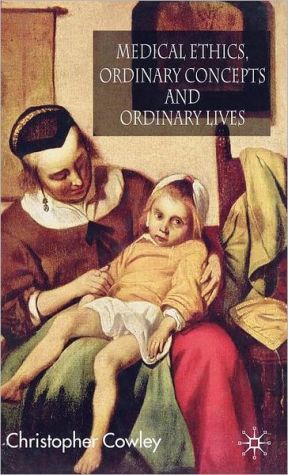
“The big issues of medical ethics are more in the news than ever before. And yet they remain as stubborn and often as incendiary as ever. This book claims that in an effort to deal with the issues, mainstream philosophers have arbitrarily omitted many ethically relevant features in order to reduce the central problems to more tractable technical puzzles. The most gratuitous omissions have been the patient’s point of view on the problem; the patient’s ordinary life, which provides the wider context for his point of view; and the ordinary language and concepts by which the patient tries to make sense of the problem.
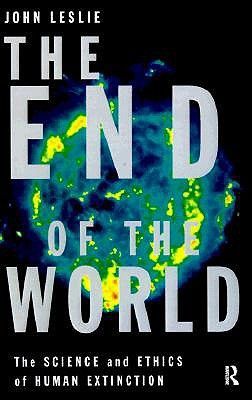
Are we in imminent danger of extinction? Yes, we probably are, argues John Leslie in his chilling account of the dangers facing the human race as we approach the second millenium.The End of the World is a sobering assessment of the many disasters that scientists have predicted and speculated on as leading to apocalypse. In the first comprehensive survey, potential catastrophes – ranging from deadly diseases to high-energy physics experiments – are explored to help us understand the risks.One of the greatest threats facing humankind, however, is the insurmountable fact that we are a relatively young species, a risk which is at the heart of the ‘Doomsday Argument’. This argument, if correct, makes the dangers we face more serious than we could have ever imagined. This more than anything makes the arrogance and ignorance of politicians, and indeed philosophers, so disturbing as they continue to ignore the manifest dangers facing future generations.
ما از اخلاق چه انتظاری داریم؟ این سوال شاید تاحدودی برای عموم مردم و یا متخصصان این رشته قابل پاسخ باشد؛ اینکه خوب بودن را به ما بیاموزد و در تنظیم روابط فردی م...

جشن کتاب تهران به ایستگاه سی و یکم رسیده است. حال و احوال نشر کتاب خوب نیست و باید فرهنگدوستان را به خرید و هدیه دادن کتاب ترغیب نمود. خانه اخلاقپژوهان جوان ب...

بنیاد کتابهای اخلاق اسلامی عمدتا پالایش جان از آلودگیها و آراستن آن به زیباییها است. اندیشه محوری این قبیل کتابها آن است که انسان فعلی آنی نیست که باید باشد...

-
0 Comments