Notice: تابع WP_Block_Type_Registry::register به طورنادرست فراخوانی شد. نامهای نوع بلوک نباید حروف بزرگ داشته باشند. لطفاً برای اطلاعات بیشتر، اشکال زدایی در وردپرس را مشاهده کنید. (این پیام در نگارش 5.0.0 افزوده شده است.) in /home/ethicsho/public_html/wp-includes/functions.php on line 5313
Warning: Use of undefined constant TDC_PATH_LEGACY - assumed 'TDC_PATH_LEGACY' (this will throw an Error in a future version of PHP) in /home/ethicsho/public_html/wp-content/plugins/td-composer/td-composer.php on line 109
Warning: Use of undefined constant TDSP_THEME_PATH - assumed 'TDSP_THEME_PATH' (this will throw an Error in a future version of PHP) in /home/ethicsho/public_html/wp-content/plugins/td-composer/td-composer.php on line 113 بایگانیهای 2156 - خانه اخلاق پژوهان جوان Notice: Trying to access array offset on value of type bool in /home/ethicsho/public_html/wp-content/plugins/wp-ulike/inc/general-functions.php on line 807
This book discusses Alasdair MacIntyre’s engagement with Marxism from the early 1950s to the present. It begins with his early writings on Marxism and Christianity, moving through his period in the New Left and the Socialist Labour League and International Socialism in the late 1950s and 1960s. It then discusses MacIntyre’s break with Marxism by developing the brief but telling five-point critique he gives of Marxism in his 1981 volume After Virtue. Marxism, Ethics and Politics highlights MacIntyre’s continuing admiration for much in Marx’s thought, noting that his contemporary project is developed in response to what he now sees as the inadequacies of Marxism, particularly Marxist politics. It concludes by examining the place of Marxism in the contemporary MacIntyrean debate and by pointing out the contested nature of the claims about Marxism that MacIntyre makes.
Neuroscience has dramatically increased understanding of how mental states and processes are realized by the brain, thus opening doors for treating the multitude of ways in which minds become dysfunctional. This book explores questions such as when is it permissible to alter a person’s memories, influence personality traits or read minds? What can neuroscience tell us about free will, self-control, self-deception and the foundations of morality? The view of neuroethics offered here argues that many of our new powers to read ,alter and control minds are not entirely unparalleled with older ones. They have, however, expanded to include almost all our social, political and ethical decisions. Written primarily for graduate students, this book will appeal to anyone with an interest in the more philosophical and ethical aspects of the neurosciences.
Most contemporary scholarly visions of moral identity in higher education suggest moral education in the university should deal primarily with a person’s professional or political identity instead of the overall ordering and enriching of a person’s various identities and the moral commitments that stem from them. In contrast, Glanzer and Ream argue that a more human moral education takes place within a university committed to a moral tradition that can set forth a comprehensive moral ideal for the university and its students about human well-being.
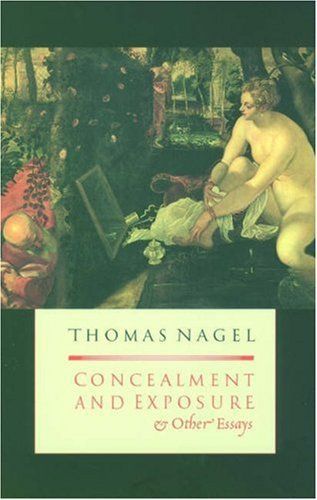
Thomas Nagel is widely recognized as one of the top American philosophers working today. Reflecting the diversity of his many philosophical preoccupations, this volume is a collection of his most recent critical essays and reviews. The first section, Public and Private, focuses on the notion of privacy in the context of social and political issues, such as the impeachment of President Clinton. The second section, Right and Wrong, discusses moral, political and legal theory, and includes pieces on John Rawls, G.A. Cohen, and T.M. Scanlon, among others. The final section, Mind and Reality, features discussions of Richard Rorty, Donald Davidson, and the Sokal hoax, and closes with a substantial new essay on the mind-body problem. Written with characteristic rigor, these pieces reveal the intellectual passion underlying the incisive analysis for which Nagel is known.
ما از اخلاق چه انتظاری داریم؟ این سوال شاید تاحدودی برای عموم مردم و یا متخصصان این رشته قابل پاسخ باشد؛ اینکه خوب بودن را به ما بیاموزد و در تنظیم روابط فردی م...

جشن کتاب تهران به ایستگاه سی و یکم رسیده است. حال و احوال نشر کتاب خوب نیست و باید فرهنگدوستان را به خرید و هدیه دادن کتاب ترغیب نمود. خانه اخلاقپژوهان جوان ب...

بنیاد کتابهای اخلاق اسلامی عمدتا پالایش جان از آلودگیها و آراستن آن به زیباییها است. اندیشه محوری این قبیل کتابها آن است که انسان فعلی آنی نیست که باید باشد...

-
0 Comments