Notice: تابع WP_Block_Type_Registry::register به طورنادرست فراخوانی شد. نامهای نوع بلوک نباید حروف بزرگ داشته باشند. لطفاً برای اطلاعات بیشتر، اشکال زدایی در وردپرس را مشاهده کنید. (این پیام در نگارش 5.0.0 افزوده شده است.) in /home/ethicsho/public_html/wp-includes/functions.php on line 5313
Warning: Use of undefined constant TDC_PATH_LEGACY - assumed 'TDC_PATH_LEGACY' (this will throw an Error in a future version of PHP) in /home/ethicsho/public_html/wp-content/plugins/td-composer/td-composer.php on line 109
Warning: Use of undefined constant TDSP_THEME_PATH - assumed 'TDSP_THEME_PATH' (this will throw an Error in a future version of PHP) in /home/ethicsho/public_html/wp-content/plugins/td-composer/td-composer.php on line 113 بایگانیهای 2094 - خانه اخلاق پژوهان جوان Notice: Trying to access array offset on value of type bool in /home/ethicsho/public_html/wp-content/plugins/wp-ulike/inc/general-functions.php on line 807
Informal Logic is an introductory guidebook to the basic principles of constructing sound arguments and criticizing bad ones. Non-technical in approach, it is based on 186 examples, which Douglas Walton, a leading authority in the field of informal logic, discusses and evaluates in clear, illustrative detail. Walton explains how errors, fallacies, and other key failures of argument occur. He shows how correct uses of argument are based on sound strategies for reasoned persuasion and critical responses. Among the many subjects covered are: forms of valid argument, defeasible arguments, relevance, appeals to emotion, personal attack, straw man argument, jumping to a conclusion, uses and abuses of expert opinion, problems in drawing conclusions from polls and statistics, loaded terms, equivocation, arguments from analogy, and techniques of posing, replying to, and criticizing questions. This new edition takes into account many new developments in the field of argumentation study that have occurred since 1989, many created by the author. Drawing on these developments, Walton includes and analyzes 36 new topical examples and also brings in recent work on argumentation schemes. Ideally suited for use in courses in informal logic and introduction to philosophy, this book will also be valuable to students of pragmatics, rhetoric, and speech communication.
Business takes place in an increasingly global environment, crossing political and cultural boundaries, and consequently ethical dilemmas arise. The central focus of this successful and innovative text lies in how to make and explain ‘best choice’ judgments in international business situations. The newly-updated version of this groundbreaking textbook continues to provide a topical and relevant analysis of the ethical dimensions of conducting business in a global political economy. From a starting point of applied ethics, the book introduces a common set of normative terms and analytical tools for examining and discussing real case scenarios. Extensive real-world examples, presented in the form of exhibits, cover issues including:foreign production, including sweatshopsexport of hazardous productstesting and pricing of HIV-AIDS drugsadvertising tobacco, alcoholic beverages and infant formuladeceptive marketing techniques and briberyreligious and social discriminationcultural impacts from ‘music, movies and malls’environmental issues, including oil spills, rain forest preservation, global warming and genetically modified foods.To keep pace with the changing landscape of global business, this new edition features:Updated exhibits that introduce new issues and are sourced from more international publicationsIncreased coverage of issues arising in emerging marketsUpdated descriptions and assessments of relevant international agreementsNew glossary of terms and abbreviationsCompanion website featuring links to relevant global policy documents from the UN, WHO, and UNCTAD, as well as updated discussion-oriented information on issues and cases.The continued globalization of business increases the relevance of this textbook and its unique focus on specifically international ethical challenges faced by business, where governments and civil society groups play an active role. While most business ethics texts continue to focus heavily on ethical theory, this textbook condenses ethical theory into applied decision-making concepts, emphasizing practical applications to real world dilemmas.Anyone with an interest in the ethical implications of international business, or the business implications of corporate responsibility in the global market, will find this book a thought-provoking yet balanced analysis. Clearly written, this has become the textbook of choice in this increasingly important field.
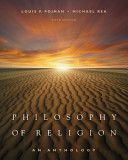
The most comprehensive text in its field, this anthology includes 70 articles in 10 areas of philosophy of religion: Traditional Arguments for the Existence of God; The Argument from Religious Experience; The Problem of Evil; The Attributes of God; Miracles, Death and Immortality; Faith and Reason; Science, Religion, and Evolution; Religious Pluralism; and Religion and Ethics. The articles are arranged in a coherent framework, with the presentation of each area progressing from the classical to the contemporary and treated in a dialectic (pro and con) fashion that exposes students to both sides of each issue.
Malice that cannot speak its name, cold-blooded but secret hostility, impotent desire, hidden rancor and spite–all cluster at the center of envy. Envy clouds thought, writes Joseph Epstein, clobbers generosity, precludes any hope of serenity, and ends in shriveling the heart. Of the seven deadly sins, he concludes, only envy is no fun at all. Writing in a conversational, erudite, self-deprecating style that wears its learning lightly, Epstein takes us on a stimulating tour of the many faces of envy. He considers what great thinkers–such as John Rawls, Schopenhauer, and Nietzsche–have written about envy; distinguishes between envy, yearning, jealousy, resentment, and schadenfreude (“a hardy perennial in the weedy garden of sour emotions”); and catalogs the many things that are enviable, including wealth, beauty, power, talent, knowledge and wisdom, extraordinary good luck, and youth (or as the title of Epstein’s chapter on youth has it, “The Young, God Damn Them”). He looks at resentment in academia, where envy is mixed with snobbery, stirred by impotence, and played out against a background of cosmic injustice; and he offers a brilliant reading of Othello as a play more driven by Iago’s envy than Othello’s jealousy. He reveals that envy has a strong touch of malice behind it–the envious want to destroy the happiness of others. He suggests that envy of the astonishing success of Jews in Germany and Austria may have lurked behind the virulent anti-Semitism of the Nazis. As he proved in his best-selling Snobbery, Joseph Epstein has an unmatched ability to highlight our failings in a way that is thoughtful, provocative, and entertaining. If envy is no fun, Epstein’s Envy is truly a joy to read.
ما از اخلاق چه انتظاری داریم؟ این سوال شاید تاحدودی برای عموم مردم و یا متخصصان این رشته قابل پاسخ باشد؛ اینکه خوب بودن را به ما بیاموزد و در تنظیم روابط فردی م...

جشن کتاب تهران به ایستگاه سی و یکم رسیده است. حال و احوال نشر کتاب خوب نیست و باید فرهنگدوستان را به خرید و هدیه دادن کتاب ترغیب نمود. خانه اخلاقپژوهان جوان ب...

بنیاد کتابهای اخلاق اسلامی عمدتا پالایش جان از آلودگیها و آراستن آن به زیباییها است. اندیشه محوری این قبیل کتابها آن است که انسان فعلی آنی نیست که باید باشد...

-
0 Comments