Notice: تابع WP_Block_Type_Registry::register به طورنادرست فراخوانی شد. نامهای نوع بلوک نباید حروف بزرگ داشته باشند. لطفاً برای اطلاعات بیشتر، اشکال زدایی در وردپرس را مشاهده کنید. (این پیام در نگارش 5.0.0 افزوده شده است.) in /home/ethicsho/public_html/wp-includes/functions.php on line 5313
Warning: Use of undefined constant TDC_PATH_LEGACY - assumed 'TDC_PATH_LEGACY' (this will throw an Error in a future version of PHP) in /home/ethicsho/public_html/wp-content/plugins/td-composer/td-composer.php on line 109
Warning: Use of undefined constant TDSP_THEME_PATH - assumed 'TDSP_THEME_PATH' (this will throw an Error in a future version of PHP) in /home/ethicsho/public_html/wp-content/plugins/td-composer/td-composer.php on line 113 بایگانیهای 2057 - خانه اخلاق پژوهان جوان Notice: Trying to access array offset on value of type bool in /home/ethicsho/public_html/wp-content/plugins/wp-ulike/inc/general-functions.php on line 807
How do we know what is morally right or wrong, good or bad? There have been innumerable answers to this question in the history of philosophy. Most of these answers can be grouped under two major positions. Either moral experience is emotional, but then it must be subjective (sentimentalism); or it is objective, but then it must be rational (rationalism). This division is based on a dichotomy between reason and emotion. However, this dichotomy has long been rejected by many emotion-scholars. This book presents a new philosophical theory according to which we need intuitions and emotions in order to have objective moral knowledge, which is called affectual intuitionism. Affectual Intuitionism combines ethical intuitionism with a cognitive theory of emotions. This approach avoids a phenomenologically implausible rationalism as much as a morally problematic relativism, and it connects well with recent developments in moral psychology.
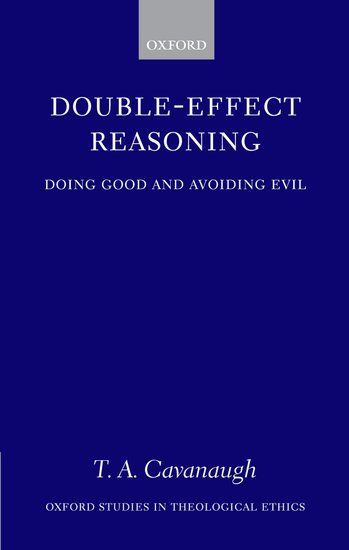
T. A. Cavanaugh defends double-effect reasoning (DER), also known as the principle of double effect. DER plays a role in anti-consequentialist ethics (such as deontology), in hard cases in which one cannot realize a good without also causing a foreseen, but not intended, bad effect (for example, killing non-combatants when bombing a military target). This study is the first book-length account of the history and issues surrounding this controversial approach to hard cases. It will be indispensable in theoretical ethics, applied ethics (especially medical and military), and moral theology. It will also interest legal and public policy scholars.
The premier political philosopher of his day, John Rawls, in three decades of teaching at Harvard, has had a profound influence on the way philosophical ethics is approached and understood today. This book brings together the lectures that inspired a generation of students–and a regeneration of moral philosophy. It invites readers to learn from the most noted exemplars of modern moral philosophy with the inspired guidance of one of contemporary philosophy’s most noteworthy practitioners and teachers.Central to Rawls’s approach is the idea that respectful attention to the great texts of our tradition can lead to a fruitful exchange of ideas across the centuries. In this spirit, his book engages thinkers such as Leibniz, Hume, Kant, and Hegel as they struggle in brilliant and instructive ways to define the role of a moral conception in human life. The lectures delineate four basic types of moral reasoning: perfectionism, utilitarianism, intuitionism, and–the ultimate focus of Rawls’s course–Kantian constructivism. Comprising a superb course on the history of moral philosophy, they also afford unique insight into how John Rawls has transformed our view of this history.
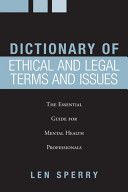
This book is a resource guide that includes all of the key terms, all of the key ethics codes and statues, and all case law relevant to everyday counseling and mental health practice. Ethics in Professional Practice would provide an easily accessible and referenced resource guide in four parts. Part I provides a lexicon of ethical and legal terms relevant to mental health practice. Part II consist a survey of key ethical issue often faced by mental health professionals, including competency, confidentiality, and cultural and ethnic factors. Part III highlights key legal issues, such as billing, testimony and court behavior, and would provide a guide to relevant legal cases and case laws. Part IV would provide a brief guide to professional licensure boards and certification agencies. An Appendix provides an annotated list of key case law and legislation relvant to mental health practice.
ما از اخلاق چه انتظاری داریم؟ این سوال شاید تاحدودی برای عموم مردم و یا متخصصان این رشته قابل پاسخ باشد؛ اینکه خوب بودن را به ما بیاموزد و در تنظیم روابط فردی م...

جشن کتاب تهران به ایستگاه سی و یکم رسیده است. حال و احوال نشر کتاب خوب نیست و باید فرهنگدوستان را به خرید و هدیه دادن کتاب ترغیب نمود. خانه اخلاقپژوهان جوان ب...

بنیاد کتابهای اخلاق اسلامی عمدتا پالایش جان از آلودگیها و آراستن آن به زیباییها است. اندیشه محوری این قبیل کتابها آن است که انسان فعلی آنی نیست که باید باشد...

-
0 Comments