Notice: تابع WP_Block_Type_Registry::register به طورنادرست فراخوانی شد. نامهای نوع بلوک نباید حروف بزرگ داشته باشند. لطفاً برای اطلاعات بیشتر، اشکال زدایی در وردپرس را مشاهده کنید. (این پیام در نگارش 5.0.0 افزوده شده است.) in /home/ethicsho/public_html/wp-includes/functions.php on line 5313
Warning: Use of undefined constant TDC_PATH_LEGACY - assumed 'TDC_PATH_LEGACY' (this will throw an Error in a future version of PHP) in /home/ethicsho/public_html/wp-content/plugins/td-composer/td-composer.php on line 109
Warning: Use of undefined constant TDSP_THEME_PATH - assumed 'TDSP_THEME_PATH' (this will throw an Error in a future version of PHP) in /home/ethicsho/public_html/wp-content/plugins/td-composer/td-composer.php on line 113 بایگانیهای 2026 - خانه اخلاق پژوهان جوان Notice: Trying to access array offset on value of type bool in /home/ethicsho/public_html/wp-content/plugins/wp-ulike/inc/general-functions.php on line 807
On its first appearance in 1960, the Concise Encyclopedia of Western Philosophy established itself as a classic; this third edition builds on its original strengths but brings it completely up to date. The Concise Encyclopedia offers a lively, readable, comprehensive and authoritative treatment of Western philosophy as a whole, incorporating scintillating articles by many leading philosophical authors. It serves not only as a convenient reference work, but also as an engaging introduction to philosophy.
The text serves as an introduction to ethical theory as it applies to environmental issues and as a casebook on contemporary problems of science, industry, and individual decision-making. It provides a readable, yet philosophically careful survey of the field of environmental ethics. It is comprehensive, covering topics from the relevance of Aristotle’s ethics for environmental issues to Deep Ecology and Ecofeminism.
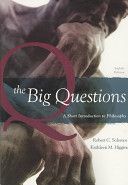
It’s time for an introduction to philosophy textbook that you can relate to and enjoy reading! THE BIG QUESTIONS: A SHORT INTRODUCTION TO PHILOSOPHY tackles the tough issues and helps you form your own opinions while presenting the best philosophical selections available.
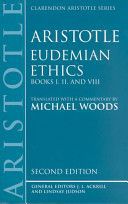
It has long been recognized that anyone seriously interested in Aristotle’s moral philosophy will need to take full account of the Eudemian Ethics, a work still gravely neglected in favor of the better-known Nicomachean Ethics. The relation between the two continues to be the subject of lively scholarly debate. This volume contains a translation of three of the eight books of the Eudemian Ethics–those that are likely to be of most interest to philosophers today–together with a philosophical commentary on these books from a contemporary point of view. Intended to serve the needs of readers of Aristotle without a knowledge of Greek, this book’s aim in translation has been to give as accurate an idea as possible of Aristotle’s text; but for the benefit of those who are able to read the original, there are notes on the Greek text used for problematic passages.
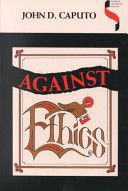
” . . . one of the most important works on philosophical ethics written in recent years. . . . Caputo speaks with a passion and a concern that are rare in academic philosophy. His profound sense of humor deepens the passion of the viewpoints he develops.Oacute; Ntilde;Mark C. Taylor Ograve; . . . a counterethics whose multiple voices will be heard long after the trivializing arguments of many analytic ethicists have vanished and the arcane formulations of many postmoderns jettisoned. . . . The either/or of this dialogue is shown as the topos of a postmodern ethics.Oacute; Ntilde;Edith Wyschogrod In Against Ethics John D. Caputo undertakes a passionate, poetic, and satiric search for the basis of an ethics in the postmodern situation. Restaging Fear and Trembling, Caputo defends the notion of obligation without ethics, of responsibility without the support of ethical foundations. Retelling the story of Abraham and Isaac, Caputo strikes the pose of a postmodern-day Johannes de Silentio, accompanied by communications from such startling figures as Johanna de Silentio, Felix Sineculpa, and Magdalena de la Cruz. In dialogue with the thought of Kierkegaard, Nietzsche, Levinas, Derrida, and Lyotard, Caputo forges a challenging, original account of what is possible and what is not possible for a continentalist ethics today.
ما از اخلاق چه انتظاری داریم؟ این سوال شاید تاحدودی برای عموم مردم و یا متخصصان این رشته قابل پاسخ باشد؛ اینکه خوب بودن را به ما بیاموزد و در تنظیم روابط فردی م...

جشن کتاب تهران به ایستگاه سی و یکم رسیده است. حال و احوال نشر کتاب خوب نیست و باید فرهنگدوستان را به خرید و هدیه دادن کتاب ترغیب نمود. خانه اخلاقپژوهان جوان ب...

بنیاد کتابهای اخلاق اسلامی عمدتا پالایش جان از آلودگیها و آراستن آن به زیباییها است. اندیشه محوری این قبیل کتابها آن است که انسان فعلی آنی نیست که باید باشد...

-
0 Comments