Notice: تابع WP_Block_Type_Registry::register به طورنادرست فراخوانی شد. نامهای نوع بلوک نباید حروف بزرگ داشته باشند. لطفاً برای اطلاعات بیشتر، اشکال زدایی در وردپرس را مشاهده کنید. (این پیام در نگارش 5.0.0 افزوده شده است.) in /home/ethicsho/public_html/wp-includes/functions.php on line 5313
Warning: Use of undefined constant TDC_PATH_LEGACY - assumed 'TDC_PATH_LEGACY' (this will throw an Error in a future version of PHP) in /home/ethicsho/public_html/wp-content/plugins/td-composer/td-composer.php on line 109
Warning: Use of undefined constant TDSP_THEME_PATH - assumed 'TDSP_THEME_PATH' (this will throw an Error in a future version of PHP) in /home/ethicsho/public_html/wp-content/plugins/td-composer/td-composer.php on line 113 بایگانیهای 2021 - خانه اخلاق پژوهان جوان Notice: Trying to access array offset on value of type bool in /home/ethicsho/public_html/wp-content/plugins/wp-ulike/inc/general-functions.php on line 807
Critiquing many areas of medical practice and research whilst making constructive suggestions about medical education, this book extends the scope of medical ethics beyond sole concern with regulation. Illustrating some humanistic ways of understanding patients, this volume explores the connections between medical ethics, healthcare and subjects, such as philosophy, literature, creative writing and medical history and how they can affect the attitudes of doctors towards patients and the perceptions of medicine, health and disease which have become part of contemporary culture. The authors examine a range of ideas in medical practice and research, including: the idea that patient status or the doctor/patient relationship can be understood via quantitative scales the illusion fostered by medical ethics that doctors, unlike those in other professions, are uniquely beneficent and indeed altruistic. An excellent text for undergraduate and postgraduate students of law, medical ethics and medical healthcare law, Bioethics and the Humanities shows the real ethical achievements, problems and half-truths of contemporary medicine.
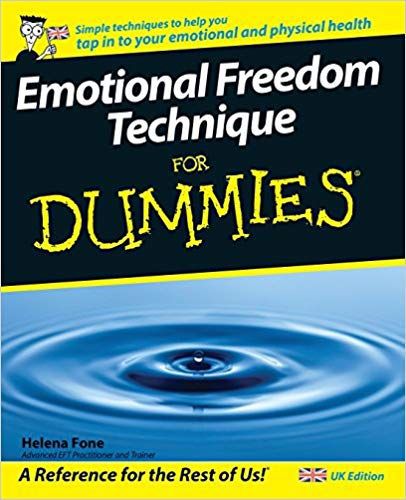
A member of the Energy Therapies family – which includes, acupuncture, acupressure and shiatsu – Emotional Freedom Technique is a simple and increasingly popular self- development therapy used to treat a wide range of physical and emotional issues. Popularised by figures including Paul McKenna, EFT is based on the theory that negative emotions are caused by disturbances in the body’s energy. Often referred to as acupuncture without needles, EFT involves locating and tapping on meridian points in the body while thinking of a negative emotion and using positive suggestion and thoughts to alter the body’s energy flow, restore balance and reprogram thought processes. This no-nonsense guide introduces readers to the theories and methods behind the technique and shows them how to use it to reduce the physical and emotional impact of a wide range of issues including, depression, fears, phobias, anger, addictions, sleeplessness and pain. It’s simple, safe, anyone can practice it at home and with EFT For Dummies readers can banish bad habits for good. Includes information on: The path to emotional freedom – explaining EFT Understanding your emotions Basic EFT tapping routines Improving emotional health with EFT Practising EFT on yourself and others Helena Fone is a registered EFT practitioner and trainer and an advanced hypnotherapist. She has a diploma in advanced holistic hypnotherapy and practices CBT and NLP. Find out more about Helena at www.EFTRegister.com
Between the Civil War and the early decades of the eighteenth century, English poets of the first rank devoted more of their time and creative energies to translating than they had ever done before or have ever done since. Paul Davis’s Translation and the Poet’s Life is the first study to range across the entirety of this golden age of poetic translation in England, taking as its organizing principle and object of inquiry the significances of translating itself as a distinctive mode of imaginative conduct. Composed of case studies of the five leading poet-translators of the age – John Denham, Henry Vaughan, Abraham Cowley, John Dryden, and Alexander Pope – it explores the part translation played in their lives as poets and thence in modelling ‘the poet’s life’ during what was a period of transition between early-modern and modern constructions of it. The argumentative method of the book is metaphorical. Each chapter explores the impact on the theory and practice of the poet at issue of a metaphor or group of metaphors broadly current in contemporary translation discourse: in particular, figurations of the translator as an exile, as a child, as a code-breaker, and as a slave; and comparisons of translation to friendship, sexual congress, metamorphosis and trade. The majority of these metaphors were wholly or potentially pejorative: translation remained a controversial practice throughout this period, widely depreciated and stigmatized. Turning translator accordingly forced the five major poets considered in Translation and the Poet’s Life to undertake strenuous efforts of self-inquiry and self-presentation; to find new answers to questions integral to their understandings of themselves and their standing in their culture: questions about vocation and career, fame and happiness, responsibility and freedom. Translation and the Poet’s Life tells the stories of these personal and public remakings.
ما از اخلاق چه انتظاری داریم؟ این سوال شاید تاحدودی برای عموم مردم و یا متخصصان این رشته قابل پاسخ باشد؛ اینکه خوب بودن را به ما بیاموزد و در تنظیم روابط فردی م...

جشن کتاب تهران به ایستگاه سی و یکم رسیده است. حال و احوال نشر کتاب خوب نیست و باید فرهنگدوستان را به خرید و هدیه دادن کتاب ترغیب نمود. خانه اخلاقپژوهان جوان ب...

بنیاد کتابهای اخلاق اسلامی عمدتا پالایش جان از آلودگیها و آراستن آن به زیباییها است. اندیشه محوری این قبیل کتابها آن است که انسان فعلی آنی نیست که باید باشد...

-
0 Comments