Notice: تابع WP_Block_Type_Registry::register به طورنادرست فراخوانی شد. نامهای نوع بلوک نباید حروف بزرگ داشته باشند. لطفاً برای اطلاعات بیشتر، اشکال زدایی در وردپرس را مشاهده کنید. (این پیام در نگارش 5.0.0 افزوده شده است.) in /home/ethicsho/public_html/wp-includes/functions.php on line 5313
Warning: Use of undefined constant TDC_PATH_LEGACY - assumed 'TDC_PATH_LEGACY' (this will throw an Error in a future version of PHP) in /home/ethicsho/public_html/wp-content/plugins/td-composer/td-composer.php on line 109
Warning: Use of undefined constant TDSP_THEME_PATH - assumed 'TDSP_THEME_PATH' (this will throw an Error in a future version of PHP) in /home/ethicsho/public_html/wp-content/plugins/td-composer/td-composer.php on line 113 بایگانیهای 1986 - خانه اخلاق پژوهان جوان Notice: Trying to access array offset on value of type bool in /home/ethicsho/public_html/wp-content/plugins/wp-ulike/inc/general-functions.php on line 807
How do we judge whether an action is morally right or wrong? If an action is wrong, what reason does that give us not to do it? Why should we give such reasons priority over our other concerns and values? In this book, T. M. Scanlon offers new answers to these questions, as they apply to the central part of morality that concerns what we owe to each other. According to his contractualist view, thinking about right and wrong is thinking about what we do in terms that could be justified to others and that they could not reasonably reject. He shows how the special authority of conclusions about right and wrong arises from the value of being related to others in this way, and he shows how familiar moral ideas such as fairness and responsibility can be understood through their role in this process of mutual justification and criticism.Scanlon bases his contractualism on a broader account of reasons, value, and individual well-being that challenges standard views about these crucial notions. He argues that desires do not provide us with reasons, that states of affairs are not the primary bearers of value, and that well-being is not as important for rational decision-making as it is commonly held to be. Scanlon is a pluralist about both moral and non-moral values. He argues that, taking this plurality of values into account, contractualism allows for most of the variability in moral requirements that relativists have claimed, while still accounting for the full force of our judgments of right and wrong.
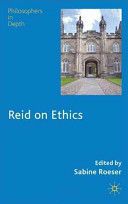
This is the first edited collection to bring together classic pieces and new work by leading scholars of Thomas Reid. The contributors explore key elements of Reid’s moral theory in an organised and thematic way, offering a balanced and broad ranging volume.
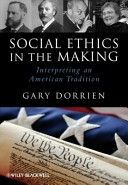
A CHOICE Outstanding Academic Title for 2009In the early 1880s, proponents of what came to be called “the social gospel” founded what is now known as social ethics. This ambitious and magisterial book describes the tradition of social ethics: one that began with the distinctly modern idea that Christianity has a social-ethical mission to transform the structures of society in the direction of social justice. Charts the story of social ethics – the idea that Christianity has a social-ethical mission to transform society – from its roots in the nineteenth century through to the present day Discusses and analyzes how different traditions of social ethics evolved in the realms of the academy, church, and general public Looks at the wide variety of individuals who have been prominent exponents of social ethics from academics and self-styled “public intellectuals” through to pastors and activists Set to become the definitive reference guide to the history and development of social ethics
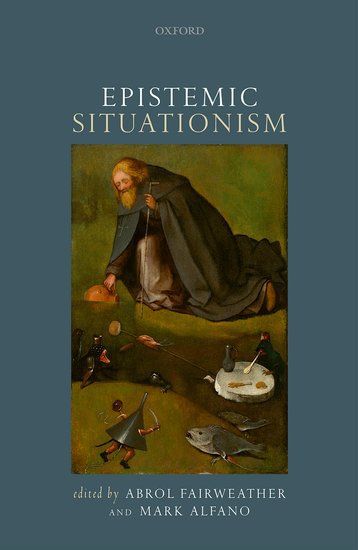
“This volume is the first sustained examination of epistemic situationism, the clash between virtue epistemology and the situationist hypothesis supported by research in empirical psychology. Current research in social psychology suggests that environmental variables have greater explanatory and predictive power than traits in explaining human behavior and this has raised serious challenges to ethical theories, such as virtue ethics, that rely on a psychology of personality traits. However, virtue epistemology appears to assume the same trait-based psychology as virtue ethics does, and the research challenging virtue theories in ethics is relevant to philosophical theorizing about knowledge as well. Until recently virtue epistemology and situationism were separate literatures, but philosophers have begun to examine the apparent incompatibility between situationist psychology and virtue epistemology. Much of the psychological research that raises questions about the empirical adequacy of the moral psychology of virtue ethics also appears to raise doubts about the empirical adequacy of the epistemic psychology assumed by virtue epistemology. Responsibilist virtue epistemology appears particularly vulnerable because epistemic virtues like open-mindedness, conscientiousness, and intellectual courage are traits of intellectual character, but reliabilist virtue epistemology appeals to the psychology of cognitive skill, abilities, and competences that may be similarly vulnerable. The essays in this volume take up this new problem of epistemic situationism from multiple points of view – some skeptical or revisionary, others conservative.”–
ما از اخلاق چه انتظاری داریم؟ این سوال شاید تاحدودی برای عموم مردم و یا متخصصان این رشته قابل پاسخ باشد؛ اینکه خوب بودن را به ما بیاموزد و در تنظیم روابط فردی م...

جشن کتاب تهران به ایستگاه سی و یکم رسیده است. حال و احوال نشر کتاب خوب نیست و باید فرهنگدوستان را به خرید و هدیه دادن کتاب ترغیب نمود. خانه اخلاقپژوهان جوان ب...

بنیاد کتابهای اخلاق اسلامی عمدتا پالایش جان از آلودگیها و آراستن آن به زیباییها است. اندیشه محوری این قبیل کتابها آن است که انسان فعلی آنی نیست که باید باشد...

-
0 Comments