Notice: تابع WP_Block_Type_Registry::register به طورنادرست فراخوانی شد. نامهای نوع بلوک نباید حروف بزرگ داشته باشند. لطفاً برای اطلاعات بیشتر، اشکال زدایی در وردپرس را مشاهده کنید. (این پیام در نگارش 5.0.0 افزوده شده است.) in /home/ethicsho/public_html/wp-includes/functions.php on line 5313
Warning: Use of undefined constant TDC_PATH_LEGACY - assumed 'TDC_PATH_LEGACY' (this will throw an Error in a future version of PHP) in /home/ethicsho/public_html/wp-content/plugins/td-composer/td-composer.php on line 109
Warning: Use of undefined constant TDSP_THEME_PATH - assumed 'TDSP_THEME_PATH' (this will throw an Error in a future version of PHP) in /home/ethicsho/public_html/wp-content/plugins/td-composer/td-composer.php on line 113 بایگانیهای 194 - خانه اخلاق پژوهان جوان Notice: Trying to access array offset on value of type bool in /home/ethicsho/public_html/wp-content/plugins/wp-ulike/inc/general-functions.php on line 807
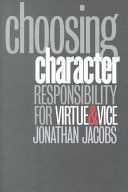
Are there key respects in which character and character defects are voluntary? Can agents with serious vices be rational agents? Jonathan Jacobs answers in the affirmative. Moral character is shaped through voluntary habits, including the ways we habituate ourselves, Jacobs believes. Just as individuals can voluntarily lead unhappy lives without making unhappiness an end, so can they degrade their ethical characters through voluntary action that does not have establishment of vice as its end. Choosing Character presents an account of ethical disability, expanding the domain of responsibility and explicating the role of character in ethical cognition.Jacobs contends that agents become ethically disabled voluntarily when their habits impair their ability to properly appreciate ethical considerations. Such agents are rational, responsible individuals who are yet incapable of virtuous action. The view develops and modifies Aristotelian claims concerning the fixity of character. Jacobs’ interpretation is developed in contrast to the overlooked work of Maimonides, who also used Aristotelian resources but argued for the possibility of character change. The notion of ethical disability has profound ramifications for ethics and for current debates about blame and punishment.
Philips defends a middle ground between the view that there is a set of standards binding on rational beings as such (universalism) and the view that differences in morals reduce ultimately to matters of taste (skepticism). He begins with a sustained critique of universalist moral theories and of certain familiar approaches to concrete moral questions that presuppose them (most appeals to intuitions, respect-for-persons moralities, and versions of contractarianism and wide reflective equilibrium). He goes on to criticize major recent attempts to develop nonuniversalist alternatives to skepticism, arguing that they rely on excessively abstract and philosophically indefensible preference satisfaction theories of the good. According to Philips’s positive alternative, ethics as social artifact, moral codes are social instruments and they are justified to the extent that they effectively do their jobs, which is to promote reasonably valued ways of life. Accordingly, he argues that different standards may be justified for different societies, depending on their circumstances, traditions, and current institutions. His account of a reasonably valued way of life depends on a “falsifiability” approach to reasonable values according to which existing values are treated as reasonable unless good arguments can be made against them. He describes many strategies for making such arguments, the upshot being an approach to the justification of moral standards that is sufficiently “grounded” to settle many controversies and to mark off areas in which rational persons are free to disagree. It also explains why the weight of a moral consideration may vary reasonably from one “domain” of social life toanother. An original approach to the uses and limits of reason in ethics, Between Universalism and Skepticism provides a theoretical basis for approaching actual moral controversies and questions of applied and professional ethics in a systematic way.
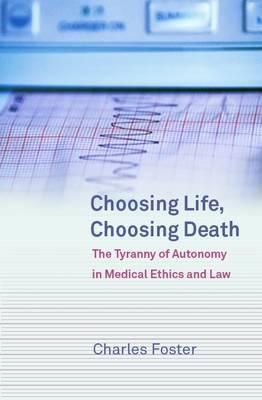
Autonomy is a vital principle in medical law and ethics which occupies a prominent place in all medico-legal and ethical debate. But there is a dangerous presumption that it should have the only vote, or at least the casting vote. This book is an assault
This book is an expanded and revised edition of the author’s critically acclaimed volume Nuts and Bolts for the Social Sciences. In twenty-six succinct chapters, Jon Elster provides an account of the nature of explanation in the social sciences. He offers an overview of key explanatory mechanisms in the social sciences, relying on hundreds of examples and drawing on a large variety of sources-psychology, behavioral economics, biology, political science, historical writings, philosophy and fiction. Written in accessible and jargon-free language, Elster aims at accuracy and clarity while eschewing formal models.
The nature of ethics has been the subject of much controversy andargument in recent decades. Theological Ethics and GlobalDynamics tackles these various debates, offering awide-ranging, comprehensive, and provocative statement of thenature of theological ethics in global times. Offers an accessible, lively, and provocative statement of thenature of moral philosophy and theological ethics in contemporarytimes.Tackles various perspectives on debates about distinctlyChristian ethics.Argues that we need to reframe the arena in which moralquestions are asked.Engages a range of positions, exploring distinctively modernissues such as moral and cultural relativism, globalization,problems of consumption and violence, and religiouspluralism.Addresses the complexity of certain ethical decisions, whichare difficult and far from clear-cut, and yet presents an ethicalunderstanding which is both humane and deeply religious.
ما از اخلاق چه انتظاری داریم؟ این سوال شاید تاحدودی برای عموم مردم و یا متخصصان این رشته قابل پاسخ باشد؛ اینکه خوب بودن را به ما بیاموزد و در تنظیم روابط فردی م...

جشن کتاب تهران به ایستگاه سی و یکم رسیده است. حال و احوال نشر کتاب خوب نیست و باید فرهنگدوستان را به خرید و هدیه دادن کتاب ترغیب نمود. خانه اخلاقپژوهان جوان ب...

بنیاد کتابهای اخلاق اسلامی عمدتا پالایش جان از آلودگیها و آراستن آن به زیباییها است. اندیشه محوری این قبیل کتابها آن است که انسان فعلی آنی نیست که باید باشد...

-
0 Comments