Notice: تابع WP_Block_Type_Registry::register به طورنادرست فراخوانی شد. نامهای نوع بلوک نباید حروف بزرگ داشته باشند. لطفاً برای اطلاعات بیشتر، اشکال زدایی در وردپرس را مشاهده کنید. (این پیام در نگارش 5.0.0 افزوده شده است.) in /home/ethicsho/public_html/wp-includes/functions.php on line 5313
Warning: Use of undefined constant TDC_PATH_LEGACY - assumed 'TDC_PATH_LEGACY' (this will throw an Error in a future version of PHP) in /home/ethicsho/public_html/wp-content/plugins/td-composer/td-composer.php on line 109
Warning: Use of undefined constant TDSP_THEME_PATH - assumed 'TDSP_THEME_PATH' (this will throw an Error in a future version of PHP) in /home/ethicsho/public_html/wp-content/plugins/td-composer/td-composer.php on line 113 بایگانیهای 1900 - خانه اخلاق پژوهان جوان Notice: Trying to access array offset on value of type bool in /home/ethicsho/public_html/wp-content/plugins/wp-ulike/inc/general-functions.php on line 807
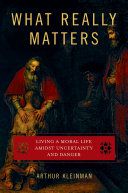
Life can sometimes thrust us into troubling circumstances that threaten to undo our thin mastery over those things that matter most. In this moving and thought-provoking volume, Arthur Kleinman tells the unsettling stories of a handful of men and women, some of whom have lived through some of the most fundamental transitions of the turbulent twentieth century. Here we meet an American veteran of World War II, tortured by the memory of the atrocities he committed while a soldier in the Pacific. A French-American woman aiding refugees in sub-Saharan Africa, facing the utter chaos of a society where life has become meaningless. A Chinese doctor trying to stay alive during Mao’s cultural revolution, discovering that the only values that matter are those that get you beyond the next threat. These individuals have found themselves caught in circumstances where those things that matter most to them–their desires, status, relationships, resources, political and religious commitments, life itself–have been challenged by the society around them. Each is caught up in existential moral experiences that define what it means to be human, with an intensity that makes their life narratives arresting. Their stories reveal just how malleable moral life is, and just how central danger is to our worlds and our livelihood. Indeed, Kleinman offers in this book a groundbreaking approach to ethics, examining “who we are” through some of the most disturbing issues of our time–war, globalization, poverty, social injustice, sex, and religion–all in the context of actual lived moral life. Here then are riveting stories of ordinary men and women, in extraordinary times and threatening situations, making sense of their worlds and facing profound challenges to what matters most in their lives.
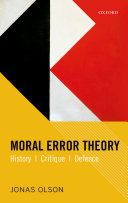
Jonas Olson presents a critical survey of moral error theory, the view that there are no moral facts and so all moral claims are false. In Part I (History), he explores the historical context of the debate, and discusses the moral error theories of David Hume and of some more or less influential twentieth century philosophers, including Axel Hägerström, Bertrand Russell, Ludwig Wittgenstein, and Richard Robinson. He argues that the early cases for moral error theory are suggestive but that they would have been stronger had they included something like J. L. Mackie’s arguments that moral properties and facts are metaphysically queer. Part II (Critique) focuses on these arguments. Olson identifies four queerness arguments, concerning supervenience, knowledge, motivation, and irreducible normativity, and goes on to establish that while the first three are not compelling, the fourth has considerable force, especially when combined with debunking explanations of why we tend to believe that there are moral properties and facts when in fact there are none. One conclusion of Part II is that a plausible error theory takes the form of an error theory about irreducible normativity. In Part III (Defence), Olson considers challenges according to which that kind of error theory has problematic ramifications regarding hypothetical reasons, epistemic reasons, and deliberation. He ends his discussion with a consideration of the implications of moral error theory for ordinary moral thought and talk, and for normative theorizing.
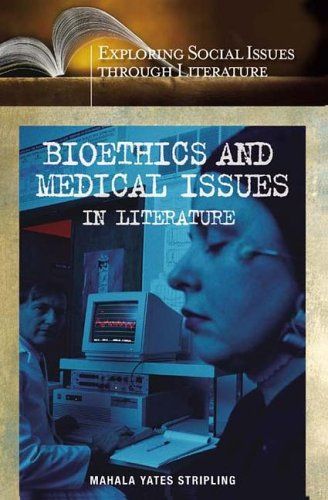
A timely investigation of the interplay between literature and medical ethics, this book ponders AIDS, stem cell research and other topics through such works as Frankenstein, Brave New World, and One Flew over the Cuckoo’s Nest.
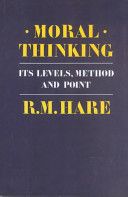
This book is a continuation of the enterprise which the author began with ‘The Language of Morals and Freedom and Reason’. In the present work, R.M. Hare has fashioned, out of the logical and linguistic theses of his earlier books, a full-scale but readily intelligible account of moral argument.
ما از اخلاق چه انتظاری داریم؟ این سوال شاید تاحدودی برای عموم مردم و یا متخصصان این رشته قابل پاسخ باشد؛ اینکه خوب بودن را به ما بیاموزد و در تنظیم روابط فردی م...

جشن کتاب تهران به ایستگاه سی و یکم رسیده است. حال و احوال نشر کتاب خوب نیست و باید فرهنگدوستان را به خرید و هدیه دادن کتاب ترغیب نمود. خانه اخلاقپژوهان جوان ب...

بنیاد کتابهای اخلاق اسلامی عمدتا پالایش جان از آلودگیها و آراستن آن به زیباییها است. اندیشه محوری این قبیل کتابها آن است که انسان فعلی آنی نیست که باید باشد...

-
0 Comments