Notice: تابع WP_Block_Type_Registry::register به طورنادرست فراخوانی شد. نامهای نوع بلوک نباید حروف بزرگ داشته باشند. لطفاً برای اطلاعات بیشتر، اشکال زدایی در وردپرس را مشاهده کنید. (این پیام در نگارش 5.0.0 افزوده شده است.) in /home/ethicsho/public_html/wp-includes/functions.php on line 5313
Warning: Use of undefined constant TDC_PATH_LEGACY - assumed 'TDC_PATH_LEGACY' (this will throw an Error in a future version of PHP) in /home/ethicsho/public_html/wp-content/plugins/td-composer/td-composer.php on line 109
Warning: Use of undefined constant TDSP_THEME_PATH - assumed 'TDSP_THEME_PATH' (this will throw an Error in a future version of PHP) in /home/ethicsho/public_html/wp-content/plugins/td-composer/td-composer.php on line 113 بایگانیهای 1885 - خانه اخلاق پژوهان جوان Notice: Trying to access array offset on value of type bool in /home/ethicsho/public_html/wp-content/plugins/wp-ulike/inc/general-functions.php on line 807
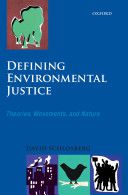
The basic task of this book is to explore what, exactly, is meant by ‘justice’ in definitions of environmental and ecological justice. It examines how the term is used in both self-described environmental justice movements and in theories of environmental and ecological justice. The central argument is that a theory and practice of environmental justice necessarily includes distributive conceptions of justice, but must also embrace notions of justice based in recognition, capabilities, and participation. Throughout, the goal is the development of a broad, multi-faceted, yet integrated notion of justice that can be applied to both relations regarding environmental risks in human populations and relations between human communities and non-human nature.
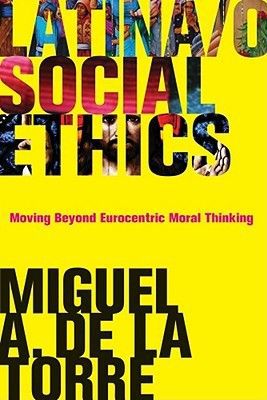
A groundbreaking corrective work, Latina/o Social Ethics strives to create a liberative ethical approach to the Hispanic experience by using its own tools and materials. First explaining why Eurocentric ethical paradigms are inadequate in their attempts to liberate oppressed communities, Miguel De La Torre looks with Hispanic eyes at three major ethicists of the twentieth century–Walter Rauschenbusch, Reinhold Niebuhr, and Stanley Hauerwas–and how ethics is presented in U.S. culture wars, from the Religious Right to the Religious Left. He deconstructs these ethical paradigms and demonstrates why all are detrimental to and irreconcilable with the Hispanic social location.With a clean slate, then, De La Torre moves to constructing a new Hispanic-centered ethical paradigm that is rooted in the Latino community way of being. Reviewing the field of Hispanic ethical thought, De La Torre pays special attention to specific concepts ripe with potential that have been developed over the past generation. In the final chapter, De La Torre offers his own constructive paradigm–an ethics para joder , which is rooted in the Latina/o experience, and by which, he argues, the Hispanic community can survive within U.S. culture.
Pioneers in the study of forgiveness, Robert Enright and Joanna North have compiled a collection of twelve essays ranging from a first-person account of the mother of a murdered child to an assessment of the United States’ post-war reconciliations with Germany and Vietnam. This book explores forgiveness in interpersonal relationships, family relationships, the individual and society relationship, and international relations through the eyes of philosophers and educators as well as a psychologist, police chief-turned-minister, law professor, sociologist, psychiatrist, social worker, and theologian.
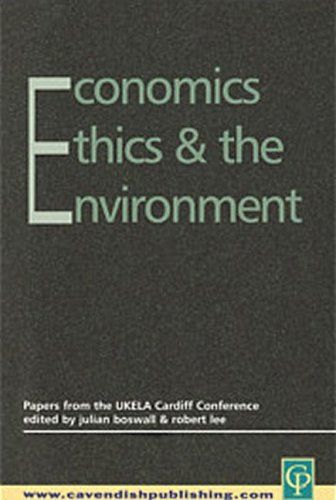
The UK Environmental Law Association (UKELA) holds a conference each year to bring together academics and practitioners,lawyers and environmental experts from other disciplines – within both science and social science. It is a unique event providing a forum for discussion of the most pressing issues of environmental regulation, and provides a unique combination of analysis and practical application. These articles, presented as papers at the Cardiff Conference in 2001, provide an accessible and informative collection addressing the conference theme of economics, ethics and the environment, including such issues as: how we can use traditional economic devices such as taxation, trading and insurance to assist in environmental regulation; how we treat and protect the natural world; how we might cope with the growing problem of waste; and how we should react to safeguard the environment in the face of risks and scientific uncertainties. The collection forms a topical and wide ranging discussion of key issues for legal practitioners, academics and students and will also be of great interest to a wider range of disciplines relating to the environment.
ما از اخلاق چه انتظاری داریم؟ این سوال شاید تاحدودی برای عموم مردم و یا متخصصان این رشته قابل پاسخ باشد؛ اینکه خوب بودن را به ما بیاموزد و در تنظیم روابط فردی م...

جشن کتاب تهران به ایستگاه سی و یکم رسیده است. حال و احوال نشر کتاب خوب نیست و باید فرهنگدوستان را به خرید و هدیه دادن کتاب ترغیب نمود. خانه اخلاقپژوهان جوان ب...

بنیاد کتابهای اخلاق اسلامی عمدتا پالایش جان از آلودگیها و آراستن آن به زیباییها است. اندیشه محوری این قبیل کتابها آن است که انسان فعلی آنی نیست که باید باشد...

-
0 Comments