Notice: تابع WP_Block_Type_Registry::register به طورنادرست فراخوانی شد. نامهای نوع بلوک نباید حروف بزرگ داشته باشند. لطفاً برای اطلاعات بیشتر، اشکال زدایی در وردپرس را مشاهده کنید. (این پیام در نگارش 5.0.0 افزوده شده است.) in /home/ethicsho/public_html/wp-includes/functions.php on line 5313
Warning: Use of undefined constant TDC_PATH_LEGACY - assumed 'TDC_PATH_LEGACY' (this will throw an Error in a future version of PHP) in /home/ethicsho/public_html/wp-content/plugins/td-composer/td-composer.php on line 109
Warning: Use of undefined constant TDSP_THEME_PATH - assumed 'TDSP_THEME_PATH' (this will throw an Error in a future version of PHP) in /home/ethicsho/public_html/wp-content/plugins/td-composer/td-composer.php on line 113 بایگانیهای 1860 - خانه اخلاق پژوهان جوان Notice: Trying to access array offset on value of type bool in /home/ethicsho/public_html/wp-content/plugins/wp-ulike/inc/general-functions.php on line 807
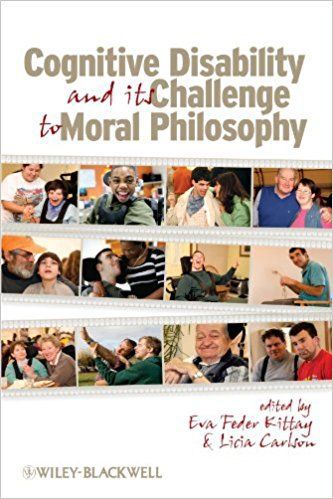
We have been taught that all humans share intrinsic qualities that lend them a common dignity. Philosophers conceive of a certain level of cognitive capacity as the very mark of humanity, and extend the mantle of equal moral fellowship to these “persons.” But what of individuals with diminished cognitive abilities? Cognitive disability poses significant challenges to these fundamental philosophical concepts, prompting a variety of difficult questions. Should those with cognitive disabilities be excluded from the protections and responsibilities we routinely assign to “persons”? Are we forced to reconsider the very concept of “personhood”? How should the interests of people with cognitive disabilities and their caregivers be represented politically? Who is responsible for guaranteeing their care? And to what extent ought they to be granted autonomy?Cognitive Disability and Its Challenge to Moral Philosophy addresses these concerns in a series of thought-provoking Chapters contributed by some of the most prominent moral philosophers of our time, as well as clinicians and medical historians. Collectively, the Chapters represent an important milestone in contemporary thinking about ethical considerations relating to people with cognitive disabilities.Eva Feder Kittay is Distinguished Professor of Philosophy, Women’s Studies Affiliate, and Senior Fellow of the Center for Medical Humanities, Bioethics and Compassionate Care at Stony Brook University, New York. Her published works include Love’s Labor: Essays on Women, Equality, and Dependency (1998); The Blackwell Guide to Feminist Philosophy (co-edited with Linda Martin Alcoff, Wiley-Blackwell, 2006); The Subject of Care: Feminist Perspectives on Dependency (with Ellen K. Feder, 2003); and Metaphor: Its Cognitive Force and Linguistic Structure (1990). She is also the mother of a cognitively disabled woman.Licia Carlson is an assistant professor of philosophy at Providence College. Her research interests include twentieth-century French philosophy, ethics, feminist theory, philosophy and disability, and the philosophy of music. She has published articles on bioethics, feminist theory, disability, and the works of Michel Foucault, and is the author of The Faces of Intellectual Disability: Philosophical Reflections (2010).
Being Apart from Reasons deals with the question of how we should go about using reasons to decide what to do. More particularly, the book presents objections to the most common response given by contemporary legal and political theorists to the moral complexity of decision-making in modern societies, namely: the attempt to release public agents from their argumentative burden by insulating a particular set of reasons from the general pool of reasons and assigning the former systematic priority over all other reasons. If those attempts succeed, public agents should not reason comprehensively, taking into account all reasons and weighing them against one another. Some reasons would be excluded from decision-making by kind. That strategy is apparent both in Rawls’ claim that reasons concerning the right are systematically prior to reasons concerning the good and in Raz’s claim that pre-emptive reasons are systematically prior to first-order reasons. The same strategy is also instantiated by certain arguments for the procedural value of law, such as Jeremy Waldron’s. In the book, each of those arguments for the insulation of reasons is objected to in order to defend the thesis the reasoning by public agents must always be as comprehensive as possible.In order to reach that conclusion a particular picture of public decision-making in needed. That picture in provided by the comparison between the use of reasons in public and private decision-making which is carried out in the first two chapters of the book. That comparison brings to light peculiar features of public decision-making that imply the need for public agents to reason comprehensively before deciding. The remaining chapters object to those arguments mentioned above which aim at justifying the exclusion of certain reasons from public agent’s decision-making.
This work returns to the 19th century tradition of a moral or ethical criticism in the context of important new thinking in the field of ethics and moral philosophy. “Shakespeare and Moral Agency” presents a collection of new essays by literary and philosophy scholars considering character and action in Shakespeare’s plays as heuristic models for the exploration of some salient problems in the field of moral inquiry. Together they offer a unified presentation of an emerging orientation in Shakespeare studies, drawing on recent work in ethics, philosophy of mind, and analytic aesthetics to construct a powerful framework for the critical analysis of Shakespeare’s works. Contributors suggest new possibilities for the interpretation of Shakespearean drama by engaging with the rich body of contemporary work in the field of moral philosophy, offering significant insights for literary criticism, for pedagogy, and also for theatrical performance. This title is part of major scholarly research monographs in “Shakespeare Studies from Continuum”.
When Michael Walzer’s Spheres of Justice was published ten years ago, the front page of The New York Times Book Review hailed the work as “an imaginative alternative to the current debate over distributive justice.” Now in Thick and Thin, Walzer revises and extends his arguments in Spheres of Justice, framing his ideas about justice, social criticism, and national identity in light of the new political world that has arisen in the past decade. Walzer focuses on two different but interrelated kinds of moral argument: maximalist and minimalist, thick and thin, local and universal.
ما از اخلاق چه انتظاری داریم؟ این سوال شاید تاحدودی برای عموم مردم و یا متخصصان این رشته قابل پاسخ باشد؛ اینکه خوب بودن را به ما بیاموزد و در تنظیم روابط فردی م...

جشن کتاب تهران به ایستگاه سی و یکم رسیده است. حال و احوال نشر کتاب خوب نیست و باید فرهنگدوستان را به خرید و هدیه دادن کتاب ترغیب نمود. خانه اخلاقپژوهان جوان ب...

بنیاد کتابهای اخلاق اسلامی عمدتا پالایش جان از آلودگیها و آراستن آن به زیباییها است. اندیشه محوری این قبیل کتابها آن است که انسان فعلی آنی نیست که باید باشد...

-
0 Comments