Notice: تابع WP_Block_Type_Registry::register به طورنادرست فراخوانی شد. نامهای نوع بلوک نباید حروف بزرگ داشته باشند. لطفاً برای اطلاعات بیشتر، اشکال زدایی در وردپرس را مشاهده کنید. (این پیام در نگارش 5.0.0 افزوده شده است.) in /home/ethicsho/public_html/wp-includes/functions.php on line 5313
Warning: Use of undefined constant TDC_PATH_LEGACY - assumed 'TDC_PATH_LEGACY' (this will throw an Error in a future version of PHP) in /home/ethicsho/public_html/wp-content/plugins/td-composer/td-composer.php on line 109
Warning: Use of undefined constant TDSP_THEME_PATH - assumed 'TDSP_THEME_PATH' (this will throw an Error in a future version of PHP) in /home/ethicsho/public_html/wp-content/plugins/td-composer/td-composer.php on line 113 بایگانیهای 1855 - خانه اخلاق پژوهان جوان Notice: Trying to access array offset on value of type bool in /home/ethicsho/public_html/wp-content/plugins/wp-ulike/inc/general-functions.php on line 807
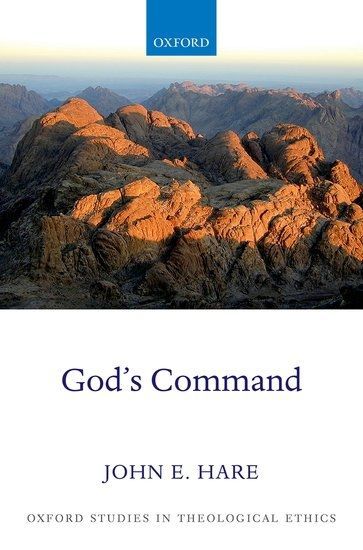
This work focuses on divine command, and in particular the theory that what makes something obligatory is that God commands it, and what makes something wrong is that God commands us not to do it. Focusing on the Abrahamic faiths, eminent scholar John E. Hare explains that two experiences have had to be integrated. The first is that God tells us to do something, or not to do something. The second is that we have to work out ourselves what to do and what not to do. The difficulty has come in establishing the proper relation between them. In Christian reflection on this, two main traditions have emerged, divine command theory and natural law theory. Professor Hare successfully defends a version of divine command theory, but also shows that there is considerable overlap with some versions of natural law theory. He engages with a number of Christian theologians, particularly Karl Barth, and extends into a discussion of divine command within Judaism and Islam.0The work concludes by examining recent work in evolutionary psychology, and argues that thinking of our moral obligations as produced by divine command offers us some help in seeing how a moral conscience could develop in a way that is evolutionarily stable.
Richard Rorty is famous, maybe even infamous, for his philosophical nonchalance. His groundbreaking work not only rejects all theories of truth but also dismisses modern epistemology and its preoccupation with knowledge and representation. At the same time, the celebrated pragmatist believed there could be no universally valid answers to moral questions, which led him to a complex view of religion rarely expressed in his writings.In this posthumous publication, Rorty, a strict secularist, finds in the pragmatic thought of John Dewey, John Stuart Mill, Henry James, and George Santayana, among others, a political imagination shared by religious traditions. His intent is not to promote belief over nonbelief or to blur the distinction between religious and public domains. Rorty seeks only to locate patterns of similarity and difference so an ethics of decency and a politics of solidarity can rise. He particularly responds to Pope Benedict XVI and his campaign against the relativist vision. Whether holding theologians, metaphysicians, or political ideologues to account, Rorty remains steadfast in his opposition to absolute uniformity and its exploitation of political strength.
Lisa Tessman’s Burdened Virtues is a deeply original and provocative work that engages questions central to feminist theory and practice, from the perspective of Aristotelian ethics. Focused primarily on selves who endure and resist oppression, she addresses the ways in which devastating conditions confronted by these selves both limit and burden their moral goodness, and affect their possibilities of flourishing. She describes two different forms of “moral trouble” prevalent under oppression. The first is that the oppressed self may be morally damaged, prevented from developing or exercising some of the virtues; the second is that the very conditions of oppression require the oppressed to develop a set of virtues that carry a moral cost to those who practice them–traits that Tessman refers to as “burdened virtues.” These virtues have the unusual feature of being disjoined from their bearer’s own well being. Tessman’s work focuses on issues that have been missed by many feminist moral theories, and her use of the virtue ethics framework brings feminist concerns more closely into contact with mainstream ethical theory. This book will appeal to feminist theorists in philosophy and women’s studies, but also more broadly, ethicists and social theorists.
One of this century’s most important philosophers here focuses on Plato’s PROTAGORAS, PHAEDO, REPUBLIC, and PHILEBUS and on Aristotle’s three moral treatises to show the essential continuity of Platonic and Aristotelian reflection on the nature of the good. In so doing Gadamer not only succeeds in giving us an incisive example of his interpretive art but also gives us a clearer picture of the ethical dimension of his own philosophy and the practical implications of hermeneutical theory.
ما از اخلاق چه انتظاری داریم؟ این سوال شاید تاحدودی برای عموم مردم و یا متخصصان این رشته قابل پاسخ باشد؛ اینکه خوب بودن را به ما بیاموزد و در تنظیم روابط فردی م...

جشن کتاب تهران به ایستگاه سی و یکم رسیده است. حال و احوال نشر کتاب خوب نیست و باید فرهنگدوستان را به خرید و هدیه دادن کتاب ترغیب نمود. خانه اخلاقپژوهان جوان ب...

بنیاد کتابهای اخلاق اسلامی عمدتا پالایش جان از آلودگیها و آراستن آن به زیباییها است. اندیشه محوری این قبیل کتابها آن است که انسان فعلی آنی نیست که باید باشد...

-
0 Comments