Notice: تابع WP_Block_Type_Registry::register به طورنادرست فراخوانی شد. نامهای نوع بلوک نباید حروف بزرگ داشته باشند. لطفاً برای اطلاعات بیشتر، اشکال زدایی در وردپرس را مشاهده کنید. (این پیام در نگارش 5.0.0 افزوده شده است.) in /home/ethicsho/public_html/wp-includes/functions.php on line 5313
Warning: Use of undefined constant TDC_PATH_LEGACY - assumed 'TDC_PATH_LEGACY' (this will throw an Error in a future version of PHP) in /home/ethicsho/public_html/wp-content/plugins/td-composer/td-composer.php on line 109
Warning: Use of undefined constant TDSP_THEME_PATH - assumed 'TDSP_THEME_PATH' (this will throw an Error in a future version of PHP) in /home/ethicsho/public_html/wp-content/plugins/td-composer/td-composer.php on line 113 بایگانیهای 185 - خانه اخلاق پژوهان جوان Notice: Trying to access array offset on value of type bool in /home/ethicsho/public_html/wp-content/plugins/wp-ulike/inc/general-functions.php on line 807
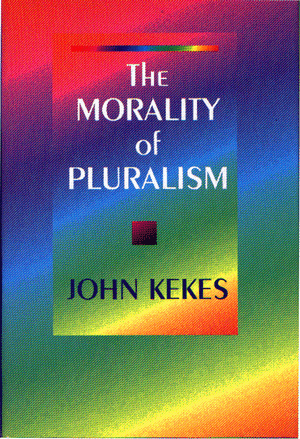
Current controversies about abortion, the environment, pornography, AIDS, capital punishment, and similar issues naturally lead to the question of whether there are any values that can be ultimately justified, or whether values are simply conventional. John Kekes argues that the present moral and political uncertainties are due to a deep change in our society from a dogmatic to a pluralistic view of values. Dogmatism is committed to there being only one justifiable system of values. Pluralism recognizes many such systems, and yet it avoids a chaotic relativism according to which all values are in the end arbitrary. Maintaining that good lives must be reasonable, but denying that they must conform to one true pattern, Kekes develops and justifies a pluralistic account of good lives and values, and works out its political, moral, and personal implications. The author defines values as possibilities whose realization would make lives good. He recognizes that their realization is difficult, especially since it involves choices among many, often conflicting, values. He argues, however, that living a good life requires a resolution of these conflicts, although reasonable resolutions are themselves plural in nature. His central claim is that pluralism is both reasonable and a preferable alternative to dogmatism and relativism.
Does our understanding and appreciation of Shakespeare’s plays demand that we know exactly who Shakespeare really was and what he intended to communicate in his work? This volume examines the role that authorship plays in people’s experience of language and art as meaningful human artifacts, as well as reviewing the fierce debates over these issues both within academia and popular culture. It is argued that many aspects of our understanding of language (both oral and written) and artworks (paintings, music, theater, etc.) rests on people’s fundamental, often unconscious, bias to seek who created something and for what communicative purpose.
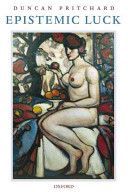
Epistemic Luck is the first book to offer a rigorous philosophical examination of the concept of luck and its relationship to knowledge. In particular, Duncan Pritchard shows how a more nuanced understanding of the relationship between knowledge and luck can enable us to see our way past some of the most intractable disputes in the contemporary theory of knowledge. Anyone working on epistemology will need to come to terms with his original and incisive contribution to the field.
ما از اخلاق چه انتظاری داریم؟ این سوال شاید تاحدودی برای عموم مردم و یا متخصصان این رشته قابل پاسخ باشد؛ اینکه خوب بودن را به ما بیاموزد و در تنظیم روابط فردی م...

جشن کتاب تهران به ایستگاه سی و یکم رسیده است. حال و احوال نشر کتاب خوب نیست و باید فرهنگدوستان را به خرید و هدیه دادن کتاب ترغیب نمود. خانه اخلاقپژوهان جوان ب...

بنیاد کتابهای اخلاق اسلامی عمدتا پالایش جان از آلودگیها و آراستن آن به زیباییها است. اندیشه محوری این قبیل کتابها آن است که انسان فعلی آنی نیست که باید باشد...

-
0 Comments