Notice: تابع WP_Block_Type_Registry::register به طورنادرست فراخوانی شد. نامهای نوع بلوک نباید حروف بزرگ داشته باشند. لطفاً برای اطلاعات بیشتر، اشکال زدایی در وردپرس را مشاهده کنید. (این پیام در نگارش 5.0.0 افزوده شده است.) in /home/ethicsho/public_html/wp-includes/functions.php on line 5313
Warning: Use of undefined constant TDC_PATH_LEGACY - assumed 'TDC_PATH_LEGACY' (this will throw an Error in a future version of PHP) in /home/ethicsho/public_html/wp-content/plugins/td-composer/td-composer.php on line 109
Warning: Use of undefined constant TDSP_THEME_PATH - assumed 'TDSP_THEME_PATH' (this will throw an Error in a future version of PHP) in /home/ethicsho/public_html/wp-content/plugins/td-composer/td-composer.php on line 113 بایگانیهای 183 - خانه اخلاق پژوهان جوان Notice: Trying to access array offset on value of type bool in /home/ethicsho/public_html/wp-content/plugins/wp-ulike/inc/general-functions.php on line 807
Will meat eaters get into heaven? Do trees have rights? Is it ever right to design a baby? What would you do? Would you always do the right thing? IS there a right thing? In this second edition of his thought-provoking and highly engaging introduction to ethics, Martin Cohen brings us eleven brand new ethical dilemmas including: The Dodgy Donor Clinic The Famous Footbridge Dilemma The Human Canonball. From overcrowded lifeboats to the censor’s pen, Martin Cohen’s stimulating and amusing dilemmas reveal the subtleties, complexities and contradictions that make up the rich tapestry of ethics. From DIY babies and breeding experiments to ‘Twinkies courtroom drama’ and Newgate Prison, there is a dilemma for everyone. Dilemmas from the worlds of medical, business, legal and war ethics; dilemmas in the shape of beautiful and ugly sisters, frogs, kings, ancient volcanic islands and suspiciously exotic villages. This book may not help you become a good person, but atleast you will have had a good think about it.
This first book of its kind for the medical profession brings the real-world translation of ethics to the care of patients, conduct of protocols, and training of professionals. An interactive, case-oriented approach to mental health ethics, Professionalism and Ethics: Q & A Self-Study Guide for Mental Health Professionals consists of questions and answers developed by the authors and fourteen contributors from backgrounds as diverse as family medicine, research ethics, social psychology, and public health. They draw on personal experience in the care of people with mental illness, in mental health research, and in clinical training to generate scenarios that pose ethical questions. Some questions are narrow and to the point, such as responding to a suspicion of child abuse; others require a more nuanced approach, such as dealing with conflict of interest posed by a pharmaceutical company. They then resolve these questions in alignment with an understanding of ethical principles, the standards of their fields, the law, and the expectations of mental health professionals. The brief case descriptions that frame each ethical question echo the real-life complexities of clinical practice and are presented in single-answer, multiple-choice format modeled after key medical licensure and specialty certification organizations. Following an overview of ethics and professionalism, questions cover four broad areas: core concepts, clinical care, medical research, and interactions with colleagues and trainees. Explanations following the questions offer background information about relevant ethical concepts and related legal and clinical considerations. A subsequent section features another set of questions for self-assessment, followed by answers with citations to appropriate references. The book’s overall approach is geared to underscore the following areas of concern: • Essential ethical skills, such as understanding how personal values affect patient care, recognizing high-risk situations in which ethical problems arise, and building ethical safeguards• Core ethical principles, including nonmaleficence, beneficence, autonomy, respect, justice, veracity, fidelity, and privacy• Key clinical ethics issues, including maintaining therapeutic boundaries, patient non-abandonment, informed consent and treatment refusal, alternative decision making and advance directives, confidentiality, reporting colleague misconduct, and caring for difficult patients. Trainees and experienced clinicians alike will be richly rewarded by considering the dilemmas posed here. Developed with an extensive review process, reference verifications, and iterative crosschecks, this book facilitates professionalism as a core competency in medicine as it instills the need for ongoing consideration of ethical behaviors and principles in the daily practice of psychiatry.
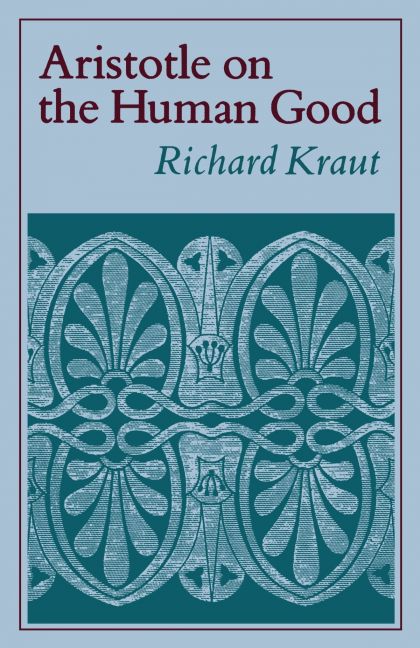
Aristotle’s Nicomachean Ethics, which equates the ultimate end of human life with happiness (eudaimonia), is thought by many readers to argue that this highest goal consists in the largest possible aggregate of intrinsic goods. Richard Kraut proposes instead that Aristotle identifies happiness with only one type of good: excellent activity of the rational soul. In defense of this reading, Kraut discusses Aristotle’s attempt to organize all human goods into a single structure, so that each subordinate end is desirable for the sake of some higher goal.This book also emphasizes the philosopher’s hierarchy of natural kinds, in which every type of creature achieves its good by imitating divine life. As Kraut argues, Aristotle’s belief that thinking is the sole activity of the gods leads him to an intellectualist conception of the ethical virtues. Aristotle values these traits because, by subordinating emotion to reason, they enhance our ability to lead a life devoted to philosophy or politics.
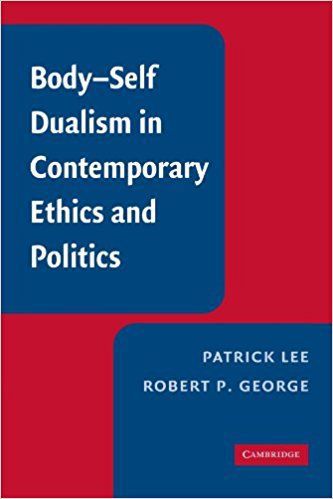
Book Summary of Body-Self Dualism In Contemporary Ethics And PoliticsProfoundly important ethical and political controversies turn on the question of whether biological life is an essential aspect of a human person, or only an extrinsic instrument. Lee and George argue that human beings are physical, animal organisms – albeit essentially rational and free – and examine the implications of this understanding of human beings for some of the most controversial issues in contemporary ethics and politics. The authors argue that human beings are animal organisms and that their personal identity across time consists in the persistence of the animal organisms they are; they also argue that human beings are essentially rational and free and that there is a radical difference between human beings and other animals; criticize hedonism and hedonistic drug-taking; present detailed defenses of the prolife positions on abortion and euthanasia; and defend the traditional moral position on marriage and sexual acts.
ما از اخلاق چه انتظاری داریم؟ این سوال شاید تاحدودی برای عموم مردم و یا متخصصان این رشته قابل پاسخ باشد؛ اینکه خوب بودن را به ما بیاموزد و در تنظیم روابط فردی م...

جشن کتاب تهران به ایستگاه سی و یکم رسیده است. حال و احوال نشر کتاب خوب نیست و باید فرهنگدوستان را به خرید و هدیه دادن کتاب ترغیب نمود. خانه اخلاقپژوهان جوان ب...

بنیاد کتابهای اخلاق اسلامی عمدتا پالایش جان از آلودگیها و آراستن آن به زیباییها است. اندیشه محوری این قبیل کتابها آن است که انسان فعلی آنی نیست که باید باشد...

-
0 Comments