Notice: تابع WP_Block_Type_Registry::register به طورنادرست فراخوانی شد. نامهای نوع بلوک نباید حروف بزرگ داشته باشند. لطفاً برای اطلاعات بیشتر، اشکال زدایی در وردپرس را مشاهده کنید. (این پیام در نگارش 5.0.0 افزوده شده است.) in /home/ethicsho/public_html/wp-includes/functions.php on line 5313
Warning: Use of undefined constant TDC_PATH_LEGACY - assumed 'TDC_PATH_LEGACY' (this will throw an Error in a future version of PHP) in /home/ethicsho/public_html/wp-content/plugins/td-composer/td-composer.php on line 109
Warning: Use of undefined constant TDSP_THEME_PATH - assumed 'TDSP_THEME_PATH' (this will throw an Error in a future version of PHP) in /home/ethicsho/public_html/wp-content/plugins/td-composer/td-composer.php on line 113 بایگانیهای 1808 - خانه اخلاق پژوهان جوان Notice: Trying to access array offset on value of type bool in /home/ethicsho/public_html/wp-content/plugins/wp-ulike/inc/general-functions.php on line 807
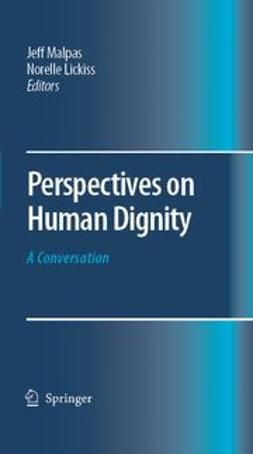
The idea of human dignity is central to any reflection on the nature of human worth, and has become a key concept in international and national law, in medical ethics, and in much philosophical and political theory. However, the idea is a complex one that also takes on many different forms. This collection explores the idea of human dignity as it arises within these many different domains, opening up the possibility of a multidisciplinary conversation that illuminates the concept itself, as well as the idea of the human to which it stands in an essential relation. The book is not only an intriguing and stimulating exploration of human dignity from a range of perspectives, but also provides an important resource for those who wish to take the exploration further.
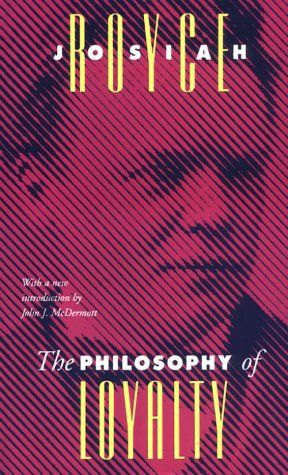
Josiah Royce (1855-1916), one of the outstanding classical American philosophers, is regarded by many as the foremost American idealist. A transitional book in the development of Royce’s thought, The Philosophy of Loyalty is a key to understanding his influence on the development of pragmatism. Royce’s basic argument is clear. Individual wills are a given, and social training is a natural aspect of community. But the two are not fully compatible, and conflicts naturally emerge. Loyalty to a cause unites many individuals into a community, but fanatical loyalty to causes often has inimical results. Long out of print and never before available in paperback, The Philosophy of Loyalty has many beneficial implications for understanding contemporary social passions and outlooks, especially for our own fragmented American culture. As Royce himself asserted nearly ninety years ago, in the preface of this book, “I am writing…not merely and not mainly for philosophers, but for all those who love…ideals, and also for those who love…their country – a country so ripe at present for idealism, and so confused, nevertheless, by the vastness and the complication of its social and political problems.” Royce speaks to these continuing concerns in a voice that is perceptive, learned, and sensitive to the human situation, and he offers powerful conceptual tools for our own troubled times.
This groundbreaking volume is the first to analyze how and to what extent bioethics considerations influence today’s judges. Previous books have attended to the law that governs bioethics problems, but Bioethics in Law is the first to examine when and how bioethical issues impact judicial reasoning and decision-making. The author undertakes careful analysis of health care committee recommendations, institutional review board determinations, bioethics commission reports, bioethics research materials, briefs of bioethics amicus curiae, and bioethics expert testimony that has been used in legal proceedings during the last decade. Through such examination, Bioethics in Law is able to offer critical insight into the ways that judges have invited, accepted, relied on, followed, critiqued, ignored, rejected, overridden, transformed, and otherwise responded to bioethics communications. This volume is the on the cutting-edge of the relationship of bioethics to law, and explores how law receives, assesses, and uses bioethics. Unlike previous treatments, which perceive the relationship between law and bioethics in an abstract or idealized sense, this book presents actual communications that have found their way to law, and then analyzes their effect on judicial outcomes.
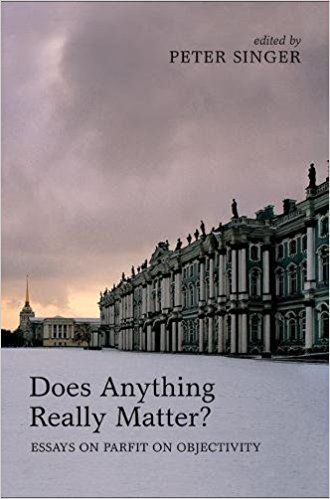
“In the first two volumes of On What Matters Derek Parfit argues that there are objective moral truths, and other normative truths about what we have reasons to believe, and to want, and to do. He thus challenges a view of the role of reason in action that can be traced back to David Hume, and is widely assumed to be correct, not only by philosophers but also by economists. In defending his view, Parfit argues that if there are no objective normative truths, nihilism follows, and nothing matters. He criticizes, often forcefully, many leading contemporary philosophers working on the nature of ethics, including Simon Blackburn, Stephen Darwall, Allen Gibbard, Frank Jackson, Peter Railton, Mark Schroeder, Michael Smith, and Sharon Street. ‘Does Anything Really Matter?’ gives these philosophers an opportunity to respond to Parfit’s criticisms, and includes essays on Parfit’s views by Richard Chappell, Andrew Huddleston, Katarzyna de Lazari-Radek and Peter Singer, Bruce Russell, and Larry Temkin. A third volume of On What Matters, in which Parfit engages with his critics and breaks new ground in finding significant agreement between his own views and theirs, is appearing as a separate companion volume.”–
ما از اخلاق چه انتظاری داریم؟ این سوال شاید تاحدودی برای عموم مردم و یا متخصصان این رشته قابل پاسخ باشد؛ اینکه خوب بودن را به ما بیاموزد و در تنظیم روابط فردی م...

جشن کتاب تهران به ایستگاه سی و یکم رسیده است. حال و احوال نشر کتاب خوب نیست و باید فرهنگدوستان را به خرید و هدیه دادن کتاب ترغیب نمود. خانه اخلاقپژوهان جوان ب...

بنیاد کتابهای اخلاق اسلامی عمدتا پالایش جان از آلودگیها و آراستن آن به زیباییها است. اندیشه محوری این قبیل کتابها آن است که انسان فعلی آنی نیست که باید باشد...

-
0 Comments