Notice: تابع WP_Block_Type_Registry::register به طورنادرست فراخوانی شد. نامهای نوع بلوک نباید حروف بزرگ داشته باشند. لطفاً برای اطلاعات بیشتر، اشکال زدایی در وردپرس را مشاهده کنید. (این پیام در نگارش 5.0.0 افزوده شده است.) in /home/ethicsho/public_html/wp-includes/functions.php on line 5313
Warning: Use of undefined constant TDC_PATH_LEGACY - assumed 'TDC_PATH_LEGACY' (this will throw an Error in a future version of PHP) in /home/ethicsho/public_html/wp-content/plugins/td-composer/td-composer.php on line 109
Warning: Use of undefined constant TDSP_THEME_PATH - assumed 'TDSP_THEME_PATH' (this will throw an Error in a future version of PHP) in /home/ethicsho/public_html/wp-content/plugins/td-composer/td-composer.php on line 113 بایگانیهای 1743 - خانه اخلاق پژوهان جوان Notice: Trying to access array offset on value of type bool in /home/ethicsho/public_html/wp-content/plugins/wp-ulike/inc/general-functions.php on line 807
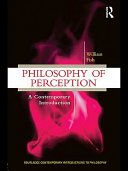
The philosophy of perception investigates the nature of our sensory experiences and their relation to reality. Raising questions about the conscious character of perceptual experiences, how they enable us to acquire knowledge of the world in which we live, and what exactly it is we are aware of when we hallucinate or dream, the philosophy of perception is a growing area of interest in metaphysics, epistemology, and philosophy of mind.William Fish’s Philosophy of Perception introduces the subject thematically, setting out the major theories of perception together with their motivations and attendant problems. While providing historical background to debates in the field, this comprehensive overview focuses on recent presentations and defenses of the different theories, and looks beyond visual perception to take into account the role of other senses.Topics covered include:The Phenomenal PrinciplePerception and HallucinationPerception and ContentSense-Data, Adverbialism and IdealismDisjunctivism and RelationalismIntentionalism and Combined TheoriesThe Nature of ContentVeridicalityPerception and Empirical ScienceNon-Visual PerceptionWith summaries and suggested further reading at the end of each chapter, this is an ideal introduction to the philosophy of perception.
When philosophers address personal identity, they usually explore numerical identity: what are the criteria for a person’s continuing existence? When non-philosophers address personal identity, they often have in mind narrative identity: Which characteristics of a particular person are salient to her self-conception? This book develops accounts of both senses of identity, arguing that both are normatively important, and is unique in its exploration of a range of issues in bioethics through the lens of identity. Defending a biological view of our numerical identity and a framework for understanding narrative identity, DeGrazia investigates various issues for which considerations of identity prove critical: the definition of death; the authority of advance directives in cases of severe dementia; the use of enhancement technologies; prenatal genetic interventions; and certain types of reproductive choices. He demonstrates the power of personal identity theory to illuminate issues in bioethics as they bring philosophical theory to life.
Moral philosophy has long been dominated by the aim of understanding morality and the virtues in terms of principles. However, the underlying assumption that this is the best approach has received almost no defence, and has been attacked by particularists, who argue that the traditional link between morality and principles is little more than an unwarranted prejudice. In Principled Ethics, Michael Ridge and Sean McKeever meet the particularist challenge head-on, and defend a distinctive view they call “generalism as a regulative ideal.”
This textbook looks at the main ethical questions that confront the criminal justice system – legislature, law enforcement, courts, and corrections – and those who work within that system, especially police officers, prosecutors, defence lawyers, judges, juries, and prison officers. John Kleinig sets the issues in the context of a liberal democratic society and its ethical and legislative underpinnings, and illustrates them with a wide and international range of real-life case studies. Topics covered include discretion, capital punishment, terrorism, restorative justice, and re-entry. Kleinig’s discussion is both philosophically acute and grounded in institutional realities, and will enable students to engage productively with the ethical questions which they encounter both now and in the future – whether as criminal justice professionals or as reflective citizens.
ما از اخلاق چه انتظاری داریم؟ این سوال شاید تاحدودی برای عموم مردم و یا متخصصان این رشته قابل پاسخ باشد؛ اینکه خوب بودن را به ما بیاموزد و در تنظیم روابط فردی م...

جشن کتاب تهران به ایستگاه سی و یکم رسیده است. حال و احوال نشر کتاب خوب نیست و باید فرهنگدوستان را به خرید و هدیه دادن کتاب ترغیب نمود. خانه اخلاقپژوهان جوان ب...

بنیاد کتابهای اخلاق اسلامی عمدتا پالایش جان از آلودگیها و آراستن آن به زیباییها است. اندیشه محوری این قبیل کتابها آن است که انسان فعلی آنی نیست که باید باشد...

-
0 Comments