Notice: تابع WP_Block_Type_Registry::register به طورنادرست فراخوانی شد. نامهای نوع بلوک نباید حروف بزرگ داشته باشند. لطفاً برای اطلاعات بیشتر، اشکال زدایی در وردپرس را مشاهده کنید. (این پیام در نگارش 5.0.0 افزوده شده است.) in /home/ethicsho/public_html/wp-includes/functions.php on line 5313
Warning: Use of undefined constant TDC_PATH_LEGACY - assumed 'TDC_PATH_LEGACY' (this will throw an Error in a future version of PHP) in /home/ethicsho/public_html/wp-content/plugins/td-composer/td-composer.php on line 109
Warning: Use of undefined constant TDSP_THEME_PATH - assumed 'TDSP_THEME_PATH' (this will throw an Error in a future version of PHP) in /home/ethicsho/public_html/wp-content/plugins/td-composer/td-composer.php on line 113 بایگانیهای 1660 - خانه اخلاق پژوهان جوان Notice: Trying to access array offset on value of type bool in /home/ethicsho/public_html/wp-content/plugins/wp-ulike/inc/general-functions.php on line 807
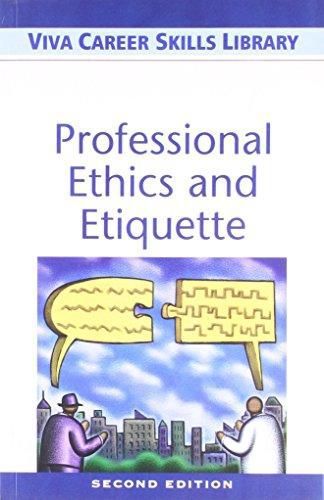
In a competitive and dynamic job market, having the right workplace skills is essential to securing a successful career. From finding a job and learning your way around a new work environment to scheduling projects and working effectively with colleagues, workers must know how to be effective, organized, and professional in the modern workplace. Each volume in the Career Skills Library details key competencies identified by the Department of Labor as essential to solid job performance. Through case studies, exercises, quizzes, and additional resources, these books will help readers learn and master the personal and professional skills essential for any career. Book jacket.
According to noncognitivists, when we say that stealing is wrong, what we are doing is more like venting our feelings about stealing or encouraging one another not to steal, than like stating facts about morality. These ideas challenge the core not only of much thinking about morality and metaethics, but also of much philosophical thought about language and meaning. Noncognitivism in Ethics is an outstanding introduction to these theories, ranging from their early history through the latest contemporary developments. Beginning with a general introduction to metaethics, Mark Schroeder introduces and assesses three principal kinds of noncognitivist theory: the speech-act theories of Ayer, Stevenson, and Hare, the expressivist theories of Blackburn and Gibbard, and hybrid theories. He pays particular attention both to the philosophical problems about what moral facts could be about or how they could matter which noncognitivism seeks to solve, and to the deep problems that it faces, including the task of explaining both the nature of moral thought and the complexity of moral attitudes, and the a ~Frege-Geacha (TM) problem. Schroeder makes even the most difficult material accessible by offering crucial background along the way. Also included are exercises at the end of each chapter, chapter summaries, and a glossary of technical terms – making Noncognitivism in Ethics essential reading for all students of ethics and metaethics.
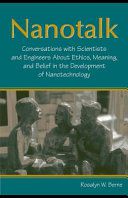
No one really knows where nanotechnology is leading, what its pursuit will mean, and how it may affect human and other forms of life. Nevertheless, its research and development are moving briskly into that unknown. It has been suggested that rapid movement towards ‘who knows where’ is endemic to all technological development; that its researchers pursue it for curiosity and enjoyment, without knowing the consequences, believing that their efforts will be beneficial. Further, that the enthusiasm for development comes with no malicious intent but rather from simple ignorance. Contrary to that commonly held perception about the collective pursuit of technological development, there are individual research scientists and engineers who are quite willing to reflect on the meaning of their work in nanotechnology.Nanotalk is a book of conversations and explorations with thirty five such nano-research scientists and engineers who share their ideas, experiences, perceptions, and beliefs about their work, humanity, nature, change, and the future of the world with nanotechnology. Precisely because of the unknowable nature of nanotechnology research and development, conscientious foresight and ethical reflection are warranted every step of the way. Not only do nanotechnology research and development represent enormous financial commitments, but they also require a profound leap of faith regarding its possible outcomes. Using these conversations as the basis of reflection and deliberation, the author explores the possible significance of nanotechnology to humanity and how it might be pursued conscientiously and ethically.
ما از اخلاق چه انتظاری داریم؟ این سوال شاید تاحدودی برای عموم مردم و یا متخصصان این رشته قابل پاسخ باشد؛ اینکه خوب بودن را به ما بیاموزد و در تنظیم روابط فردی م...

جشن کتاب تهران به ایستگاه سی و یکم رسیده است. حال و احوال نشر کتاب خوب نیست و باید فرهنگدوستان را به خرید و هدیه دادن کتاب ترغیب نمود. خانه اخلاقپژوهان جوان ب...

بنیاد کتابهای اخلاق اسلامی عمدتا پالایش جان از آلودگیها و آراستن آن به زیباییها است. اندیشه محوری این قبیل کتابها آن است که انسان فعلی آنی نیست که باید باشد...

-
0 Comments