Notice: تابع WP_Block_Type_Registry::register به طورنادرست فراخوانی شد. نامهای نوع بلوک نباید حروف بزرگ داشته باشند. لطفاً برای اطلاعات بیشتر، اشکال زدایی در وردپرس را مشاهده کنید. (این پیام در نگارش 5.0.0 افزوده شده است.) in /home/ethicsho/public_html/wp-includes/functions.php on line 5313
Warning: Use of undefined constant TDC_PATH_LEGACY - assumed 'TDC_PATH_LEGACY' (this will throw an Error in a future version of PHP) in /home/ethicsho/public_html/wp-content/plugins/td-composer/td-composer.php on line 109
Warning: Use of undefined constant TDSP_THEME_PATH - assumed 'TDSP_THEME_PATH' (this will throw an Error in a future version of PHP) in /home/ethicsho/public_html/wp-content/plugins/td-composer/td-composer.php on line 113 بایگانیهای 1641 - خانه اخلاق پژوهان جوان Notice: Trying to access array offset on value of type bool in /home/ethicsho/public_html/wp-content/plugins/wp-ulike/inc/general-functions.php on line 807
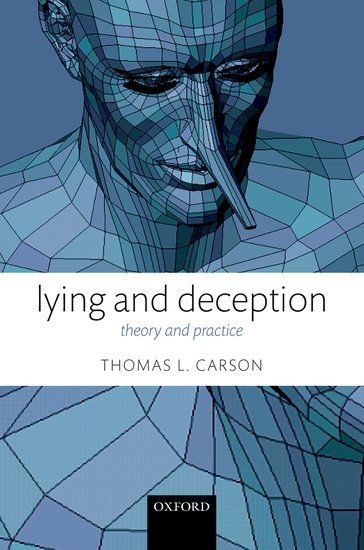
Thomas Carson offers the most comprehensive and up-to-date investigation of moral and conceptual questions about lying and deception. Part I addresses conceptual questions and offers definitions of lying, deception, and related concepts such as withholding information, “keeping someone in the dark,” and “half truths.” Part II deals with questions in ethical theory. Carson argues that standard debates about lying and deception between act-utilitarians and their critics are inconclusive because they rest on appeals to disputed moral intuitions. He defends a version of the golden rule and a theory of moral reasoning. His theory implies that there is a moral presumption against lying and deception that causes harm — a presumption at least as strong as that endorsed by act-utilitarianism. He uses this theory to justify his claims about the issues he addresses in Part III: deception and withholding information in sales, deception in advertising, bluffing in negotiations, the duties of professionals to inform clients, lying and deception by leaders as a pretext for fighting wars, and lying and deception about history (with special attention to the Holocaust), and cases of distorting the historical record by telling half-truths. The book concludes with a qualified defence of the view that honesty is a virtue.
This book explores philosophical ethics in Arabo-Islamic thought. Examining the meaning, origin and development of “Divine Command Theory”, it underscores the philosophical bases of religious fundamentalism that hinder social development and hamper dialogue between different cultures and nations.Challenging traditional stereotypes of Islam, the book refutes contemporary claims that Islam is a defining case of ethical voluntarism, and that the prominent theory in Islamic ethical thought is Divine Command Theory. The author argues that, in fact, early Arab-Islamic scholars articulated moral theories: theories of value and theories of obligation. She traces the development of Arabo-Islamic ethics from the early Islamic theological and political debates between the Kharijites and the Murji’ites, shedding new light on the moral theory of Abd al-Jabbar al-Mu’tazili and the effects of this moral theory on post-Mu’tazilite ethical thought.Highlighting important aspects in the development of Islamic thought, this book will appeal to students and scholars of Islamic moral thought and ethics, Islamic law, and religious fundamentalism.
The term bioethics was first used in the early 1970s by biologists who were concerned about ethical implications of genetic and ecological interventions, but was soon applied to all aspects of biomedical ethics, including health care delivery, research, and public policy. Its literature draws from disciplines as varied as clinical medicine and nursing, scientific research, theology and philosophy, law, and the social sciences?each with its own distinctive vocabulary and expressions. A Handbook of Bioethics Terms is a handy and concise glossary-style reference featuring over 400 entries on the significant terms, expressions, titles, and court cases that are most important to the field. Most entries are cross-referenced, making this handbook a valuable addition to the bookshelves of undergraduate and graduate students in health care ethics, physicians and nurses, members of institutional ethics committees, and others interested in bioethics.
Ethics and the University brings together two closely related topics, the practice of ethics in the university (“academic ethics”) and the teaching of practical or applied ethics in the university. This volume is divided into four parts: * A survey of practical ethics, offering an explanation of its recent emergence as a university subject, situating that subject into a wider social and historical context and identifying some problems that the subject generates for universities * An examination of research ethics, including the problem of plagiarism * A discussion of the teaching of practical ethics. Michael Davis explores how ethics can be integrated into the university curriculum and what part particular cases should play in the teaching of ethics * An exploration of sexual ethics Ethics and the University provides a stimulating and provocative analysis of academic ethics which will be useful to students, academics and practitioners.
ما از اخلاق چه انتظاری داریم؟ این سوال شاید تاحدودی برای عموم مردم و یا متخصصان این رشته قابل پاسخ باشد؛ اینکه خوب بودن را به ما بیاموزد و در تنظیم روابط فردی م...

جشن کتاب تهران به ایستگاه سی و یکم رسیده است. حال و احوال نشر کتاب خوب نیست و باید فرهنگدوستان را به خرید و هدیه دادن کتاب ترغیب نمود. خانه اخلاقپژوهان جوان ب...

بنیاد کتابهای اخلاق اسلامی عمدتا پالایش جان از آلودگیها و آراستن آن به زیباییها است. اندیشه محوری این قبیل کتابها آن است که انسان فعلی آنی نیست که باید باشد...

-
0 Comments