Notice: تابع WP_Block_Type_Registry::register به طورنادرست فراخوانی شد. نامهای نوع بلوک نباید حروف بزرگ داشته باشند. لطفاً برای اطلاعات بیشتر، اشکال زدایی در وردپرس را مشاهده کنید. (این پیام در نگارش 5.0.0 افزوده شده است.) in /home/ethicsho/public_html/wp-includes/functions.php on line 5313
Warning: Use of undefined constant TDC_PATH_LEGACY - assumed 'TDC_PATH_LEGACY' (this will throw an Error in a future version of PHP) in /home/ethicsho/public_html/wp-content/plugins/td-composer/td-composer.php on line 109
Warning: Use of undefined constant TDSP_THEME_PATH - assumed 'TDSP_THEME_PATH' (this will throw an Error in a future version of PHP) in /home/ethicsho/public_html/wp-content/plugins/td-composer/td-composer.php on line 113 بایگانیهای 1624 - خانه اخلاق پژوهان جوان Notice: Trying to access array offset on value of type bool in /home/ethicsho/public_html/wp-content/plugins/wp-ulike/inc/general-functions.php on line 807
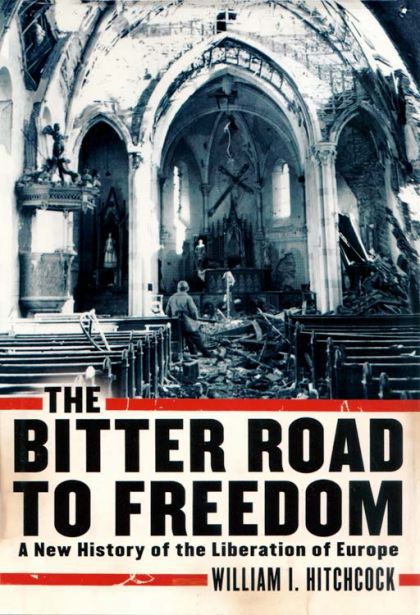
American s are justly proud of th e role their country played in liberating Europe from Nazi tyranny. For many years, we have celebrated the courage of Allied soldiers, sailors, and aircrews who defeated Hitler’s regime and restored freedom to the continent. But in recounting the heroism of the “greatest generation,” Americans often overlook the wartime experiences of European people themselves — the very people for whom the war was fought.In this brilliant new book, historian William I. Hitchcock surveys the European continent from D-Day to the final battles of the war and the first few months of the peace. Based on exhaustive research in five nations and dozens of archives, Hitchcock’s groundbreaking account shows that the liberation of Europe was both a military triumph and a human tragedy of epic proportions.Hitchcock gives voice to those who were on the receiving end of liberation, moving them from the edge of the story to the center. From France to Poland to Germany, from concentration-camp internees to refugees, farmers to shopkeepers, husbands and wives to children, the experience of liberation was often difficult and dangerous. Their gratitude was mixed with guilt or resentment. Their lives were difficult to reassemble.This strikingly original, multinational history of liberation brings to light the interactions of soldiers and civilians, the experiences of noncombatants, and the trauma of displacement and loss amid unprecedented destruction. This book recounts a surprising story, often jarring and uncomfortable, and one that has never been told with such richness and depth.Ranging from the ferocious battle for Normandy (where as many French civilians died on D-Day as U.S. servicemen) to the plains of Poland, from the icy ravines of the Ardennes to the shattered cities and refugee camps of occupied Germany, The Bitter Road to Freedom depicts in searing detail the shocking price that Europeans paid for their freedom.Today, with American soldiers once again waging wars of liberation in faraway lands, this book serves as a timely and sharp reminder of the terrible human toll exacted by even the most righteous of wars.
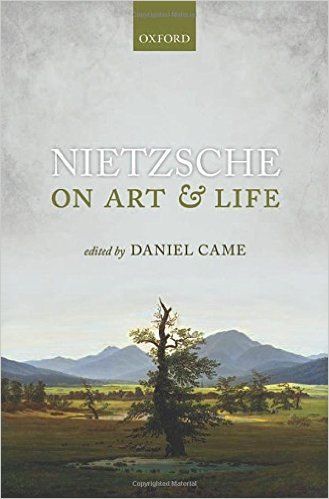
Nietzsche was not interested in the nature of art as such, or in providing an aesthetic theory of a traditional sort. For he regarded the significance of art to lie not in l’art pour l’art, but in the role that it might be play in enabling us positively to “revalue” the world and human experience. This volume brings together a number of distinguished figures in contemporary Anglo-American Nietzsche scholarship to examine his views on art and the aesthetic in the context of this wider philosophical project. All of the major themes of Nietzsche’s aesthetics are discussed: art and the affirmation of life, the relationship between art and truth, music, tragedy, the nature of aesthetic experience, the role of art in Nietzsche’s positive ethics, his critique of romanticism, and his ambivalent attitude towards Richard Wagner.–
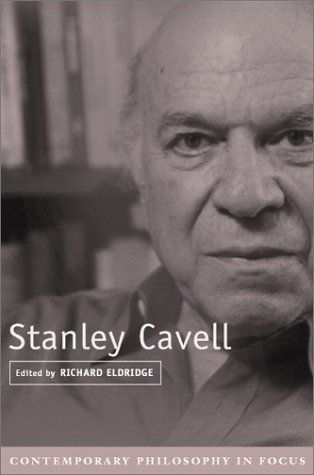
Stanley Cavell has been one of the most creative and independent of contemporary philosophical voices. At the core of his thought is the view that skepticism is not a theoretical position to be refuted by philosophical theory but is a reflection of the fundamental limits of human knowledge of the self, of others and of the external world that must be accepted. This volume is the first attempt systematically and accessibly to describe and assess the full range of Cavell’s work. There are new accounts of Cavell’s contribution to the philosophy of mind and language, the theory of action, ethics, aesthetics, Romanticism, American philosophy. Richard Eldridge is Professor of Philosophy and Chair of the Philsophy Department at Swarthmore College. He is author of The Persistence of Romanticism (Cambridge, 2001), On Moral Personhood: Philosophy, Literature, Criticism, and Self-Understanding (Chicago, 1989) and Leading a Human Life: Wittengenstein, Intentionality, and Romanticism (Chicago, 1997), which won the 1998 Jean-Pierre Barricelli Book Prize awarded by the American Conference on Romanticism. He is the editor of Beyond Representation: Philosophy and Poetic Imagination (Cambridge, 1996).
Agnes Heller is one of the leading thinkers to come out of the tradition of critical theory. Her awesome intellectual range and output includes ethics, philosophical anthropology, political philosophy and a theory of modernity and its culture.Hungarian by birth, she was one of the best known dissident Marxists in central Europe in the 1960’s and 1970’s. Since her forced immigration she has held visiting lectureships all over the world and has been the Hannah Arendt Professor of Philosophy at the New School in New York for the last twenty years.This introduction to her thought is ideal for all students of philosophy, political theory and sociology. Grumley explores Heller’s early work, elaborating her relation to Lukacs and the evolution of her own version of Marxism. He examines the subsequent break with Marxism and the initial development of an alternative radical philosophy. Finally, he explains and assesses her mature reflective post-modernism, a perspective that is both sceptical and utopian, that upholds a critical humanist perspective just as it critiques contemporary democratic culture.
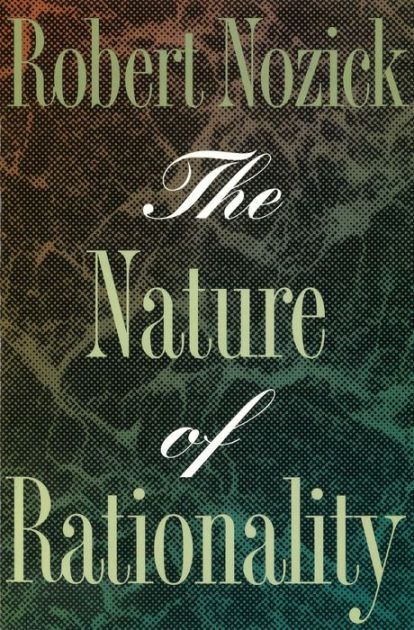
Repeatedly and successfully, the celebrated Harvard philosopher Robert Nozick has reached out to a broad audience beyond the confines of his discipline, addressing ethical and social problems that matter to every thoughtful person. Here Nozick continues his search for the connections between philosophy and “ordinary” experience. In the lively and accessible style that his readers have come to expect, he offers a bold theory of rationality, the one characteristic deemed to fix humanity’s “specialness”. What are principles for? asks Nozick. We could act simply on whim, or maximize our self-interest and recommend that others do the same. As Nozick explores rationality of decision and rationality of belief, he shows how principles actually function in our day-to-day thinking and in our efforts to live peacefully and productively with one another. In Nozick’s view, misconceptions of rationality have resulted in many intractable philosophical problems. For example, the Kantian attempt to make principled behavior the sole ultimate standard of conduct extends rationality beyond its bounds. In this provocative volume, Nozick reformulates current decision theory to include the symbolic meaning of actions in areas from controlling impulses to fighting society’s war against drugs. The author proposes a new rule of rational decision, “maximizing decision-value”, which is a weighted sum of causal, evidential, and symbolic utility. In a particularly fascinating section of the book he traces the implications of this rule for the famous Prisoner’s Dilemma and for Newcomb’s Problem. Rationality of belief, according to Nozick, involves two aspects: support by reasons that make the belief credible, andgeneration by a process that reliably produces true beliefs. A new evolutionary account explains how some factual connections are instilled in us as seemingly self-evident, thus reversing the direction of Kant’s “Copernican Revolution”. Proposing a theory of rational belief that includes both the intellectual credibility of the belief and the practical consequences of believing it, Nozick also provides a fresh resolution of the “lottery paradox”. Finally, Nozick explores the scope and limits of instrumental rationality, or the effective and efficient pursuit of given goals, and suggests some new conditions on the rationality of goals. Throughout, the book combines daring speculations with detailed investigations to portray the nature and status of rationality and the essential role that imagination plays in this singular human aptitude.
ما از اخلاق چه انتظاری داریم؟ این سوال شاید تاحدودی برای عموم مردم و یا متخصصان این رشته قابل پاسخ باشد؛ اینکه خوب بودن را به ما بیاموزد و در تنظیم روابط فردی م...

جشن کتاب تهران به ایستگاه سی و یکم رسیده است. حال و احوال نشر کتاب خوب نیست و باید فرهنگدوستان را به خرید و هدیه دادن کتاب ترغیب نمود. خانه اخلاقپژوهان جوان ب...

بنیاد کتابهای اخلاق اسلامی عمدتا پالایش جان از آلودگیها و آراستن آن به زیباییها است. اندیشه محوری این قبیل کتابها آن است که انسان فعلی آنی نیست که باید باشد...

-
0 Comments