Notice: تابع WP_Block_Type_Registry::register به طورنادرست فراخوانی شد. نامهای نوع بلوک نباید حروف بزرگ داشته باشند. لطفاً برای اطلاعات بیشتر، اشکال زدایی در وردپرس را مشاهده کنید. (این پیام در نگارش 5.0.0 افزوده شده است.) in /home/ethicsho/public_html/wp-includes/functions.php on line 5313
Warning: Use of undefined constant TDC_PATH_LEGACY - assumed 'TDC_PATH_LEGACY' (this will throw an Error in a future version of PHP) in /home/ethicsho/public_html/wp-content/plugins/td-composer/td-composer.php on line 109
Warning: Use of undefined constant TDSP_THEME_PATH - assumed 'TDSP_THEME_PATH' (this will throw an Error in a future version of PHP) in /home/ethicsho/public_html/wp-content/plugins/td-composer/td-composer.php on line 113 بایگانیهای 1582 - خانه اخلاق پژوهان جوان Notice: Trying to access array offset on value of type bool in /home/ethicsho/public_html/wp-content/plugins/wp-ulike/inc/general-functions.php on line 807
Memory and forgetting are inextricably intertwined. In order to understand how memory works we need to understand how and why we forget. The topic of forgetting is therefore hugely important, despite the fact that it has often been neglected in comparison with other features of memory.This volume addresses various aspects of forgetting, drawing from several disciplines, including experimental and cognitive psychology, cognitive and clinical neuropsychology, behavioural neuroscience, neuroimaging, clinical neurology, and computational modeling. The first chapters of the book discuss the history of forgetting, its theories and accounts, the difference between short-term and long-term forgetting as well as the relevance of forgetting within each of the numerous components of memory taxonomy. The central part summarizes and discusses what we have learned about forgetting from animal work, from computational modeling, and from neuroimaging. Further chapters discuss pathological forgetting in patients with amnesia and epilepsy, as well as psychogenic forgetting. The book concludes by focusing on the difference between forgetting of autobiographical memories versus collective memory forgetting.This book is the first to address the issue of forgetting from an interdisciplinary point of view, but with a particular emphasis on psychology. The book is scientific and yet accessible in tone, and as such is suitable for advanced undergraduate and postgraduate students of psychology and related subjects, such as science and neuroscience.
Abortion in Judaism presents a complete Jewish legal history of abortion from the earliest relevant biblical references through the end of the twentieth century. For the first time, almost every Jewish text relevant to the abortion issue is explored in detail. These texts are investigated in historical sequence, thereby elucidating the development inherent within the Jewish approach to abortion. Following the examination of the foundational sources, a range of contemporary responses from across the Jewish spectrum is also introduced in order to probe their place in this history, as well as to discern the directions in which they would have the law proceed. The impact of Jewish abortion law upon Israeli legislative enactments is evaluated, along with the social outcomes of such legislation. Finally, the work considers the insights that this thematic history provides into Jewish ethical principles, as well as into the role of halakhah within Judaism.
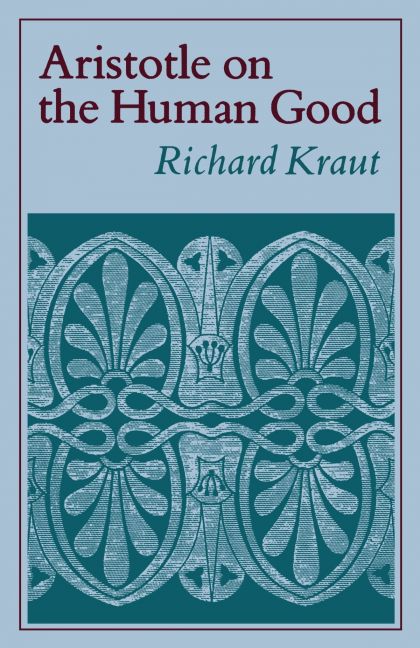
Aristotle’s Nicomachean Ethics, which equates the ultimate end of human life with happiness (eudaimonia), is thought by many readers to argue that this highest goal consists in the largest possible aggregate of intrinsic goods. Richard Kraut proposes instead that Aristotle identifies happiness with only one type of good: excellent activity of the rational soul. In defense of this reading, Kraut discusses Aristotle’s attempt to organize all human goods into a single structure, so that each subordinate end is desirable for the sake of some higher goal.This book also emphasizes the philosopher’s hierarchy of natural kinds, in which every type of creature achieves its good by imitating divine life. As Kraut argues, Aristotle’s belief that thinking is the sole activity of the gods leads him to an intellectualist conception of the ethical virtues. Aristotle values these traits because, by subordinating emotion to reason, they enhance our ability to lead a life devoted to philosophy or politics.
ما از اخلاق چه انتظاری داریم؟ این سوال شاید تاحدودی برای عموم مردم و یا متخصصان این رشته قابل پاسخ باشد؛ اینکه خوب بودن را به ما بیاموزد و در تنظیم روابط فردی م...

جشن کتاب تهران به ایستگاه سی و یکم رسیده است. حال و احوال نشر کتاب خوب نیست و باید فرهنگدوستان را به خرید و هدیه دادن کتاب ترغیب نمود. خانه اخلاقپژوهان جوان ب...

بنیاد کتابهای اخلاق اسلامی عمدتا پالایش جان از آلودگیها و آراستن آن به زیباییها است. اندیشه محوری این قبیل کتابها آن است که انسان فعلی آنی نیست که باید باشد...

-
0 Comments