Notice: تابع WP_Block_Type_Registry::register به طورنادرست فراخوانی شد. نامهای نوع بلوک نباید حروف بزرگ داشته باشند. لطفاً برای اطلاعات بیشتر، اشکال زدایی در وردپرس را مشاهده کنید. (این پیام در نگارش 5.0.0 افزوده شده است.) in /home/ethicsho/public_html/wp-includes/functions.php on line 5313
Warning: Use of undefined constant TDC_PATH_LEGACY - assumed 'TDC_PATH_LEGACY' (this will throw an Error in a future version of PHP) in /home/ethicsho/public_html/wp-content/plugins/td-composer/td-composer.php on line 109
Warning: Use of undefined constant TDSP_THEME_PATH - assumed 'TDSP_THEME_PATH' (this will throw an Error in a future version of PHP) in /home/ethicsho/public_html/wp-content/plugins/td-composer/td-composer.php on line 113 بایگانیهای 1564 - خانه اخلاق پژوهان جوان Notice: Trying to access array offset on value of type bool in /home/ethicsho/public_html/wp-content/plugins/wp-ulike/inc/general-functions.php on line 807
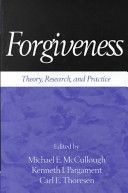
Bringing together a distinguished array of researchers and scholars, this volume reviews the breadth of current knowledge on the psychology of forgiveness. In addition to presenting cutting-edge theory and research, the book outlines crucial issues that must be addressed to advance the state of the science in years to come. The first section provides a historical and conceptual overview, examining definitional problems and giving special attention to religious and cultural influences on how forgiveness is understood and experienced. The biological, developmental, social, and personality foundations of forgiveness are then explored. The final section covers applications in clinical research and practice, including guidelines for studying and applying forgiveness-based strategies in psychotherapy, counseling, and interventions to promote health. This volume will be of interest to a broad interdisciplinary audience of researchers, educators, students, and practicing professionals.
Choice Outstanding Academic Title, 2000.A Choice Outstanding Academic Title for 1999Academic debates about pluralism and truth have become increasingly polarized in recent years. One side embraces extreme relativism, deeming any talk of objective truth as philosophically naive. The opposition, frequently arguing that any sort of relativism leads to nihilism, insists on an objective notion of truth according to which there is only one true story of the world. Both sides agree that there is no middle path.In Truth in Context, Michael Lynch argues that there is a middle path, one where metaphysical pluralism is consistent with a robust realism about truth. Drawing on the work of Hilary Putnam, W. V. O. Quine, and Ludwig Wittgenstein, among others, Lynch develops an original version of metaphysical pluralism, which he calls relativistic Kantianism. He argues that one can take facts and propositions as relative without implying that our ordinary concept of truth is a relative, epistemic, or “soft” concept. The truths may be relative, but our concept of truth need not be.
Simone de Beauvoir was a philosopher and writer of notable range and influence whose work is central to feminist theory, French existentialism, and contemporary moral and social philosophy. The essays in this volume examine the major aspects of her thought. They explore her views on the role of biology, sexuality and sexual difference, and evil; the influence on her work of Heidegger, Sartre, Merleau-Ponty, Husserl, and others; and the philosophical significance of her memoirs and fiction.
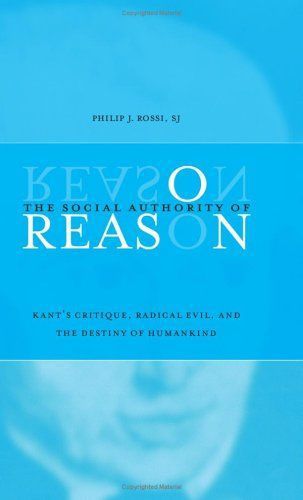
In “The Social Authority of Reason, Philip J. Rossi, SJ argues that the current cultural milieu of globalization is strikingly reflective of the human condition appraised by kant, in which mutual social interaction for human good is hamstrung by our contentious “unsociable sociability.” He situates the paradoxical nature of contemporary society–“its opportunities for deepening the bonds of our common human mutuality along with its potential for enlarging the fissures that arise from our human differences–“in the context of Kant’s notion of radical evil. As a corrective, Rossi proposes that we draw upon the social charcater of Kant’s critique of reason, which offers a communal trajectory for human moral effort and action. This trajectory still has power to open the path to what Kant called “the highest political good”–“lasting peace among nations.
ما از اخلاق چه انتظاری داریم؟ این سوال شاید تاحدودی برای عموم مردم و یا متخصصان این رشته قابل پاسخ باشد؛ اینکه خوب بودن را به ما بیاموزد و در تنظیم روابط فردی م...

جشن کتاب تهران به ایستگاه سی و یکم رسیده است. حال و احوال نشر کتاب خوب نیست و باید فرهنگدوستان را به خرید و هدیه دادن کتاب ترغیب نمود. خانه اخلاقپژوهان جوان ب...

بنیاد کتابهای اخلاق اسلامی عمدتا پالایش جان از آلودگیها و آراستن آن به زیباییها است. اندیشه محوری این قبیل کتابها آن است که انسان فعلی آنی نیست که باید باشد...

-
0 Comments