Notice: تابع WP_Block_Type_Registry::register به طورنادرست فراخوانی شد. نامهای نوع بلوک نباید حروف بزرگ داشته باشند. لطفاً برای اطلاعات بیشتر، اشکال زدایی در وردپرس را مشاهده کنید. (این پیام در نگارش 5.0.0 افزوده شده است.) in /home/ethicsho/public_html/wp-includes/functions.php on line 5313
Warning: Use of undefined constant TDC_PATH_LEGACY - assumed 'TDC_PATH_LEGACY' (this will throw an Error in a future version of PHP) in /home/ethicsho/public_html/wp-content/plugins/td-composer/td-composer.php on line 109
Warning: Use of undefined constant TDSP_THEME_PATH - assumed 'TDSP_THEME_PATH' (this will throw an Error in a future version of PHP) in /home/ethicsho/public_html/wp-content/plugins/td-composer/td-composer.php on line 113 بایگانیهای 1553 - خانه اخلاق پژوهان جوان Notice: Trying to access array offset on value of type bool in /home/ethicsho/public_html/wp-content/plugins/wp-ulike/inc/general-functions.php on line 807
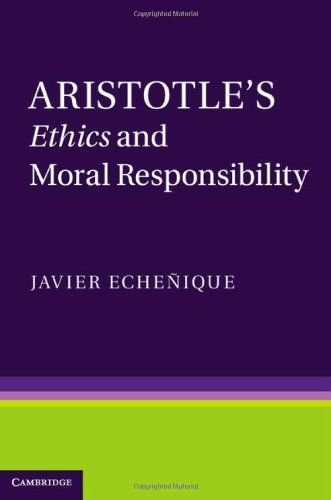
“Aristotle’s Ethics develops a complex theory of the qualities which make for a good human being and for several decades there has been intense discussion about whether Aristotle’s theory of voluntariness, outlined in the Ethics, actually delineates what modern thinkers would recognize as a theory of moral responsibility. Javier Echeñique presents a novel account of Aristotle’s discussion of voluntariness in the Ethics, arguing – against the interpretation by Arthur Adkins and that inspired by Peter Strawson – that he developed an original and compelling theory of moral responsibility and that this theory has contributed in important ways to our understanding of coercion, ignorance and violence. His study will be valuable for a wide range of readers interested in Aristotle and in ancient ethics more broadly”–
Over the last fifteen years, Michael Smith has written a series of seminal essays about the nature of belief and desire, the status of normative judgment, and the relevance of the views we take on both these topics to the accounts we give of our nature as free and responsible agents. This long awaited collection comprises some of the most influential of Smith’s essays. Among the topics covered are: the Humean theory of motivating reasons, the nature of normative reasons, Williams and Korsgaard on internal and external reasons, the nature of self-control, weakness of will, compulsion, freedom, responsibility, the analysis of our rational capacities, moral realism, the dispositional theory of value, the supervenience of the normative on the non-normative, the error theory, rationalist treatments of moral judgment, the practicality requirement on moral judgment and non-cognivist. This collection will be of interest to students in philosophy and psychology.
In 1972, the young philosopher Peter Singer published “Famine, Affluence and Morality,” which rapidly became one of the most widely discussed essays in applied ethics. Through this article, Singer presents his view that we have the same moral obligations to those far away as we do to those close to us. He argued that choosing not to send life-saving money to starving people on the other side of the earth is the moral equivalent of neglecting to save drowning children because we prefer not to muddy our shoes. If we can help, we must–and any excuse is hypocrisy. Singer’s extreme stand on our moral obligations to others became a powerful call to arms and continues to challenge people’s attitudes towards extreme poverty. Today, it remains a central touchstone for those who argue we should all help others more than we do. As Bill and Melinda Gates observe in their foreword, in the age of today’s global philanthropy, Singer’s essay is as relevant now as it ever was. This attractively packaged, concise edition collects the original article, two of Singer’s more recent popular writings on our obligations to others around the world, and a new introduction by Singer that discusses his current thinking.
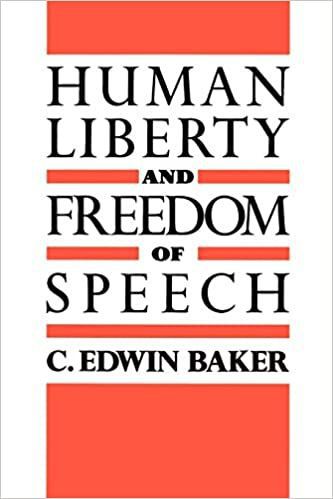
Although an inchoate liberty theory of freedom of speech has deep roots in Supreme Court decisions and political history, it has been overshadowed in judicial decisions and scholarly commentary by the marketplace of ideas theory. In this book, Baker critiques the assumptions required by the marketplace of ideas theory and develops the liberty theory, showing its philosophical soundness, persuasiveness, and ability to protect free speech. He argues that First Amendment liberty rights (as well as Fourteenth Amendment equality rights) required by political or moral theory are central to the possibility of progressive change. Problem areas are examined, including the question of whether individual political and civil rights can in principle be distinguished from property rights, freedom of the press, and the use of public spaces for expressive purposes.
ما از اخلاق چه انتظاری داریم؟ این سوال شاید تاحدودی برای عموم مردم و یا متخصصان این رشته قابل پاسخ باشد؛ اینکه خوب بودن را به ما بیاموزد و در تنظیم روابط فردی م...

جشن کتاب تهران به ایستگاه سی و یکم رسیده است. حال و احوال نشر کتاب خوب نیست و باید فرهنگدوستان را به خرید و هدیه دادن کتاب ترغیب نمود. خانه اخلاقپژوهان جوان ب...

بنیاد کتابهای اخلاق اسلامی عمدتا پالایش جان از آلودگیها و آراستن آن به زیباییها است. اندیشه محوری این قبیل کتابها آن است که انسان فعلی آنی نیست که باید باشد...

-
0 Comments