Notice: تابع WP_Block_Type_Registry::register به طورنادرست فراخوانی شد. نامهای نوع بلوک نباید حروف بزرگ داشته باشند. لطفاً برای اطلاعات بیشتر، اشکال زدایی در وردپرس را مشاهده کنید. (این پیام در نگارش 5.0.0 افزوده شده است.) in /home/ethicsho/public_html/wp-includes/functions.php on line 5313
Warning: Use of undefined constant TDC_PATH_LEGACY - assumed 'TDC_PATH_LEGACY' (this will throw an Error in a future version of PHP) in /home/ethicsho/public_html/wp-content/plugins/td-composer/td-composer.php on line 109
Warning: Use of undefined constant TDSP_THEME_PATH - assumed 'TDSP_THEME_PATH' (this will throw an Error in a future version of PHP) in /home/ethicsho/public_html/wp-content/plugins/td-composer/td-composer.php on line 113 بایگانیهای 1497 - خانه اخلاق پژوهان جوان Notice: Trying to access array offset on value of type bool in /home/ethicsho/public_html/wp-content/plugins/wp-ulike/inc/general-functions.php on line 807
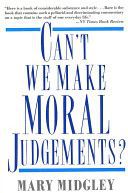
In this book, Mary Midgely turns a spotlight on the fashionable view that we no longer need or use moral judgements. She shows how the question of whether or not we can make moral judgements must inevitably affect our attitudes to the law and its institutions, but also to events that occur in our daily lives.
Do national boundaries have fundamental moral significance, or do we have moral obligations to foreigners that are equal to our obligations to our compatriots? The latter position is known as cosmopolitanism, and this volume brings together a number of distinguished political philosophers and theorists to explore cosmopolitanism and the positive arguments that can be made for it. Their essays provide a comprehensive overview of the current state of the debate as well as the alternative visions of cosmopolitanism that will interest a wide range of readers in philosophy, political theory, and law.
What does it mean to lead a moral life? In her first extended study of moral philosophy, Judith Butler offers aprovocative outline for a new ethical practice–one responsive to the need for critical autonomy and grounded in a new sense of the human subject. Butler takes as her starting point one’s ability to answer the questions ocirc;What have I done?ouml; and ocirc;What ought I to do?ouml; She shows that these question can be answered only by asking a prior question, ocirc;Who is this aelig;I’ who is under an obligation to give an account of itself and to act in certain ways?ouml; Because I find that I cannot give an account of myself without accounting for the social conditions under which I emerge, ethical reflection requires a turn to social theory. In three powerfully crafted and lucidly written chapters, Butler demonstrates how difficult it is to give an account of oneself, and how this lack of self-transparency and narratibility is crucial to an ethical understanding of the human. In brilliant dialogue with Adorno, Levinas, Foucault, and other thinkers, she eloquently argues the limits, possibilities, and dangers of contemporary ethical thought. Butler offers a critique of the moral self, arguing that the transparent, rational, and continuous ethical subject is an impossible construct that seeks to deny the specificity of what it is to be human. We can know ourselves only incompletely, and only in relation to a broader social world that has always preceded us and already shaped us in ways we cannot grasp. If inevitably we are partially opaque to ourselves, how can giving an account of ourselves define the ethical act? And doesn’t an ethical system that holds us impossibly accountable for full self-knowledge and self-consistency inflict a kind of psychic violence, leading to a culture of self-beratement and cruelty? How does the turn to social theory offer us a chance to understand the specifically social character of our own unknowingness about ourselves? In this invaluable book, by recasting ethics as a project in which being ethical means becoming critical of norms under which we are asked to act, but which we can never fully choose, Butler illuminates what it means for us as ocirc;fallible creaturesouml; to create and share an ethics of vulnerability, humility, and ethical responsiveness.
The concept of global justice makes visible how we citizens of affluent countries are potentially implicated in the horrors so many must endure in the so-called less developed countries.Distinct conceptions of global justice differ in their specific criteria of global justice. However, they agree that the touchstone is how well our global institutional order is doing, compared to its feasible alternatives, in regard to the fundamental human interests that matter from a moral point of view.We are responsible for global regimes such as the global trading system and the rules governing military interventions. These institutional arrangements affect human beings worldwide, for instance by shaping the options and incentives of governments and corporations. Alternative paths of globalization would have differed in how much violence, oppression, and extreme poverty they engender. And global institutional reforms could greatly enhance human rights fullfillment in the future.The importance of this global justice approach reaches well beyond philosophy. It helps ordinary citizens evaluate their options and their responsibility for global institutional factors, and it challenges social scientists to address the causes of poverty and hunger that act across borders.The present volume addresses four main topics regarding global justice: The normative grounds for claims regarding the global institutional order, the substantive normative principles for a legitimate global order, the roles of legal human rights standards, and some institutional arrangements that may make the present world order less unjust.All royalties from this book have been assigned to Oxfam.
Alan Millar examines our understanding of why people think and act as they do. His key theme is that normative considerations form an indispensable part of the explanatory framework in terms of which we seek to understand each other. Millar defends a conception according to which normativity is linked to reasons. On this basis he examines the structure of certain normative commitments incurred by having propositional attitudes. Controversially, he argues that ascriptions of beliefs and intentions in and of themselves attribute normative commitments and that this has implications for the psychology of believing and intending. Indeed, all propositional attitudes of the sort we ascribe to people have a normative dimension, since possessing the concepts that the attitudes implicate is of its very nature commitment-incurring. The ramifications of these views for our understanding of people is explored. Millar offers illuminating discussions of reasons for belief and reasons for action; the explanation of beliefs and actions in terms of the subject’s reasons; the idea that simulation has a key role in understanding people; and the limits of explanation in terms of propositional attitudes. He compares and contrasts the commitments incurred by propositional attitudes with those incurred by participating in practices, arguing that the former should not be assimilated to the latter. Understanding People will be of great interest to most philosophers of mind, as well as to those working on practical and theoretical reasoning.
ما از اخلاق چه انتظاری داریم؟ این سوال شاید تاحدودی برای عموم مردم و یا متخصصان این رشته قابل پاسخ باشد؛ اینکه خوب بودن را به ما بیاموزد و در تنظیم روابط فردی م...

جشن کتاب تهران به ایستگاه سی و یکم رسیده است. حال و احوال نشر کتاب خوب نیست و باید فرهنگدوستان را به خرید و هدیه دادن کتاب ترغیب نمود. خانه اخلاقپژوهان جوان ب...

بنیاد کتابهای اخلاق اسلامی عمدتا پالایش جان از آلودگیها و آراستن آن به زیباییها است. اندیشه محوری این قبیل کتابها آن است که انسان فعلی آنی نیست که باید باشد...

-
0 Comments