Notice: تابع WP_Block_Type_Registry::register به طورنادرست فراخوانی شد. نامهای نوع بلوک نباید حروف بزرگ داشته باشند. لطفاً برای اطلاعات بیشتر، اشکال زدایی در وردپرس را مشاهده کنید. (این پیام در نگارش 5.0.0 افزوده شده است.) in /home/ethicsho/public_html/wp-includes/functions.php on line 5313
Warning: Use of undefined constant TDC_PATH_LEGACY - assumed 'TDC_PATH_LEGACY' (this will throw an Error in a future version of PHP) in /home/ethicsho/public_html/wp-content/plugins/td-composer/td-composer.php on line 109
Warning: Use of undefined constant TDSP_THEME_PATH - assumed 'TDSP_THEME_PATH' (this will throw an Error in a future version of PHP) in /home/ethicsho/public_html/wp-content/plugins/td-composer/td-composer.php on line 113 بایگانیهای 1342 - خانه اخلاق پژوهان جوان Notice: Trying to access array offset on value of type bool in /home/ethicsho/public_html/wp-content/plugins/wp-ulike/inc/general-functions.php on line 807
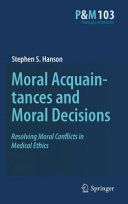
The potential of modern medicine in a pluralistic world leads to the potential for moral conflict. The most prevalent bioethical theories often either overestimate or underestimate the amount of shared moral belief that can be used to address those conflicts. This work presents a means for taking seriously the pluralism in the modern world while recognizing the likelihood of moral acquaintance between persons with differing views. It criticizes moral theories that overstate the extent of the problem of pluralism as well as those that imply too much agreement between reasonable moral persons, yet it locates a means for the resolution of many moral conflicts in moral acquaintanceship. Drawing from the work of H. Tristram Engelhardt, Jr., casuists and principle-based theorists, and Erich Loewy and Kevin W. Wildes s initial development of the concept of moral acquaintanceship, Moral Acquaintances and Moral Decisions is philosophically indepth work with direct applications for decisionmaking in real medical settings. A work in moral theory as well as a source of real world guidance, clinically oriented bioethics professionals as well as students of bioethical theory should find the theory of moral acquaintanceship provided here important to their work.
The second volume in applied ethics based on the distinguished Wayne Leys Memorial Lectureship Series. With guidelines from legal reasoning, Michael D. Bayles examines “Moral Theory and Application.” Abraham Edel questions “Ethics Applied Or Conduct Enlightened?” The late Warner A. Wick shows in “The Good Person and the Good Society: Some Ideals Foolish and Otherwise” that devotion to ideals need not be either fanaticism or foolishness. John Lachs contends that many public gains are purchased at the cost of individuals being manipulated in “Public Benefit, Private Costs.” James E. Childress in “Gift of Life…” considers ethical issues in obtaining and distributing human organs. Carl Wellman in “Terrorism and Moral Rights” argues that there can be no “rights-based justification” for anti-abortion terrorism.
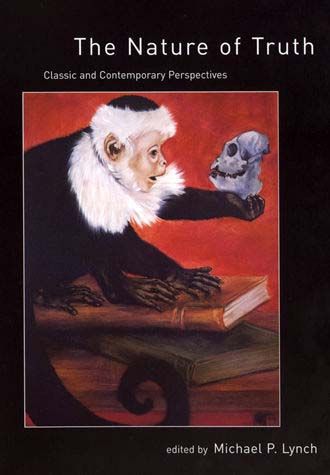
“What is truth?” has long been the philosophical question par excellence. The Nature of Truth collects in one volume the twentieth century’s most influential philosophical work on the subject. The coverage strikes a balance between classic works and the leading edge of current philosophical research.The essays center around two questions: Does truth have an underlying nature? And if so, what sort of nature does it have? Thus the book discusses both traditional and deflationary theories of truth, as well as phenomenological, postmodern, and pluralist approaches to the problem. The essays are organized by theory. Each of the seven sections opens with a detailed introduction that not only discusses the essays in that section but relates them to other relevant essays in the book. Eleven of the essays are previously unpublished or substantially revised. The book also includes suggestions for further reading.Contributors:Linda Martin Alcoff, William P. Alston, J. L. Austin, Brand Blanshard, Marian David, Donald Davidson, Michael Devitt, Michael Dummett, Hartry Field, Michel Foucault, Dorothy Grover, Anil Gupta, Martin Heidegger, Terence Horgan, Jennifer Hornsby, Paul Horwich, William James, Michael P. Lynch, Charles Sanders Pierce, Hilary Putnam, W. V. O. Quine, F. P. Ramsey, Richard Rorty, Bertrand Russell, Scott Soames, Ernest Sosa, P. F. Strawson, Alfred Tarski, Ralph C. Walker, Crispin Wright.
Simon Blackburn puts forward a compelling and original philosophy of human motivation and morality. Why do we behave as we do? Can we improve? Is our ethics at war with our passions, or is it an upshot of those passions? Blackburn seeks the answers to such questions in an exploration of the nature of moral emotions and the structures of human motivation. He develops a naturalistic ethics, which integrates our understanding of ethics with the rest of our understanding of the world we live in. His theory does not debunk the ethical by reducing it to the non-ethical, and it banishes the spectres of scepticism and relativism that have haunted recent moral philosophy. Ruling Passions reveals how ethics can maintain its authority even though it is rooted in the very emotions and motivations that it exists to control.
ما از اخلاق چه انتظاری داریم؟ این سوال شاید تاحدودی برای عموم مردم و یا متخصصان این رشته قابل پاسخ باشد؛ اینکه خوب بودن را به ما بیاموزد و در تنظیم روابط فردی م...

جشن کتاب تهران به ایستگاه سی و یکم رسیده است. حال و احوال نشر کتاب خوب نیست و باید فرهنگدوستان را به خرید و هدیه دادن کتاب ترغیب نمود. خانه اخلاقپژوهان جوان ب...

بنیاد کتابهای اخلاق اسلامی عمدتا پالایش جان از آلودگیها و آراستن آن به زیباییها است. اندیشه محوری این قبیل کتابها آن است که انسان فعلی آنی نیست که باید باشد...

-
0 Comments