Notice: تابع WP_Block_Type_Registry::register به طورنادرست فراخوانی شد. نامهای نوع بلوک نباید حروف بزرگ داشته باشند. لطفاً برای اطلاعات بیشتر، اشکال زدایی در وردپرس را مشاهده کنید. (این پیام در نگارش 5.0.0 افزوده شده است.) in /home/ethicsho/public_html/wp-includes/functions.php on line 5313
Warning: Use of undefined constant TDC_PATH_LEGACY - assumed 'TDC_PATH_LEGACY' (this will throw an Error in a future version of PHP) in /home/ethicsho/public_html/wp-content/plugins/td-composer/td-composer.php on line 109
Warning: Use of undefined constant TDSP_THEME_PATH - assumed 'TDSP_THEME_PATH' (this will throw an Error in a future version of PHP) in /home/ethicsho/public_html/wp-content/plugins/td-composer/td-composer.php on line 113 بایگانیهای 1260 - خانه اخلاق پژوهان جوان Notice: Trying to access array offset on value of type bool in /home/ethicsho/public_html/wp-content/plugins/wp-ulike/inc/general-functions.php on line 807
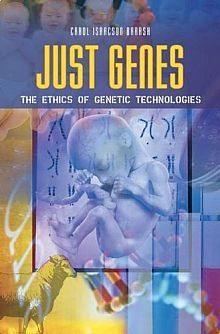
Advances in genetics research, largely, though not entirely, spawned by the Human Genome Project, have led to a broad array of new technologies that promise to revolutionize life as we have known it. Medicine and agriculture are already starting to utilize new technologies to greatly improve disease prevention and treatment and food production. Yet, these “improvements” often raise ethical questions that are not easy to untangle. Some have gone as far to as to argue that certain applications, such as embryonic stem cell research, threaten the very fiber of our moral compass. While the application of scientific advances to better mankind has always raised thorny ethical issues, the ethical impact of genetic advances arguably reaches a new height because the applicability of advances is exceptionally broad, deep, and potentially irreversible. To utilize such technologies could mean saving thousands of lives, but where and how do we draw the line? Here, Barash sheds light on the actual ethical concerns surrounding various types of genetic technologies, introducing readers to the competing issues at stake in the arguments about the scientific application of the new technologies available and those on the horizon. She begins by illustrating the history of genetic advances, their societal applications, and the ethical issues that have arisen from those applications. Using case studies and examples throughout, she walks readers through the various considerations involved in a variety of areas related to the application of genetic technologies currently available and possible in the future. Covering topics ranging from stem cell research to genetically modified food, genetic mapping to cloning, this book offers a thoughtful approach to the complex issues at play in the various fields of genetic technologies.
Mark Platts’ influential first book “Ways of Meaning” argued within the context of the philosophy of language that a realist’ account of moral thought was possible. “Moral Realities” defends the same possibility from the perspective of the philosophy of psychology. “Moral Realities” engages the classical moral philosophies of Hume, Mandeville and Nietzsche, and tackles the powerful arguments of the contemporary moral relativists. Platts uses an existing critique of philosophical notions of desire and value to present a descriptive metaphysics of morals–clarifying both what morality is and what it is not. He also employs a classification of desire that articulates a general theory of value and valuing which is distinguished by a cognitive approach given to certain kinds of moral valuing. The possibility of applying this approach to moral valuings is defended against the persuasive criticisms of both the Humean subjectivist and the contemporary moral relativist. This is a challenging book which illuminates many of the major issues of contemporary moral philosophy including: the practical nature of moral thought, free will and choice, morality and religious belief, and the pragmatics of moral discourse.
Written toward the end of World War I, this study of economics tackles the issue from the standpoint of religion and philosophy by summarizing the Catholic school of economics, which insists that the welfare of human beings belongs at the center of any real economy and that other systems that place either the individual or the state at the center of their schemes are not only false, but actually injurious to individuals, families, communities, and nations. Extensive documentation and citations from leading economic theorists are provided.
Freedom of the sort implicated in acting freely or with free will is important to the truth of different sorts of moral judgment, such as judgments of moral responsibility and those of moral obligation. Little thought, however, has been invested into whether appraisals of good or evil presuppose free will. This important topic has not commanded the attention it deserves owing to what is perhaps a prevalent assumption that freedom leaves judgments concerning good and evil largely unaffected. The central aim of this book is to dispute this assumption by arguing for the relevance of free will to the truth of two sorts of such judgment: welfare-ranking judgments or judgments of personal well-being (when is one’s life intrinsically good for the one who lives it?), and world-ranking judgments (when is a possible world intrinsically better than another?). The book also examines free will’s impact on the truth of such judgments for central issues in moral obligation and in the free will debate. This book should be of interest to those working on intrinsic value, personal well-being, moral obligation, and free will.
ما از اخلاق چه انتظاری داریم؟ این سوال شاید تاحدودی برای عموم مردم و یا متخصصان این رشته قابل پاسخ باشد؛ اینکه خوب بودن را به ما بیاموزد و در تنظیم روابط فردی م...

جشن کتاب تهران به ایستگاه سی و یکم رسیده است. حال و احوال نشر کتاب خوب نیست و باید فرهنگدوستان را به خرید و هدیه دادن کتاب ترغیب نمود. خانه اخلاقپژوهان جوان ب...

بنیاد کتابهای اخلاق اسلامی عمدتا پالایش جان از آلودگیها و آراستن آن به زیباییها است. اندیشه محوری این قبیل کتابها آن است که انسان فعلی آنی نیست که باید باشد...

-
0 Comments