Notice: تابع WP_Block_Type_Registry::register به طورنادرست فراخوانی شد. نامهای نوع بلوک نباید حروف بزرگ داشته باشند. لطفاً برای اطلاعات بیشتر، اشکال زدایی در وردپرس را مشاهده کنید. (این پیام در نگارش 5.0.0 افزوده شده است.) in /home/ethicsho/public_html/wp-includes/functions.php on line 5313
Warning: Use of undefined constant TDC_PATH_LEGACY - assumed 'TDC_PATH_LEGACY' (this will throw an Error in a future version of PHP) in /home/ethicsho/public_html/wp-content/plugins/td-composer/td-composer.php on line 109
Warning: Use of undefined constant TDSP_THEME_PATH - assumed 'TDSP_THEME_PATH' (this will throw an Error in a future version of PHP) in /home/ethicsho/public_html/wp-content/plugins/td-composer/td-composer.php on line 113 بایگانیهای 1251 - خانه اخلاق پژوهان جوان Notice: Trying to access array offset on value of type bool in /home/ethicsho/public_html/wp-content/plugins/wp-ulike/inc/general-functions.php on line 807
Film & Ethics considers a range of films and texts of film criticism alongside disparate philosophical discourses of ethics by Levinas, Derrida, Foucault, Lacanian psychoanalysts and postmodern theorists. While an ethics of looking is implicitly posited in most strands of cinema theory, there is no established body of work that might be called ethical film criticism. This book, therefore, redresses the reluctance of many existing works to address cinema from an explicitly ethical perspective. Readings range across popular Hollywood films such as Thelma and Louise, Alfred Hitchcock’s canonical corpus, and films from European and World cinemas, including Dreyer’s The Passion of Joan of Arc and the little-known African film Bamako. The book engages with debates concerning censorship and pornography; the ethical implications of ‘positive representation’; the ethics of making and viewing images of atrocity and suffering; and the relationship between ethics and aesthetics. Lisa Downing and Libby Saxton re-invigorate debates in film studies by foregrounding the ethical dimensions of the moving image, and create dialogues between ostensibly incompatible philosophical and political trends of thought, without seeking to reconcile their differences.
Recently, the first “zoopharming” product has reached market approval: it is a recombinant human protein for medical use that is produced in the milk of transgenic goats. In addition, other transgenic animals, including faster-growing salmon and „environmentally friendly” pigs with reduced levels of phosphate in their faeces are awaiting regulatory approval. These are only some examples of upcoming applications of genetic engineering in farm animals. Other potential applications include traditional breeding goals such as higher milk or meat yields, leaner meat, and disease resistance. While genetic engineering in livestock opens a huge range of possibilities, it also brings about concerns of safety and justification: does genetic engineering affect animal welfare? Is it safe and morally acceptable to apply genetic engineering to farm animals for the various purposes that are envisaged? It is against this background that the Europaische Akademie GmbH and the Berlin-Brandenburgische Akademie der Wissenschaften addressed the topic of transgenic farm animals in an interdisciplinary symposium in 2007. In these proceedings the following topics are covered: an analysis of the state of the art of the technology and its applications, an introduction to the specific application zoopharming (including its historical industrial development and the market for biopharmaceuticals), an assessment of ethical aspects, and considerations regarding the investigation of animal welfare implications of livestock biotechnology. The proceedings address science, industry, politics and the general public interested in the chances and risks of this upcoming field of biotechnology.
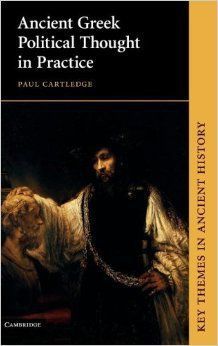
Ancient Greece was a place of tremendous political experiment and innovation, and it was here too that the first serious political thinkers emerged. Using carefully selected case-studies, Professor Cartledge investigates the dynamic interaction between ancient Greek political thought and practice from early historic times to the early Roman Empire. Of concern throughout are three major issues: first, the relationship of political thought and practice; second, the relevance of class and status to explaining political behaviour and thinking; third, democracy – its invention, development and expansion, and extinction, prior to its recent resuscitation and even apotheosis. In addition, monarchy in various forms and at different periods and the peculiar political structures of Sparta are treated in detail over a chronological range extending from Homer to Plutarch. The book provides an introduction to the topic for all students and non-specialists who appreciate the continued relevance of ancient Greece to political theory and practice today.
Book Summary of Commitment, Value, And Moral RealismDespite the importance of commitment in moral and political philosophy, there has hitherto been little extended analysis of it. Marcel Lieberman examines the conditions under which commitment is possible, and offers at the same time an indirect argument for moral realism. His ambitious study addresses questions that are of great interest to analytic philosophers but also makes many connections with continental philosophy and with folk psychology, sociology and cognitive science. It will be seen as a novel and distinctive intervention in the debate about moral realism..
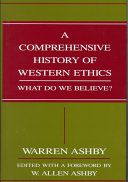
Our intellectual history spans more than 2,000 years, yet, surprisingly, we have had no adequate history of Western ethics. A Comprehensive History of Western Ethics fills this void by providing an engaging, thorough, and inclusive history that encompasses both classical and modern perspectives. Author Warren Ashby speaks both to students of history and ethics and to a needy public interested in but often perplexed by moral values in contemporary life — people who are looking for clearer personal and social bearings on what it means to be a person in today’s society. Ashby embraces all who are concerned with expanding human rights, finding new ways to think about moral experience, and discovering an ethical perspective appropriate for their lives. By exploring past ethical problems, we can prepare for the future’s challenges.Included with the commentary on the writings of great thinkers, are in-depth discussions of Greek, biblical, and Stoic ethics; Augustine, Aquinas, and medieval views; the Renaissance, the Reformation, and ethics in the age of science; as well as the Enlightenment, Romanticism, and the last Western century.
ما از اخلاق چه انتظاری داریم؟ این سوال شاید تاحدودی برای عموم مردم و یا متخصصان این رشته قابل پاسخ باشد؛ اینکه خوب بودن را به ما بیاموزد و در تنظیم روابط فردی م...

جشن کتاب تهران به ایستگاه سی و یکم رسیده است. حال و احوال نشر کتاب خوب نیست و باید فرهنگدوستان را به خرید و هدیه دادن کتاب ترغیب نمود. خانه اخلاقپژوهان جوان ب...

بنیاد کتابهای اخلاق اسلامی عمدتا پالایش جان از آلودگیها و آراستن آن به زیباییها است. اندیشه محوری این قبیل کتابها آن است که انسان فعلی آنی نیست که باید باشد...

-
0 Comments