Notice: تابع WP_Block_Type_Registry::register به طورنادرست فراخوانی شد. نامهای نوع بلوک نباید حروف بزرگ داشته باشند. لطفاً برای اطلاعات بیشتر، اشکال زدایی در وردپرس را مشاهده کنید. (این پیام در نگارش 5.0.0 افزوده شده است.) in /home/ethicsho/public_html/wp-includes/functions.php on line 5313
Warning: Use of undefined constant TDC_PATH_LEGACY - assumed 'TDC_PATH_LEGACY' (this will throw an Error in a future version of PHP) in /home/ethicsho/public_html/wp-content/plugins/td-composer/td-composer.php on line 109
Warning: Use of undefined constant TDSP_THEME_PATH - assumed 'TDSP_THEME_PATH' (this will throw an Error in a future version of PHP) in /home/ethicsho/public_html/wp-content/plugins/td-composer/td-composer.php on line 113 بایگانیهای 1223 - خانه اخلاق پژوهان جوان Notice: Trying to access array offset on value of type bool in /home/ethicsho/public_html/wp-content/plugins/wp-ulike/inc/general-functions.php on line 807
This book combines ancient, modern, and postmodern resources to argue that moral life and thought are inherently and radically creative. Human beings are called by their own primordially created depths to exceed historical evil and tragedy through the ongoing creative transformation together of their world. This creative capability can be understood in its fullest dimensions only as a religious or mythological affirmation of humanity as an image of its Creator. This thesis challenges Greek and biblical separations of ethics and poetic image-making, as well as contemporary conceptions of moral life as grounded in fixed principles or preconstituted traditions. It instead recasts a range of mythic, prophetic, and tragic resources to uncover moral life’s poetics, tension, dynamism, catharsis, disruptiveness, excess, and impossible possibility for renewal. The book takes as its starting point a critical reading of the hermeneutical poetics of the will of Paul Ricoeur, and from there enters into a range of conversations with Aristotle and contemporary Aristotelianism, Immanuel Kant and modernism, and current Continental, narrative, liberationist, and feminist ethics such as in Emmanuel Levinas, Richard Kearney, Martha Nussbaum, Jürgen Habermas, Gustavo Gutiérrez, Luce Irigaray, and Sallie McFague. In the process, it develops a meta-ethical phenomenology of moral creativity along the lines of four increasingly complex dimensions: ontology (creativity of the self), teleology (positive creativity of narrative goods), deontology (negative creativity in response to otherness), and social practice (mixed creativity between plural others in society). Moral creativity is in the end an original and necessary religious capability for responding anew to the tensions within and between selves in the world by forming over time, in love and hope, an ever more radically inclusive humanity.
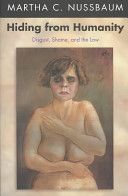
Should laws about sex and pornography be based on social conventions about what is disgusting? Should felons be required to display bumper stickers or wear T-shirts that announce their crimes? This powerful and elegantly written book, by one of America’s most influential philosophers, presents a critique of the role that shame and disgust play in our individual and social lives and, in particular, in the law. Martha Nussbaum argues that we should be wary of these emotions because they are associated in troubling ways with a desire to hide from our humanity, embodying an unrealistic and sometimes pathological wish to be invulnerable. Nussbaum argues that the thought-content of disgust embodies “magical ideas of contamination, and impossible aspirations to purity that are just not in line with human life as we know it.” She argues that disgust should never be the basis for criminalizing an act, or play either the aggravating or the mitigating role in criminal law it currently does. She writes that we should be similarly suspicious of what she calls “primitive shame,” a shame “at the very fact of human imperfection,” and she is harshly critical of the role that such shame plays in certain punishments. Drawing on an extraordinarily rich variety of philosophical, psychological, and historical references–from Aristotle and Freud to Nazi ideas about purity–and on legal examples as diverse as the trials of Oscar Wilde and the Martha Stewart insider trading case, this is a major work of legal and moral philosophy.
To be responsible for their acts, agents must both perform those acts voluntarily and in some sense know what they are doing. Of these requirements, the voluntariness condition has been much discussed, but the epistemic condition has received far less attention. In Who Knew? George Sher seeks to rectify that imbalance. The book is divided in two halves, the first of which criticizes a popular but inadequate way of understanding the epistemic condition, while the second seeks to develop a more adequate alternative. It is often assumed that agents are responsible only for what they are aware of doing or bringing about–that their responsibility extends only as far as the searchlight of their consciousness. The book criticizes this “searchlight view” on two main grounds: first, that it is inconsistent with our attributions of responsibility to a broad range of agents who should but do not realize that they are acting wrongly or foolishly, and, second, that the view is not independently defensible. The book’s positive view construes the crucial relation between an agent and his failure to recognize the wrongness or foolishness of what he is doing in causal terms: the agent is responsible when, and because, his failure to respond to his reasons for believing that he is acting wrongly or foolishly has its origins in the same constitutive psychology that generally does render him reason-responsive.
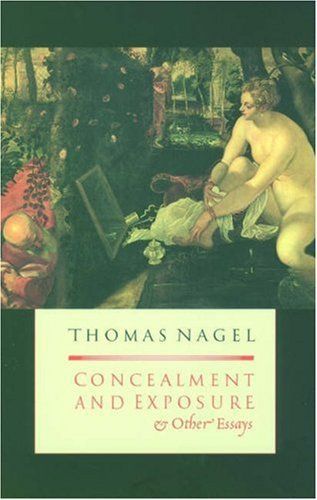
Thomas Nagel is widely recognized as one of the top American philosophers working today. Reflecting the diversity of his many philosophical preoccupations, this volume is a collection of his most recent critical essays and reviews. The first section, Public and Private, focuses on the notion of privacy in the context of social and political issues, such as the impeachment of President Clinton. The second section, Right and Wrong, discusses moral, political and legal theory, and includes pieces on John Rawls, G.A. Cohen, and T.M. Scanlon, among others. The final section, Mind and Reality, features discussions of Richard Rorty, Donald Davidson, and the Sokal hoax, and closes with a substantial new essay on the mind-body problem. Written with characteristic rigor, these pieces reveal the intellectual passion underlying the incisive analysis for which Nagel is known.
This is a 3-in-1 reference book. It gives a complete medical dictionary covering hundreds of terms and expressions relating to abortion. It also gives extensive lists of bibliographic citations. Finally, it provides information to users on how to update their knowledge using various Internet resources. The book is designed for physicians, medical students preparing for Board examinations, medical researchers, and patients who want to become familiar with research dedicated to abortion. If your time is valuable, this book is for you. First, you will not waste time searching the Internet while missing a lot of relevant information. Second, the book also saves you time indexing and defining entries. Finally, you will not waste time and money printing hundreds of web pages.
ما از اخلاق چه انتظاری داریم؟ این سوال شاید تاحدودی برای عموم مردم و یا متخصصان این رشته قابل پاسخ باشد؛ اینکه خوب بودن را به ما بیاموزد و در تنظیم روابط فردی م...

جشن کتاب تهران به ایستگاه سی و یکم رسیده است. حال و احوال نشر کتاب خوب نیست و باید فرهنگدوستان را به خرید و هدیه دادن کتاب ترغیب نمود. خانه اخلاقپژوهان جوان ب...

بنیاد کتابهای اخلاق اسلامی عمدتا پالایش جان از آلودگیها و آراستن آن به زیباییها است. اندیشه محوری این قبیل کتابها آن است که انسان فعلی آنی نیست که باید باشد...

-
0 Comments