Notice: تابع WP_Block_Type_Registry::register به طورنادرست فراخوانی شد. نامهای نوع بلوک نباید حروف بزرگ داشته باشند. لطفاً برای اطلاعات بیشتر، اشکال زدایی در وردپرس را مشاهده کنید. (این پیام در نگارش 5.0.0 افزوده شده است.) in /home/ethicsho/public_html/wp-includes/functions.php on line 5313
Warning: Use of undefined constant TDC_PATH_LEGACY - assumed 'TDC_PATH_LEGACY' (this will throw an Error in a future version of PHP) in /home/ethicsho/public_html/wp-content/plugins/td-composer/td-composer.php on line 109
Warning: Use of undefined constant TDSP_THEME_PATH - assumed 'TDSP_THEME_PATH' (this will throw an Error in a future version of PHP) in /home/ethicsho/public_html/wp-content/plugins/td-composer/td-composer.php on line 113 بایگانیهای 848/.91409 - خانه اخلاق پژوهان جوان Notice: Trying to access array offset on value of type bool in /home/ethicsho/public_html/wp-content/plugins/wp-ulike/inc/general-functions.php on line 807
This book presents an ethical theory that uniquely integrates naturalistic and rationalistic elements. Robert Audi develops his theory in four areas: moral epistemology, the metaphysics of ethics, moral psychology, and the foundations of ethics. Comprising both new and published work, the book sets forth a moderate intuitionism, clarifies the relation between reason and motivation, constructs a theory of intrinsic value and its place in moral obligation, and presents a sophisticated account of moral justification. The concluding chapter articulates a new normative framework built from both Kantian and intuitionist elements. Connecting ethics in novel ways to both the theory of value and the philosophy of action, the essays explore topics such as ethical intuition, reason and judgement, and virtue. Audi also considers major views in the history of ethics, including those of Aristotle, Hume, Kant, Mill, Moore, and W. D. Ross, and engages contemporary work on autonomy, responsibility, objectivity, reasons, and other issues. Clear and conceptually rich, this book makes vital reading for students and scholars of ethics.
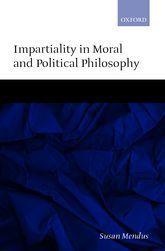
The debate between impartialists and their critics has dominated both moral and political philosophy for over a decade. Characteristically, impartialists argue that any sensible form of impartialism can accommodate the partial concerns we have for others. By contrast, partialists deny that this is so. They see the division as one which runs exceedingly deep and argue that, at the limit, impartialist thinking requires that we marginalise those concerns and commitments that make our lives meaningful. This book attempts to show both that the dispute between impartialists and their critics runs very deep, and that it can nonetheless be resolved. The resolution begins by asking how impartialist political philosophy can defend the priority of justice when it conflicts with people’s commitments to their conceptions of the good. It is argued that priority can only defended if political impartialism has a moral foundation, and that moral foundation must not be a foundation in the ideal of equality (as is often thought), but a foundation in the partial concerns we have for others. In short, impartialist moral philosophy must take our partial concerns as central if it is to gain allegiance. However, if it does take our partial concerns as central, then it can generate a defence of political impartialism which shows why justice must take priority, but which also acknowledges that pluralism about the good is permanent.
What Nietzsche Really Saidgives us a lucid overview — both informative and entertaining — of perhaps the most widely read and least understood philosopher in history. Friedrich Nietzsche’s aggressive independence, flamboyance, sarcasm, and celebration of strength have struck responsive chords in contemporary culture. More people than ever are reading and discussing his writings. But Nietzsche’s ideas are often overshadowed by the myths and rumors that surround his sex life, his politics, and his sanity. In this lively and comprehensive analysis, Nietzsche scholars Robert C. Solomon and Kathleen M. Higgins get to the heart of Nietzsche’s philosophy, from his ideas on “the will to power” to his attack on religion and morality and his infamousUbermensch(superman). What Nietzsche Really Saidoffers both guidelines and insights for reading and understanding this controversial thinker. Written with sophistication and wit, this book provides an excellent summary of the life and work of one of history’s most provocative philosophers. From the Hardcover edition.
ما از اخلاق چه انتظاری داریم؟ این سوال شاید تاحدودی برای عموم مردم و یا متخصصان این رشته قابل پاسخ باشد؛ اینکه خوب بودن را به ما بیاموزد و در تنظیم روابط فردی م...

جشن کتاب تهران به ایستگاه سی و یکم رسیده است. حال و احوال نشر کتاب خوب نیست و باید فرهنگدوستان را به خرید و هدیه دادن کتاب ترغیب نمود. خانه اخلاقپژوهان جوان ب...

بنیاد کتابهای اخلاق اسلامی عمدتا پالایش جان از آلودگیها و آراستن آن به زیباییها است. اندیشه محوری این قبیل کتابها آن است که انسان فعلی آنی نیست که باید باشد...

-
0 Comments