Notice: تابع WP_Block_Type_Registry::register به طورنادرست فراخوانی شد. نامهای نوع بلوک نباید حروف بزرگ داشته باشند. لطفاً برای اطلاعات بیشتر، اشکال زدایی در وردپرس را مشاهده کنید. (این پیام در نگارش 5.0.0 افزوده شده است.) in /home/ethicsho/public_html/wp-includes/functions.php on line 5313
Warning: Use of undefined constant TDC_PATH_LEGACY - assumed 'TDC_PATH_LEGACY' (this will throw an Error in a future version of PHP) in /home/ethicsho/public_html/wp-content/plugins/td-composer/td-composer.php on line 109
Warning: Use of undefined constant TDSP_THEME_PATH - assumed 'TDSP_THEME_PATH' (this will throw an Error in a future version of PHP) in /home/ethicsho/public_html/wp-content/plugins/td-composer/td-composer.php on line 113 بایگانیهای 790 - خانه اخلاق پژوهان جوان Notice: Trying to access array offset on value of type bool in /home/ethicsho/public_html/wp-content/plugins/wp-ulike/inc/general-functions.php on line 807
Paternalistic intervention, especially in the context of modern medicine and health care, is the topical issue of The Limits of Medical Paternalism. Dr Hayry aims to define and morally assess paternalistic interventions through a defined conceptual background. The method employed for this purpose is that of applied philosophical ethics in the analytic tradition. It is argued that there is a marked distinction between strong and weak paternalism. Strong paternalism is defined as the violation of autonomy of a patient ‘in her own best interest’ when the person is capable of autonomous decision-making in matters that concern primarily only herself. Weak paternalism is the violation of autonomy when a person is temporarily incapable of self-determined decision-making; it is therefore sometimes justifiable. The application of these views is that no overall a priori judgement concerning the rights and wrongs of such medical intervention is possible.
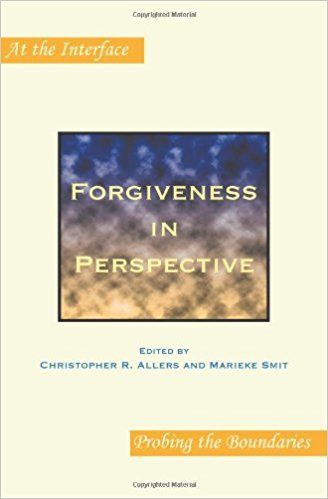
Amidst the cacophony of claims made about forgiveness, this book serves to aid in an effort to put żforgiveness in perspective.ż Marieke Smit and Christopher R. Allers have collected here ten essays written by twelve authors from around the world and across the disciplinary spectrum including philosophers, practitioners, psychologists, literary theorists, and prison chaplains. All the essays offer a perspective on forgiveness and put forgiveness in perspective whether by tracing what forgiveness żis,ż how this religious inheritance is worked out in our secularizing societies, how forgiveness works in our quotidian experience, or a particular manifestation in a particular context such as marriage, prison, or after an abortion, to name a few. The multi-disciplinary character of this book provides a multi-disciplinary appeal as well as a resource to enlarge oneżs own perspective on this perplexing, enigmatic, and wonderfully complex concept of forgiveness.Marieke Smit is a researcher at the Centre for Prison Pastoral Care at the University of Tilburg, The Netherlands. Her research concerns the role of forgiveness in detention. She is also working as a prison chaplain in Dutch prisons.Christopher R. Allers (M.A., Institute for Christian Studies, Toronto) is Adjunct Professor of Philosophy at Cornerstone University (Grand Rapids, MI) and Sessional Instructor in Philosophy at the Institute for Christian Studies, Toronto (ICS) where he is also a doctoral student in the conjoint degree program between ICS and the Vrije Universiteit, Amsterdam. He is currently working on a dissertation on forgiveness which is tentatively titled The Miracle of Forgiveness.
One of the most difficult problems confronting clinicians and medical professionals today is the application of ethical principles to real decisions affecting patients. In this even-handed book, Clare Foster examines the three main approaches to moral decision-making: goal-based, duty-based, and rights-based. She discusses the underlying philosophical arguments behind each approach, examines their relative strengths and weaknesses, and indicates how they can actually be applied. Is it ethical to experiment with new cures on people who are probably dying? How do you assess quality of consent? This book provides a thorough, nonpartisan grounding in what the ethical principles are and what informs them.
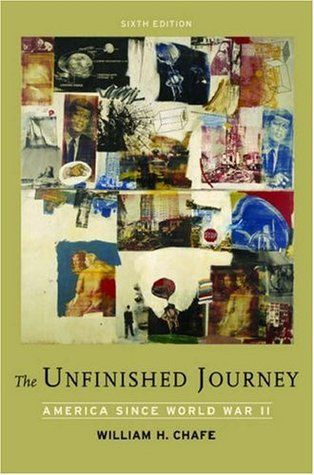
“This popular and classic text chronicles America’s roller-coaster journey through the decades since World War Two. Considering both the paradoxes and the possibilities of postwar America, William H. Chafe portrays the significant cultural and political themes that have colored our country’s past and present, including issues of race, class, gender, foreign policy, and economic and social reform. In this new edition, Chafe provides a nuanced yet unabashed assessment of George W. Bush’s presidency, covering his reelection, the saga of the Iraq War, and the administration’s response to the widespread devastation of Hurricane Katrina.”–BOOK JACKET.
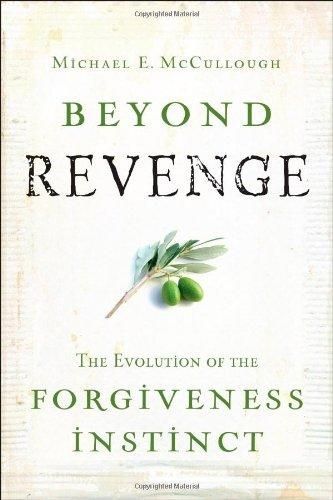
Why is revenge such a pervasive and destructive problem? How can we create a future in which revenge is less common and forgiveness is more common? Psychologist Michael McCullough argues that the key to a more forgiving, less vengeful world is to understand the evolutionary forces that gave rise to these intimately human instincts and the social forces that activate them in human minds today. Drawing on exciting breakthroughs from the social and biological sciences, McCullough dispenses surprising and practical advice for making the world a more forgiving place. Michael E. McCullough (Miami, Florida), an internationally recognized expert on forgiveness and revenge, is a professor of psychology at the University of Miami in Coral Gables, Florida, where he directs the Laboratory for Social and Clinical Psychology.
ما از اخلاق چه انتظاری داریم؟ این سوال شاید تاحدودی برای عموم مردم و یا متخصصان این رشته قابل پاسخ باشد؛ اینکه خوب بودن را به ما بیاموزد و در تنظیم روابط فردی م...

جشن کتاب تهران به ایستگاه سی و یکم رسیده است. حال و احوال نشر کتاب خوب نیست و باید فرهنگدوستان را به خرید و هدیه دادن کتاب ترغیب نمود. خانه اخلاقپژوهان جوان ب...

بنیاد کتابهای اخلاق اسلامی عمدتا پالایش جان از آلودگیها و آراستن آن به زیباییها است. اندیشه محوری این قبیل کتابها آن است که انسان فعلی آنی نیست که باید باشد...

-
0 Comments