Notice: تابع WP_Block_Type_Registry::register به طورنادرست فراخوانی شد. نامهای نوع بلوک نباید حروف بزرگ داشته باشند. لطفاً برای اطلاعات بیشتر، اشکال زدایی در وردپرس را مشاهده کنید. (این پیام در نگارش 5.0.0 افزوده شده است.) in /home/ethicsho/public_html/wp-includes/functions.php on line 5313
Warning: Use of undefined constant TDC_PATH_LEGACY - assumed 'TDC_PATH_LEGACY' (this will throw an Error in a future version of PHP) in /home/ethicsho/public_html/wp-content/plugins/td-composer/td-composer.php on line 109
Warning: Use of undefined constant TDSP_THEME_PATH - assumed 'TDSP_THEME_PATH' (this will throw an Error in a future version of PHP) in /home/ethicsho/public_html/wp-content/plugins/td-composer/td-composer.php on line 113 بایگانیهای 709.0113 - خانه اخلاق پژوهان جوان Notice: Trying to access array offset on value of type bool in /home/ethicsho/public_html/wp-content/plugins/wp-ulike/inc/general-functions.php on line 807
Each anthology in the new Global Viewpoints series (which does not duplicate any material in the Opposing Viewpoints series) delivers contemporary perspectives on the featured issue — with the majority of the material reflecting stances of countries other than the United States. Primary sources, including speeches and government documents, join essays from international magazines and news sources for a truly panoramic view. Helpful features include an annotated table of contents, a world map and country index, a bibliography and a subject index.
The recent revival of natural law theory in modern moral philosophy has been an exciting and important development. This book brings together an international group of moral philosophers who make original contributions to the project of developing natural law ethics as a comprehensive treatment of modern ethical theory and practice.
Recently, the first “zoopharming” product has reached market approval: it is a recombinant human protein for medical use that is produced in the milk of transgenic goats. In addition, other transgenic animals, including faster-growing salmon and „environmentally friendly” pigs with reduced levels of phosphate in their faeces are awaiting regulatory approval. These are only some examples of upcoming applications of genetic engineering in farm animals. Other potential applications include traditional breeding goals such as higher milk or meat yields, leaner meat, and disease resistance. While genetic engineering in livestock opens a huge range of possibilities, it also brings about concerns of safety and justification: does genetic engineering affect animal welfare? Is it safe and morally acceptable to apply genetic engineering to farm animals for the various purposes that are envisaged? It is against this background that the Europaische Akademie GmbH and the Berlin-Brandenburgische Akademie der Wissenschaften addressed the topic of transgenic farm animals in an interdisciplinary symposium in 2007. In these proceedings the following topics are covered: an analysis of the state of the art of the technology and its applications, an introduction to the specific application zoopharming (including its historical industrial development and the market for biopharmaceuticals), an assessment of ethical aspects, and considerations regarding the investigation of animal welfare implications of livestock biotechnology. The proceedings address science, industry, politics and the general public interested in the chances and risks of this upcoming field of biotechnology.
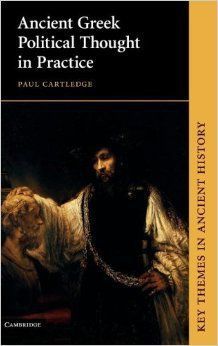
Ancient Greece was a place of tremendous political experiment and innovation, and it was here too that the first serious political thinkers emerged. Using carefully selected case-studies, Professor Cartledge investigates the dynamic interaction between ancient Greek political thought and practice from early historic times to the early Roman Empire. Of concern throughout are three major issues: first, the relationship of political thought and practice; second, the relevance of class and status to explaining political behaviour and thinking; third, democracy – its invention, development and expansion, and extinction, prior to its recent resuscitation and even apotheosis. In addition, monarchy in various forms and at different periods and the peculiar political structures of Sparta are treated in detail over a chronological range extending from Homer to Plutarch. The book provides an introduction to the topic for all students and non-specialists who appreciate the continued relevance of ancient Greece to political theory and practice today.
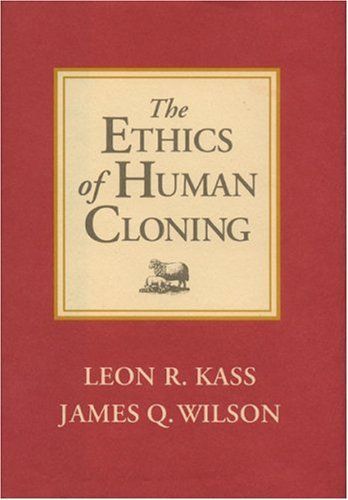
In this engaging book, Leon R. Kass, the noted teacher, scientist, and humanist, and James Q. Wilson, the preeminent political scientist to whom four U.S. presidents have turned for advice on crime, drug abuse, education, and other crises in American life, explore the ethics of human cloning, reproductive technology, and the teleology of human sexuality. Although in their lively dialogue both authors share a fundamental distrust of the notion of human cloning, they base their reticence on different views of the role of sexual reproduction and the role of the family. Professor Kass contends that in vitro fertilization and other assisted reproduction technologies that place the origin of human life in human hands have eroded the respect for the mystery of sexuality and human renewal. Professor Wilson, on the other hand, asserts that whether a human life is created naturally or artificially is immaterial as long as the child is raised by loving parents in a two-parent family and is not harmed by the means of its conception. This accessible volume promises to inform the public policy debate over the permissible conduct of genetic research and the permissible uses of its discoveries.
ما از اخلاق چه انتظاری داریم؟ این سوال شاید تاحدودی برای عموم مردم و یا متخصصان این رشته قابل پاسخ باشد؛ اینکه خوب بودن را به ما بیاموزد و در تنظیم روابط فردی م...

جشن کتاب تهران به ایستگاه سی و یکم رسیده است. حال و احوال نشر کتاب خوب نیست و باید فرهنگدوستان را به خرید و هدیه دادن کتاب ترغیب نمود. خانه اخلاقپژوهان جوان ب...

بنیاد کتابهای اخلاق اسلامی عمدتا پالایش جان از آلودگیها و آراستن آن به زیباییها است. اندیشه محوری این قبیل کتابها آن است که انسان فعلی آنی نیست که باید باشد...

-
0 Comments