Notice: تابع WP_Block_Type_Registry::register به طورنادرست فراخوانی شد. نامهای نوع بلوک نباید حروف بزرگ داشته باشند. لطفاً برای اطلاعات بیشتر، اشکال زدایی در وردپرس را مشاهده کنید. (این پیام در نگارش 5.0.0 افزوده شده است.) in /home/ethicsho/public_html/wp-includes/functions.php on line 5313
Warning: Use of undefined constant TDC_PATH_LEGACY - assumed 'TDC_PATH_LEGACY' (this will throw an Error in a future version of PHP) in /home/ethicsho/public_html/wp-content/plugins/td-composer/td-composer.php on line 109
Warning: Use of undefined constant TDSP_THEME_PATH - assumed 'TDSP_THEME_PATH' (this will throw an Error in a future version of PHP) in /home/ethicsho/public_html/wp-content/plugins/td-composer/td-composer.php on line 113 بایگانیهای 70 - خانه اخلاق پژوهان جوان Notice: Trying to access array offset on value of type bool in /home/ethicsho/public_html/wp-content/plugins/wp-ulike/inc/general-functions.php on line 807
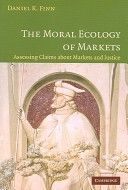
Disagreements about the morality of markets, and about self-interested behavior within markets, run deep. They arise from perspectives within economics and political philosophy that appear to have nothing in common. In this book, Daniel Finn provides a framework for understanding these conflicting points of view. Recounting the arguments for and against markets and self-interest, he argues that every economy must address four fundamental problems: allocation, distribution, scale, and the quality of relations. In addition, every perspective on the morality of markets addresses explicitly or implicitly the economic, political, and cultural contexts of markets, or what Finn terms ‘the moral ecology of markets’. His book enables a dialogue among the various participants in the debate over justice in markets. In this process, Finn engages with major figures in political philosophy, including John Rawls, Robert Nozick, and Michael Walzer, as well as in economics, notably Milton Friedman, Friedrich Hayek, and James Buchannan.
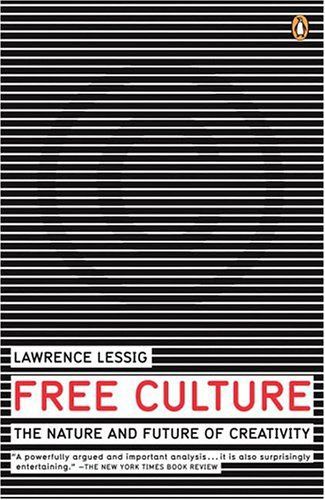
Lawrence Lessig, the most important thinker on intellectual property in the Internet era (The New Yorker), masterfully argues that never before in human history has the power to control creative progress been so concentrated in the hands of the powerful few, the so-called Big Media. Never before have the cultural powers- that-be been able to exert such control over what we can and cant do with the culture around us. Our society defends free markets and free speech; why then does it permit such top-down control? To lose our long tradition of free culture, Lawrence Lessig shows us, is to lose our freedom to create, our freedom to build, and, ultimately, our freedom to imagine.
As the use of human body parts has become increasingly commercialized, a need has arisen for new approaches to regulation that move beyond the paradigm of altruism. In the course of this discussion, the notion of property has become a key concept. This volume focuses on practical and conceptual perspectives to set standards for a detailed and innovative discussion in the regulation of research on human tissue. The authors, a multidisciplinary research group combining specialists from philosophy, law, sociology, biology and medicine have come together with practicing lawyers to consider both legal provisions and patterns of regulation in countries across Europe. The authors identify divergences between the different legal traditions, and explore various conceptual models which could be used to improve and to guide policy making. With this twin focus on practical and conceptual perspectives the volume sets standards for a detailed and innovative discussion of problems in the regulation of research on human tissue.
ما از اخلاق چه انتظاری داریم؟ این سوال شاید تاحدودی برای عموم مردم و یا متخصصان این رشته قابل پاسخ باشد؛ اینکه خوب بودن را به ما بیاموزد و در تنظیم روابط فردی م...

جشن کتاب تهران به ایستگاه سی و یکم رسیده است. حال و احوال نشر کتاب خوب نیست و باید فرهنگدوستان را به خرید و هدیه دادن کتاب ترغیب نمود. خانه اخلاقپژوهان جوان ب...

بنیاد کتابهای اخلاق اسلامی عمدتا پالایش جان از آلودگیها و آراستن آن به زیباییها است. اندیشه محوری این قبیل کتابها آن است که انسان فعلی آنی نیست که باید باشد...

-
0 Comments