Notice: تابع WP_Block_Type_Registry::register به طورنادرست فراخوانی شد. نامهای نوع بلوک نباید حروف بزرگ داشته باشند. لطفاً برای اطلاعات بیشتر، اشکال زدایی در وردپرس را مشاهده کنید. (این پیام در نگارش 5.0.0 افزوده شده است.) in /home/ethicsho/public_html/wp-includes/functions.php on line 5313
Warning: Use of undefined constant TDC_PATH_LEGACY - assumed 'TDC_PATH_LEGACY' (this will throw an Error in a future version of PHP) in /home/ethicsho/public_html/wp-content/plugins/td-composer/td-composer.php on line 109
Warning: Use of undefined constant TDSP_THEME_PATH - assumed 'TDSP_THEME_PATH' (this will throw an Error in a future version of PHP) in /home/ethicsho/public_html/wp-content/plugins/td-composer/td-composer.php on line 113 بایگانیهای 614.4/2 - خانه اخلاق پژوهان جوان Notice: Trying to access array offset on value of type bool in /home/ethicsho/public_html/wp-content/plugins/wp-ulike/inc/general-functions.php on line 807
“We all live our daily lives surrounded by the products of technology that make what we do simpler, faster, and more efficient. These are benefits we often just take for granted. But at the same time, as these products disburden us of unwanted tasks that consumed much time and effort in earlier eras, many of them also leave us more disengaged from our natural and even human surroundings. It is the task of what Gene Moriarty calls focal engineering to create products that will achieve a balance between disburdenment and engagement.” “One of Moriarty’s examples of a focally engineered structure is the Golden Gate Bridge, which “draws people to it, enlivens and elevates the human spirit, and resonates with the world of its congenial setting. Humans, bridge, and world are in tune.” These values of engagement, enlivenment, and resonance are key to the normative approach Moriarty brings to the profession of engineering, which traditionally has focused mainly on technical measures of evaluation such as efficiency, productivity, objectivity, and precision.”–BOOK JACKET.
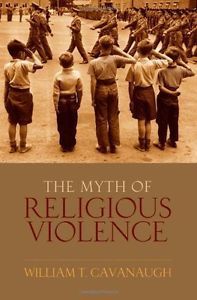
The idea that religion has a dangerous tendency to promote violence is part of the conventional wisdom of Western societies, and it underlies many of our institutions and policies, from limits on the public role of religion to efforts to promote liberal democracy in the Middle East. William T. Cavanaugh challenges this conventional wisdom by examining how the twin categories of religion and the secular are constructed. A growing body of scholarly work explores how the category ‘religion’ has been constructed in the modern West and in colonial contexts according to specific configurations of political power. Cavanaugh draws on this scholarship to examine how timeless and transcultural categories of ‘religion and ‘the secular’ are used in arguments that religion causes violence. He argues three points: 1) There is no transhistorical and transcultural essence of religion. What counts as religious or secular in any given context is a function of political configurations of power; 2) Such a transhistorical and transcultural concept of religion as non-rational and prone to violence is one of the foundational legitimating myths of Western society; 3) This myth can be and is used to legitimate neo-colonial violence against non-Western others, particularly the Muslim world.
Providing Christians with a comprehensive reference volume covering every key issue, person, and concept related to Christian apologetics, this work offers extensive coverage of apologetics with articles on key individuals, philosophical systems and concepts, biblical controversies, contemporary issues, and perennial apologetic arguments. Valuable information and advice are provided for to a wide audience, including pastors and Christian leaders, students on college campuses, those involved in counter-cult ministries.
Critical Reasoning in Ethics is an accessible introduction that will enable students, through practical exercises, to develop their own skills in reasoning about ethical issues such as:* analysing and evaluating arguments used in discussions of ethical issues* analysing and evaluating ethical concepts, such as utilitarianism* making decisions on ethical issues* learning how to approach ethical issues in a fair minded wayEthical issues discussed include the arguments about abortion, euthanasia, capital punishment, animal rights, the environment and war.The book will be essential reading for philosophy, health, social work and nursing courses.
ما از اخلاق چه انتظاری داریم؟ این سوال شاید تاحدودی برای عموم مردم و یا متخصصان این رشته قابل پاسخ باشد؛ اینکه خوب بودن را به ما بیاموزد و در تنظیم روابط فردی م...

جشن کتاب تهران به ایستگاه سی و یکم رسیده است. حال و احوال نشر کتاب خوب نیست و باید فرهنگدوستان را به خرید و هدیه دادن کتاب ترغیب نمود. خانه اخلاقپژوهان جوان ب...

بنیاد کتابهای اخلاق اسلامی عمدتا پالایش جان از آلودگیها و آراستن آن به زیباییها است. اندیشه محوری این قبیل کتابها آن است که انسان فعلی آنی نیست که باید باشد...

-
0 Comments