Notice: تابع WP_Block_Type_Registry::register به طورنادرست فراخوانی شد. نامهای نوع بلوک نباید حروف بزرگ داشته باشند. لطفاً برای اطلاعات بیشتر، اشکال زدایی در وردپرس را مشاهده کنید. (این پیام در نگارش 5.0.0 افزوده شده است.) in /home/ethicsho/public_html/wp-includes/functions.php on line 5313
Warning: Use of undefined constant TDC_PATH_LEGACY - assumed 'TDC_PATH_LEGACY' (this will throw an Error in a future version of PHP) in /home/ethicsho/public_html/wp-content/plugins/td-composer/td-composer.php on line 109
Warning: Use of undefined constant TDSP_THEME_PATH - assumed 'TDSP_THEME_PATH' (this will throw an Error in a future version of PHP) in /home/ethicsho/public_html/wp-content/plugins/td-composer/td-composer.php on line 113 بایگانیهای 370/.944 - خانه اخلاق پژوهان جوان Notice: Trying to access array offset on value of type bool in /home/ethicsho/public_html/wp-content/plugins/wp-ulike/inc/general-functions.php on line 807
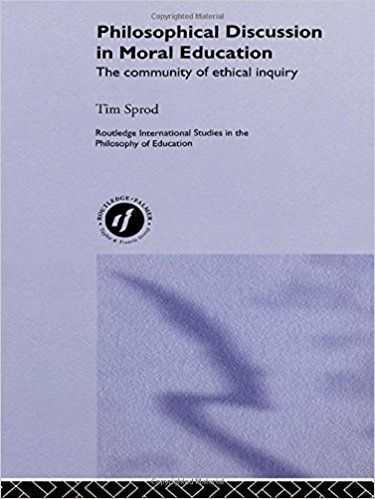
In recent years there has been an increase in the number of calls for moral education to receive greater public attention. In our pluralist society, however, it is difficult to find agreement on what exactly moral education requires. Philosophical Discussion in Moral Education develops a detailed philosophical defence of the claim that teachers should engage students in ethical discussions to promote moral competence and strengthen moral character. Paying particular attention to the teacher’s role, this book highlights the justification for, and methods of, creating a classroom community of ethical inquiry.
One of the most dynamic aspects of the Islamic revival during the past two centuries has been the rethinking of Islamic political thought. A broad range of actors, ideas, and ideologies characterize the debate on how Islamic ethics and law should be manifested in modern institutions. Yet this aspect of the “return to Islam” has been neglected by policymakers, the media, and even many scholars, who equate “political Islam” with merely one strand, labeled “Islamic fundamentalism.” Bringing together ten essays from six volumes of the Ethikon Series in Comparative Ethics, this book gives a rounded treatment to the subject of Islamic political ethics.The authors explore the Islamic ethics of civil society, boundaries, pluralism, and war and peace. They consider questions of diversity, discussing, among other subjects, Islamic regimes’ policies regarding women and religious minorities. The chapters on war and peace take up such crucial and timely issues as the Islamic ethics of jihad, examining both the legitimate conditions for the declaration of war and the proper conduct of war.In their discussions, the contributors analyze the works of classical writers as well as the full range of modern reinterpretations. But beyond these analyses of previous and contemporary thinkers, the essays also reach back to the two fundamental sources of Islamic ethics–the Qur’an and traditions of the Prophet–to develop fresh insights into how Islam and Muslims can contribute to human society in the twenty-first century.The authors are Dale F. Eickelman, Hasan Hanafi, Sohail H. Hashmi, Farhad Kazemi, John Kelsay, Muhammad Khalid Masud, Sulayman Nyang, Bassam Tibi, and M. Raquibuz Zaman.From the foreword by Jack Miles:”Western foreign ministers and secretaries of state may have to learn a little theology if the looming clash between embattled elements both in the West and in the Muslim umma is to yield to disengagement and peaceful coexistence, to say nothing of fruitful collaboration. . . . It is, then, no idle academic exercise that the thinkers whose work is collected here have in hand. The long-term practical importance of their work can scarcely be overstated.”
At its core, accountability is the responsibility to act. It is the commitment to do the right thing and stand by your decisions. Perhaps most importantly, it is a quality that must come from within; dishearteningly, even as legislators, shareholders, customers, and community activists are demanding greater accountability from corporate leaders, too many are waiting for some third party to take action. Whatever the endeavor, it is ultimately the individual who must hold himself to the highest standard first. Those who manage by accountability viscerally know that external rules cannot substitute for character. And they know that accountability is a quality that can be developed, honed through practice, and encouraged in others. Using stories drawn from David Dealy’s experiences on the front lines, as well as examples from other successful leaders, “Managing by Accountability” demonstrates how leaders who embark on a management philosophy of personal accountability imbue their organizations with the qualities of integrity and responsibility. In their down-to-earth style, the authors identify the five great accountability mistakes and offer a wealth of practical suggestions for overcoming them to achieve outstanding results throughout the organization. In some cases it may be Congress (e.g., Sarbanes-Oxley legislation), the media, the company’s legal or communications department, Wall Street, disgruntled customers, or angry community activists. This is not to say that formal accountability programs are useless; they do play an important role. Nevertheless, it is ultimately the individual who must hold himself to the highest standard first-without waiting to be told, pushed, or prodded. Those who manage by accountability viscerally know that external rules cannot substitute for character. And they also know that accountability can be developed, honed through practice, and encouraged in others. “Managing by Accountability” demonstrates how leaders who embark on a management philosophy of personal accountability imbue their organizations with the qualities of integrity and responsibility. Using stories drawn from David Dealy’s experiences on the front lines, as well as examples from other successful leaders, the book provides concrete examples of accountability in action. In their down-to-earth style, Dealy and Thomas identify the five great accountability mistakes and offer a wealth of practical suggestions for overcoming them to achieve outstanding results throughout the organization.
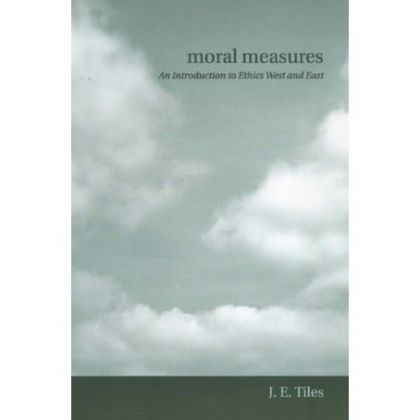
What basis do we have for condemning the Aztec custom of human sacrifice, the Chinese tradition of foot-binding, or the African practice of female genital mutilation? What can we learn from the moral traditions of other cultures? Addressing such questions,MoralMeasuresis a clear, fresh and accessible introduction to ethics which carefully illuminates the difficult issues surrounding cross-cultural ethics and moral thought. By examining Eastern and Western moral traditions, J. E. Tiles explores the basis for determining ethical measures of conduct across different cultures. Drawing on a rich array of ethical thinkers, including Aristotle, Kant and Confucius, Tiles argues that ethical problems are shared by apparently opposed moral traditions and that there is much to be learned by comparing them.
ما از اخلاق چه انتظاری داریم؟ این سوال شاید تاحدودی برای عموم مردم و یا متخصصان این رشته قابل پاسخ باشد؛ اینکه خوب بودن را به ما بیاموزد و در تنظیم روابط فردی م...

جشن کتاب تهران به ایستگاه سی و یکم رسیده است. حال و احوال نشر کتاب خوب نیست و باید فرهنگدوستان را به خرید و هدیه دادن کتاب ترغیب نمود. خانه اخلاقپژوهان جوان ب...

بنیاد کتابهای اخلاق اسلامی عمدتا پالایش جان از آلودگیها و آراستن آن به زیباییها است. اندیشه محوری این قبیل کتابها آن است که انسان فعلی آنی نیست که باید باشد...

-
0 Comments