Notice: تابع WP_Block_Type_Registry::register به طورنادرست فراخوانی شد. نامهای نوع بلوک نباید حروف بزرگ داشته باشند. لطفاً برای اطلاعات بیشتر، اشکال زدایی در وردپرس را مشاهده کنید. (این پیام در نگارش 5.0.0 افزوده شده است.) in /home/ethicsho/public_html/wp-includes/functions.php on line 5313
Warning: Use of undefined constant TDC_PATH_LEGACY - assumed 'TDC_PATH_LEGACY' (this will throw an Error in a future version of PHP) in /home/ethicsho/public_html/wp-content/plugins/td-composer/td-composer.php on line 109
Warning: Use of undefined constant TDSP_THEME_PATH - assumed 'TDSP_THEME_PATH' (this will throw an Error in a future version of PHP) in /home/ethicsho/public_html/wp-content/plugins/td-composer/td-composer.php on line 113 بایگانیهای 346.24048 - خانه اخلاق پژوهان جوان Notice: Trying to access array offset on value of type bool in /home/ethicsho/public_html/wp-content/plugins/wp-ulike/inc/general-functions.php on line 807
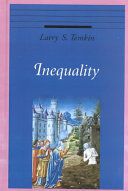
Equality has long been among the most potent of human ideals and it continues to play a prominent role in political argument. Views about equality inform much of the debate about wide-ranging issues such as racism, sexism, obligations to the poor or handicapped, relations between developed and developing countries, and the justification of competing political, economic, and ideological systems. Temkin begins his illuminating examination with a simple question: when is one situation worse than another regarding inequality? In exploring this question, a new approach to understanding inequality emerges. Temkin goes against the common view that inequality is simple and holistic and argues instead that it is complex, individualistic, and essentially comparative. He presents a new way of thinking about equality and inequality that challenges the assumptions of philosophers, welfare economists, and others, and has significant and far-reaching implications on a practical as well as a theoretical level.
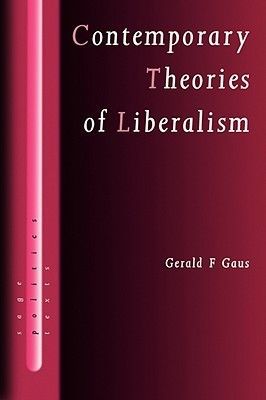
`The author has provided us with a masterful overview and critique of liberal theorizing of the past quarter-century. While dealing exhaustively and fairly with each of a variety of broadly liberal approaches, Gaus also presents a compelling argument for his own preferred “justificatory” approach. His analyses range across familiar territory – Berlin, Gauthier, Baier, Habermas, social choice theory, Rawls, and so on – and are always illuminating and, taken together, provide both the newcomer and the old-hand much to ponder’ – Fred D’Agostino, University of New England, Armidale `[A]ll that man is and all that raises him above animals he owes to his reason’ – Ludwig von Mises Contemporary Theories of Liberalism provides students with a comprehensive overview of the key tenets of liberalism developed through Hobbes, Locke, Kant and Rawls to present day theories and debates. Central to recent debate has been the idea of public reason. The text introduces and explores seven dominant theories of public reason, namely, pluralism, Neo-Hobbesianism, pragmatism, deliberative democracy, political democracy, Rawlsian political liberalism and justificatory liberalism. As a proponent of justificatory liberalism, Gaus presents an accessible and critical analysis of all contempoary liberal political theory and powerfully illustrates the distinct and importsant contribution of justificatory liberalism. Contemporary Theories of Liberalism is essential reading for students and academics seeking a deeper understanding of liberal political theory today.
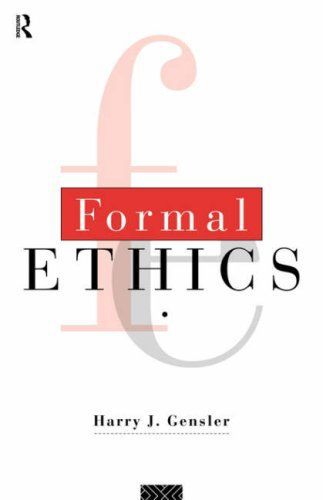
Formal Ethics focuses on the golden rule (“Treat others as you want to be treated”) and other formal ethical principles (like “Be logically consistent in your beliefs,” “Follow your conscience,” and “Make similar evaluations about similar cases”). The book formulates such principles clearly, defends them from various perspectives on the foundations of ethics, and shows how to use them to reason about practical problems (like racism and moral education). While addressed to specialists in moral philosophy and logic, the book’s simple language and practical relevance make it suitable for graduate and advanced undergraduate students. There is an associated Web site featuring computer exercises at: http://www.routledge.com/routledge/philosophy/fe_main.html
ما از اخلاق چه انتظاری داریم؟ این سوال شاید تاحدودی برای عموم مردم و یا متخصصان این رشته قابل پاسخ باشد؛ اینکه خوب بودن را به ما بیاموزد و در تنظیم روابط فردی م...

جشن کتاب تهران به ایستگاه سی و یکم رسیده است. حال و احوال نشر کتاب خوب نیست و باید فرهنگدوستان را به خرید و هدیه دادن کتاب ترغیب نمود. خانه اخلاقپژوهان جوان ب...

بنیاد کتابهای اخلاق اسلامی عمدتا پالایش جان از آلودگیها و آراستن آن به زیباییها است. اندیشه محوری این قبیل کتابها آن است که انسان فعلی آنی نیست که باید باشد...

-
0 Comments