




Notice: تابع WP_Block_Type_Registry::register به طورنادرست فراخوانی شد. نامهای نوع بلوک نباید حروف بزرگ داشته باشند. لطفاً برای اطلاعات بیشتر، اشکال زدایی در وردپرس را مشاهده کنید. (این پیام در نگارش 5.0.0 افزوده شده است.) in /home/ethicsho/public_html/wp-includes/functions.php on line 5313
Warning: Use of undefined constant TDC_PATH_LEGACY - assumed 'TDC_PATH_LEGACY' (this will throw an Error in a future version of PHP) in /home/ethicsho/public_html/wp-content/plugins/td-composer/td-composer.php on line 109
Warning: Use of undefined constant TDSP_THEME_PATH - assumed 'TDSP_THEME_PATH' (this will throw an Error in a future version of PHP) in /home/ethicsho/public_html/wp-content/plugins/td-composer/td-composer.php on line 113 بایگانیهای 346.048 - خانه اخلاق پژوهان جوان Notice: Trying to access array offset on value of type bool in /home/ethicsho/public_html/wp-content/plugins/wp-ulike/inc/general-functions.php on line 807
Writing in a conversational style filled with stories and examples, Jim Keenan breaks open the treasure trove of resources in the Catholic tradition for developing moral wisdom. He reclaims four key texts that bishops and lay people alike appealed to in nurturing their moral wisdom–the person of Jesus in the New Testament, the ten commandments in the catechism, the practice of the corporal works of mercy, and the development of the four cardinal virtues–and lifts up the lessons on love, conscience, sin, and suffering within these texts that form the content of the Catholic moral tradition.
“Andrew Sayer undertakes a fundamental critique of social science’s difficulties in acknowledging that people’s relation to the world is one of concern. As sentient beings, capable of flourishing and suffering, and particularly vulnerable to how others treat us, our view of the world is substantially evaluative. Yet modernist ways of thinking encourage the common but extraordinary belief that values are beyond reason, and merely subjective or matters of convention, with little or nothing to do with the kind of beings people are, the quality of their social relations, their material circumstances or well-being. The author shows how social theory and philosophy need to change to reflect the complexity of everyday ethical concerns and the importance people attach to dignity. He argues for a robustly critical social science that explains and evaluates social life from the standpoint of human flourishing”–
Everywhere people share certain moral principles–it is bad to steal, to kill, to lie–and yet we often subvert these rules. As Robert Hinde points out in this provocative book, the politician will vote with his party instead of his conscience, a lawyer will argue a point that he or she personally abhors. And this constant bending the rules ultimately endangers our world. Hinde, an eminent Cambridge biologist and psychologist, here presents a new approach to morality–combining insights from evolutionary science with observations on how people actually behave. Featuring contributions by Nobel Peace Laureate Sir Joseph Rotblat, the book illuminates how rule-bending–hardening in-group boundaries, putting duty over other moral obligations, and much more–occurs within personal relationships, law, science, medicine, politics, business, and war. Hinde argues that many of the world’s problems are related to the disregard of moral rules–for instance, racism, religious intolerance, excessive consumerism, and global warming. With growing reliance on nuclear weapons, we are heading for a world ruled by threat and fear, instead of one ruled by law and mutual understanding. We need a new understanding of morality, its nature, sources, and importance for communal living. This book helps to provide that understanding.
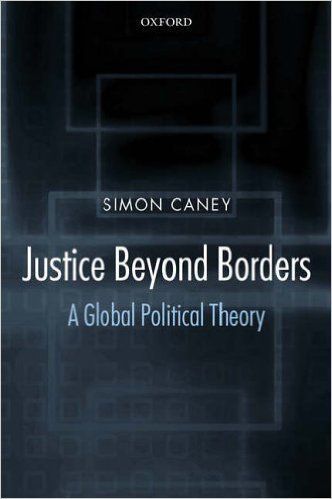
Which political principles should govern global politics? In his new book, Simon Caney engages with the work of philosophers, political theorists, and international relations scholars in order to examine some of the most pressing global issues of our time. Are there universal civil, political, and economic human rights? Should there be a system of supra-state institutions? Can humanitarian intervention be justified?
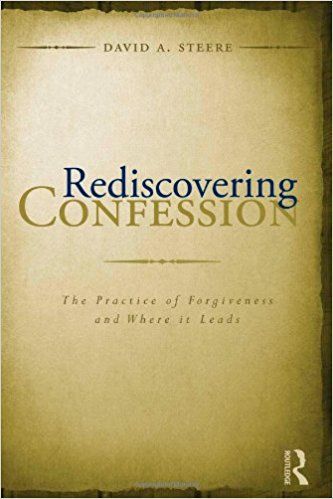
Rediscovering Confession is about recovering the experience of confession, in danger now of becoming a lost art. It identifies four elements present in psychotherapy and confession: a state of heightened self-awareness, a growing realization that our predicament points in some meaningful direction beyond itself, the necessity to make a relevant response to our situation, and a potential for spiritual encounter that accompanies the process. Each chapter contains a section devoted to Practice with exercises for individual contemplation and experimentation, guidelines for forming a confessional partnership, directions for conducting discussions in a study goup, and ways to organize a small confessional group.
ما از اخلاق چه انتظاری داریم؟ این سوال شاید تاحدودی برای عموم مردم و یا متخصصان این رشته قابل پاسخ باشد؛ اینکه خوب بودن را به ما بیاموزد و در تنظیم روابط فردی م...

جشن کتاب تهران به ایستگاه سی و یکم رسیده است. حال و احوال نشر کتاب خوب نیست و باید فرهنگدوستان را به خرید و هدیه دادن کتاب ترغیب نمود. خانه اخلاقپژوهان جوان ب...

بنیاد کتابهای اخلاق اسلامی عمدتا پالایش جان از آلودگیها و آراستن آن به زیباییها است. اندیشه محوری این قبیل کتابها آن است که انسان فعلی آنی نیست که باید باشد...

-
0 Comments