Notice: تابع WP_Block_Type_Registry::register به طورنادرست فراخوانی شد. نامهای نوع بلوک نباید حروف بزرگ داشته باشند. لطفاً برای اطلاعات بیشتر، اشکال زدایی در وردپرس را مشاهده کنید. (این پیام در نگارش 5.0.0 افزوده شده است.) in /home/ethicsho/public_html/wp-includes/functions.php on line 5313
Warning: Use of undefined constant TDC_PATH_LEGACY - assumed 'TDC_PATH_LEGACY' (this will throw an Error in a future version of PHP) in /home/ethicsho/public_html/wp-content/plugins/td-composer/td-composer.php on line 109
Warning: Use of undefined constant TDSP_THEME_PATH - assumed 'TDSP_THEME_PATH' (this will throw an Error in a future version of PHP) in /home/ethicsho/public_html/wp-content/plugins/td-composer/td-composer.php on line 113 بایگانیهای 320.097291 - خانه اخلاق پژوهان جوان Notice: Trying to access array offset on value of type bool in /home/ethicsho/public_html/wp-content/plugins/wp-ulike/inc/general-functions.php on line 807
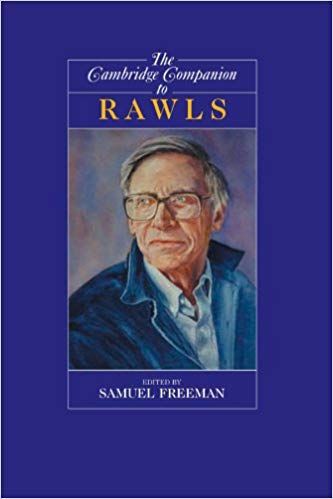
Each volume of this series of companions to major philosophers contains specially commissioned essays by an international team of scholars and will serve as a reference work for students and nonspecialists. John Rawls is the most significant and influential philosopher and moral philosopher of the twentieth century. His work has profoundly shaped contemporary discussions of social, political and economic justice in philosophy, law, political science, economics and other social disciplines. In this exciting collection of new essays, many of the world’s leading political and moral theorists discuss the full range of Rawls’s contribution to the concepts of political and economic justice, democracy, liberalism, constitutionalism, and international justice. There are also assessments of Rawls’s controversial relationships with feminism, utilitarianism and communitarianism. New readers will find this the most accessible guide to Rawls currently available. Advanced students and specialists will find a conspectus of recent developments in the interpretation of Rawls.
In The UN Secretary-General and Moral Authority, contributors provide case studies of all seven former secretaries-general, establishing a much-needed comparative survey of each office-holder’s personal religious and moral values. From Trygve Lie’s forbearance during the UN’s turbulent formative years to the Nobel committee’s awarding Kofi Annan and the United Nations the prize for peace in 2001, the case studies all follow the same format, first detailing the environmental and experiential factors that forged these men’s ethical frameworks, then analyzing how their “inner code” engaged with the duties of office and the global events particular to their terms. Balanced and unbiased in its approach, this study provides valuable insight into how religious and moral leadership functions in the realm of international relations, and how the promotion of ethical values works to diffuse international tensions and improve the quality of human life around the world.
Bob Brecher claims that it is wrong to think that morality is simply rooted in what people want. Brecher explains that in our consumerist society, we make the assumption that getting “what people want” is our natural goal, and that this goal is usually a good one. We see that whether it is a matter of pornography or getting married–if people want it, then that’s that. But is this really a good thing? Getting What You Want offers a critique of liberal morality and an analysis of its understanding of the individual as a wanting thing. Brecher boldly argues that the Anglo-American liberalism cannot give an adequate account of moral reasoning and action, or any justification of moral principles or demands.
Social justice: an ideal, forever beyond our grasp; or one of many practical possibilities? More than a matter of intellectual discourse, the idea of justice plays a real role in how—and how well—people live. And in this book the distinguished scholar Amartya Sen offers a powerful critique of the theory of social justice that, in its grip on social and political thinking, has long left practical realities far behind.The transcendental theory of justice, the subject of Sen’s analysis, flourished in the Enlightenment and has proponents among some of the most distinguished philosophers of our day; it is concerned with identifying perfectly just social arrangements, defining the nature of the perfectly just society. The approach Sen favors, on the other hand, focuses on the comparative judgments of what is “more” or “less” just, and on the comparative merits of the different societies that actually emerge from certain institutions and social interactions.At the heart of Sen’s argument is a respect for reasoned differences in our understanding of what a “just society” really is. People of different persuasions—for example, utilitarians, economic egalitarians, labor right theorists, no-nonsense libertarians—might each reasonably see a clear and straightforward resolution to questions of justice; and yet, these clear and straightforward resolutions would be completely different. In light of this, Sen argues for a comparative perspective on justice that can guide us in the choice between alternatives that we inevitably face.
ما از اخلاق چه انتظاری داریم؟ این سوال شاید تاحدودی برای عموم مردم و یا متخصصان این رشته قابل پاسخ باشد؛ اینکه خوب بودن را به ما بیاموزد و در تنظیم روابط فردی م...

جشن کتاب تهران به ایستگاه سی و یکم رسیده است. حال و احوال نشر کتاب خوب نیست و باید فرهنگدوستان را به خرید و هدیه دادن کتاب ترغیب نمود. خانه اخلاقپژوهان جوان ب...

بنیاد کتابهای اخلاق اسلامی عمدتا پالایش جان از آلودگیها و آراستن آن به زیباییها است. اندیشه محوری این قبیل کتابها آن است که انسان فعلی آنی نیست که باید باشد...

-
0 Comments