Notice: تابع WP_Block_Type_Registry::register به طورنادرست فراخوانی شد. نامهای نوع بلوک نباید حروف بزرگ داشته باشند. لطفاً برای اطلاعات بیشتر، اشکال زدایی در وردپرس را مشاهده کنید. (این پیام در نگارش 5.0.0 افزوده شده است.) in /home/ethicsho/public_html/wp-includes/functions.php on line 5313
Warning: Use of undefined constant TDC_PATH_LEGACY - assumed 'TDC_PATH_LEGACY' (this will throw an Error in a future version of PHP) in /home/ethicsho/public_html/wp-content/plugins/td-composer/td-composer.php on line 109
Warning: Use of undefined constant TDSP_THEME_PATH - assumed 'TDSP_THEME_PATH' (this will throw an Error in a future version of PHP) in /home/ethicsho/public_html/wp-content/plugins/td-composer/td-composer.php on line 113 بایگانیهای 306.3 - خانه اخلاق پژوهان جوان Notice: Trying to access array offset on value of type bool in /home/ethicsho/public_html/wp-content/plugins/wp-ulike/inc/general-functions.php on line 807
Is medical ethics in times of armed conflict identical to medical ethics in times of peace, as the World Medical Association declares? In Bioethics and Armed Conflict, the first comprehensive study of medical ethics in conventional, unconventional, and low-intensity war, Michael Gross examines the dilemmas that arise when bioethical principles clash with military necessity—when physicians try to save lives during an endeavor dedicated to taking them—and describes both the conflicts and congruencies of military and medical ethics.Gross describes how the principles of contemporary just war, unlike those of medical ethics, often go beyond the welfare of the individual to consider the collective interests of combatants and noncombatants and the general interests of the state. Military necessity plays havoc with such patients’ rights as the right to life, the right to medical care, informed consent, confidentiality, and the right to die. The principles of triage in battle conditions dictate not need-based treatment but the distribution of resources that will return the greatest number of soldiers to active duty. And unconventional warfare, including current “wars” on terrorism, challenges the traditional concept of medical neutrality as physicians who have sworn to “do no harm” are called upon to lend their expertise to “interrogational” torture or to the development of biological or chemical weapons. Difficult dilemmas inevitably arise during armed conflict, and medicine, Gross concludes, is not above the fray. Medical ethics in time of war cannot be identical to medical ethics in peacetime.
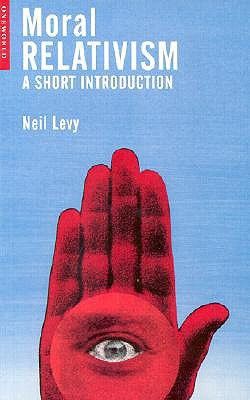
On September 11 2001, thousands of people died in the attacks on the Unitedtates. How could this act of terror be justified? A young man kills hisister to protect his family’s honour. How could this be “right”?;These areust two of the questions tackled by Neil Levy in this guide to thehilosophy of moral relativism – the idea that concepts of “rightness” and “rongness” vary from culture to culture and that there is no such thing as anbsolute moral code. Opening with a comprehensive definition to thisontroversial theory, the book examines all the arguments for and againstoral relativism, from its implications for ethics to the role of humaniology and the difficulty of separating cultural values from innateehaviour. The author draws on case studies from sources as diverse as theztecs and the Australian aboriginals to illustrate debates such as: can wever have a shared morality?; can concepts of “rightness” and “wrongness”ver be absolute?; does moral relativism pose a threat to human rights?;oncluding with a proposal for a more modest form of relativism, and
One of the most dynamic aspects of the Islamic revival during the past two centuries has been the rethinking of Islamic political thought. A broad range of actors, ideas, and ideologies characterize the debate on how Islamic ethics and law should be manifested in modern institutions. Yet this aspect of the “return to Islam” has been neglected by policymakers, the media, and even many scholars, who equate “political Islam” with merely one strand, labeled “Islamic fundamentalism.” Bringing together ten essays from six volumes of the Ethikon Series in Comparative Ethics, this book gives a rounded treatment to the subject of Islamic political ethics.The authors explore the Islamic ethics of civil society, boundaries, pluralism, and war and peace. They consider questions of diversity, discussing, among other subjects, Islamic regimes’ policies regarding women and religious minorities. The chapters on war and peace take up such crucial and timely issues as the Islamic ethics of jihad, examining both the legitimate conditions for the declaration of war and the proper conduct of war.In their discussions, the contributors analyze the works of classical writers as well as the full range of modern reinterpretations. But beyond these analyses of previous and contemporary thinkers, the essays also reach back to the two fundamental sources of Islamic ethics–the Qur’an and traditions of the Prophet–to develop fresh insights into how Islam and Muslims can contribute to human society in the twenty-first century.The authors are Dale F. Eickelman, Hasan Hanafi, Sohail H. Hashmi, Farhad Kazemi, John Kelsay, Muhammad Khalid Masud, Sulayman Nyang, Bassam Tibi, and M. Raquibuz Zaman.From the foreword by Jack Miles:”Western foreign ministers and secretaries of state may have to learn a little theology if the looming clash between embattled elements both in the West and in the Muslim umma is to yield to disengagement and peaceful coexistence, to say nothing of fruitful collaboration. . . . It is, then, no idle academic exercise that the thinkers whose work is collected here have in hand. The long-term practical importance of their work can scarcely be overstated.”
Centore’s work is an inquiry into the weaknesses and strengths of the two basic positions in ethics: the man-centered model and the God-centered model for deciding between right and wrong behavior. The philosophical paradigm for the man-centered approach is absolute relativism, while the paradigm for the God-centered approach is relative absolutism. Centore argues that the man-centered model in actual practice proves not to be realistic as an ethical guide, while the God-centered model, if properly understood, is the most useful approach. This work penetrates difficult ethical issues by examining human experience and reasoning in conjunction with actual choices of action. Although the God-centered approach is shown to be the most practical, Centore argues for a natural moral law that avoids any specific theology. Each chapter discusses the historical and theoretical background of the approaches and two possible compromises. The work is enlivened with examples of possible contexts in which moral decisions must take place. Various ethical dilemmas are presented with an examination of the potential consequences of applying either the atheistic or the theistic ethical approach. Centore’s argument is complex, but he explains the elements clearly and his conclusion is strengthened by real-life cases and an extensive Bibliography.
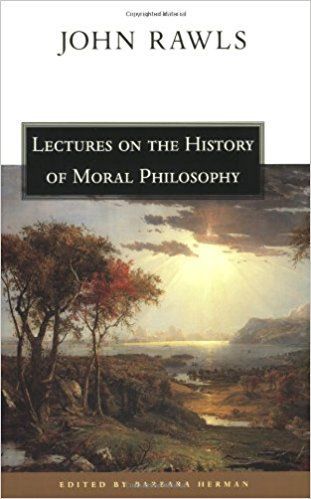
The premier political philosopher of his day, John Rawls, in three decades of teaching at Harvard, has had a profound influence on the way philosophical ethics is approached and understood today. This book brings together the lectures that inspired a generation of students–and a regeneration of moral philosophy. It invites readers to learn from the most noted exemplars of modern moral philosophy with the inspired guidance of one of contemporary philosophy’s most noteworthy practitioners and teachers.Central to Rawls’s approach is the idea that respectful attention to the great texts of our tradition can lead to a fruitful exchange of ideas across the centuries. In this spirit, his book engages thinkers such as Leibniz, Hume, Kant, and Hegel as they struggle in brilliant and instructive ways to define the role of a moral conception in human life. The lectures delineate four basic types of moral reasoning: perfectionism, utilitarianism, intuitionism, and–the ultimate focus of Rawls’s course–Kantian constructivism. Comprising a superb course on the history of moral philosophy, they also afford unique insight into how John Rawls has transformed our view of this history.
ما از اخلاق چه انتظاری داریم؟ این سوال شاید تاحدودی برای عموم مردم و یا متخصصان این رشته قابل پاسخ باشد؛ اینکه خوب بودن را به ما بیاموزد و در تنظیم روابط فردی م...

جشن کتاب تهران به ایستگاه سی و یکم رسیده است. حال و احوال نشر کتاب خوب نیست و باید فرهنگدوستان را به خرید و هدیه دادن کتاب ترغیب نمود. خانه اخلاقپژوهان جوان ب...

بنیاد کتابهای اخلاق اسلامی عمدتا پالایش جان از آلودگیها و آراستن آن به زیباییها است. اندیشه محوری این قبیل کتابها آن است که انسان فعلی آنی نیست که باید باشد...

-
0 Comments